
| Reviews & Columns |
|
Reviews DVD TV on DVD Blu-ray 4K UHD International DVDs In Theaters Reviews by Studio Video Games Features Collector Series DVDs Easter Egg Database Interviews DVD Talk Radio Feature Articles Columns Anime Talk DVD Savant Horror DVDs The M.O.D. Squad Art House HD Talk Silent DVD
|
 DVD Talk Forum |
|
|
| Resources |
|
DVD Price Search Customer Service #'s RCE Info Links |
|
Columns
  


 
|
|
|
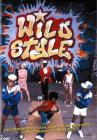
Wild Style

As far as trend movies go Charlie Ahearn's Wild Style (1983) was both way ahead of the curve and extremely intimately involved with the culture it portrayed. Shot in 1981 and 1982 (before recorded rap was even a minor factor in the music industry), Wild Style is the first major film to take the rapidly expanding hip-hop movement seriously. We're talking about pre-Miami, pre-Atlanta, pre-West Cost, hell, pre-Queens hip-hop. Wild Style is so deep in the South Bronx origins of hip-hop that the film's Lower East Side finale feels positively exotic.
For a plot Ahearn made no attempt to bite off more than he could chew. His main character, graffiti artist Raymond ("Lee" Quinones) longs for his ex-girlfriend Rose (Sandra "Pink" Fabara) while struggling with some of the same issues as any other kind of artist: What is the purpose of his work? What is he trying to say? Can he become a commercial success and still retain his roots? Neither the film nor the actors are articulate enough to make these issues pretentious and obvious and instead the film comes off as simply honest. There's no false poetry to the dialog, much of which sounds completely spontaneous.
In fact, the film's plot only gives it a basic structure. The brilliance of Ahearn's film is that its meatiest content consists of tons of real hip-hop flavor. Long before hip-hop became little more than a showcase for egotistical rappers it was a movement consisting in equal parts rapping, DJing, break-dancing and graffiti. Wild Style contains generous amounts of each, often tying them together in dynamic, visually exciting ways. One of the most memorable scenes in hip-hop film history finds rap pioneers Cold Crush Brothers and the Fantastic Freaks facing off on a playground. First they rap a cappella at each other, then compete in a game of basketball scored with their rhymes. The sequence is so filled with the joy of their words and skills that you almost want to jump up and wave your hands in the air.
The hip-hop material is also formed into something of a plot with Fab 5 Freddy (Fred Brathwaite) at the center. Playing the smooth-talking Phade, the legendary hip-hop scenemaker spends the film trying to elevate the movement's notoriety. He introduces Raymond to a journalist (underground film star Patti Astor) and helps organize the climactic outdoor jam. His slick promotion style is a sharp precursor to the movers-and-shakers who would eventually turn rap into the mega-industry it is today but there's still a sweetness to Freddy's flow here.
Wild Style is an originator. The scenes in here echo through every hip-hop film to follow, from Krush Groove through Belly and beyond. None of those films, however, are as honest. The ridiculous culture of violence had not yet fully turned the art form into the cartoon it has been for the past decade (although one sequence reminds the audience that the South Bronx wasn't just a hip-hop paradise but rather a dangerous place) and the hip-hop language hadn't yet splintered and become overly simplified. Like Doug Pray's recent excellent documentary Scratch or DJ Qbert's Wave Twisters, Wild Style celebrates the culture in its entirety. It's a very simple film with a tremendous amount of important stuff going on.
Given how central to the film the music is it should come as no surprise how outstanding it all is. Great performances abound, like several wonderfully clever rhymes from Busy Bee, that amazing a capella basketball court duel and another beat-free performance from Double Trouble, sitting on a stoop rapping about life. These are iconic images and sounds in hip-hop but they're dazzling for how casual they all are. Heck, Grandmaster Flash cuts it up on a set of turntables in his kitchen.
The cool thing about the music is that in order to avoid copyright issues (for the most part, see below for the exception) Ahearn had Freddy work with Chris Stein of Blondie to create original beats for the DJs in the film to cut up. (In fact, if you look at the turntables you can sometimes see that the records are labelled "Wild Style") This technique gives the music in the film a familiar style and sound but fresh specifics, like you recognize the beats but you're still hearing them for the first time. Grand Master Caz's title track perfectly sums up the drama of the lives on display with rhymes like "South Bronx, New York is where I dwell / But to a lot of people it's a living hell."
One caveat: Presumably due to rights issues, one important musical cue has been changed. Grandmaster Flash's use of Bob James' "Take Me To The Mardi Gras" (the same bell-ringing sample used in Run DMC's seminal DJ-classic "Peter Piper") has been eliminated and replaced with another cue. While this substitution doesn't ruin the film in any way and will go unnoticed for most, it's worth pointing out. A purist might skip this disc in favor of an old VHS copy that may contain the original cut but frankly there isn't any better version of Wild Style available and it's unlikely that it will be re-released any time soon.
VIDEO:
The full-frame video is a bit soft and shows some reasonable wear but considering the 16mm source and the age of the elements it looks remarkably good. This is a film with humble technical origins and, all things considered, Rhino's treatment here is terrific.
AUDIO:
A Dolby Digital 2.0 soundtrack is available as well as a Dolby Digital 5.1 remix. The 2.0 is muffled by comparison but still sounds better than old VHS copies of the film. The 5.1 mix highlights how rough some of the location recording is, particularly the dialog, some of which is hard to understand, but the music sounds great. The sparse beats and unpretentious rhymes sound excellent.
EXTRAS:
The most important extra here is the commentary track featuring director Charlie Ahearn and costar / music supervisor / all-around behind-the-scenes inspiration Fab 5 Freddy. This is one of the most informative, energetic, personality-filled tracks I've ever heard. There is a wealth of knowledge on both the film and the early history of hip-hop on display here and both participants are dazzling in their abilities to mix non-stop chatting with riveting entertaining. In particular Fab 5 Freddy delivers as lively an audio commentary as can possibly be done. Fans of his years as the host of the weekly version of Yo! MTV Raps recall his smooth demeanor and his friendly display of insider expertise. The movie is already indispensable but the commentary track easily bumps the DVD up a review grade.
A couple of deleted scenes are included as well as generous galleries, both in still and video formats, of classic subway graffiti. The full version of Caz's Wild Style theme song is included along with clips from the film and a nice photo gallery of rappers, graf writers and filmmakers is also included.
FINAL THOUGHTS:
Simply required viewing for hip-hop fans. Rhino's disc is good enough but the real treat here is the movie. Wild Style is in no way reactionary trend-cashing filmmaking. As much as later hip-hop films like Krush Groove or Beat Street are great fun only Wild Style deserves the title of true hip-hop film. Everything about it oozes realness, from the honest portrayal of the horrific South Bronx environs to the pure joy of the music to the unpolished performances of the graf writers. With the outstanding commentary this is one disc that fans of the culture can't live without.
|



| Popular Reviews |
| Sponsored Links |
|
|
| Sponsored Links |
|
|
| Release List | Reviews | Shop | Newsletter | Forum | DVD Giveaways | Blu-Ray | Advertise |
|
Copyright 2024 DVDTalk.com All Rights Reserved. Legal Info, Privacy Policy, Terms of Use,
Manage Preferences,
Your Privacy Choices 
| |||||||