
| Reviews & Columns |
|
Reviews DVD TV on DVD Blu-ray 4K UHD International DVDs In Theaters Reviews by Studio Video Games Features Collector Series DVDs Easter Egg Database Interviews DVD Talk Radio Feature Articles Columns Anime Talk DVD Savant Horror DVDs The M.O.D. Squad Art House HD Talk Silent DVD
|
 DVD Talk Forum |
|
|
| Resources |
|
DVD Price Search Customer Service #'s RCE Info Links |
|
Columns
  


 
|
|
|
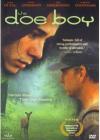
Doe Boy, The
What, then, is Hunter's story? He's a petulant, dissatisfied, angst-ridden teenager with an overprotective mother and a father who gets on his case too much. For anyone who spends any time around teenagers, this is hardly news; it's a difficult age for a young man or woman in any culture. What makes Hunter's transition to adulthood worthy of our interest?
The film does have a certain potential to explore the intersection of personal identity and culture. An occasional voiceover narration from Hunter's grandfather tells Hunter's story as if it were a Native American myth, placing his struggle in a timeless context, but the Cherokee culture that should be at the center of the film is sidelined. At one point Hunter refers to hemophilia as a "white man's disease," as if blaming his non-Cherokee father for its occurrence in him, but for the most part the story could be taking place in any rural district of the United States among any group of people.
One of the film's pitfalls is its reliance on an assumed subtext about hunting, an activity that is central to the story and the characters. The various people in the film, from Hunter, his father, and his grandfather to Hunter's friends and neighbors, are all either avid deer hunters or are fascinated by the subject. It's obviously an important element in their lives... but the significance of the hunt to their society is never really brought out. For me personally, the hunt just looked like a display of machismo; it seems clear that the director intended it to be both more profound and more complex, but too much of the canvas is left blank, and any deeper meaning is difficult to find.
The ending of the film makes a creditable effort to pull the various thematic threads together, showing how Hunter's steps toward independence give him the opportunity to accept his past, and his family, and move on toward a life of his own. Still, I didn't feel that The Doe Boy made the necessary connections between storyline, theme, and character to make the story truly engaging.
Video
The Doe Boy is presented in an attractive anamorphic widescreen transfer that preserves the film's original 1.85:1 aspect ratio. There's some mild edge enhancement, resulting in a slight blurring of some detail, but on the whole it's a clean-looking image, with only a faint hint of noise or print flaws. Colors are strong and vibrant, and the nature scenes in particular look lovely.
Audio
The Dolby 5.1 soundtrack on The Doe Boy offers a solid audio experience. Dialogue and sound effects are clear and clean-sounding, though there's essentially no use of the surround channels. Viewers should note that the default audio setting is actually Dolby 2.0; to play the film with the 5.1 soundtrack it's necessary to go to the audio menu.
Extras
The Doe Boy DVD includes a trailer for the film and filmographies for the principal actors, along with a set of weblinks.
Final thoughts
The Doe Boy is watchable, but it never reached me on any level beyond the surface events. It might be worth a rental for anyone who is familiar with the cultures presented in the story; the good DVD transfer makes it pleasant to watch from the audio and video perspective.
|



| Popular Reviews |
| Sponsored Links |
|
|
| Sponsored Links |
|
|
| Release List | Reviews | Shop | Newsletter | Forum | DVD Giveaways | Blu-Ray | Advertise |
|
Copyright 2024 DVDTalk.com All Rights Reserved. Legal Info, Privacy Policy, Terms of Use,
Manage Preferences,
Your Privacy Choices 
| |||||||