
| Reviews & Columns |
|
Reviews DVD TV on DVD Blu-ray 4K UHD International DVDs In Theaters Reviews by Studio Video Games Features Collector Series DVDs Easter Egg Database Interviews DVD Talk Radio Feature Articles Columns Anime Talk DVD Savant Horror DVDs The M.O.D. Squad Art House HD Talk Silent DVD
|
 DVD Talk Forum |
|
|
| Resources |
|
DVD Price Search Customer Service #'s RCE Info Links |
|
Columns


|
|
|
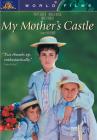
My Mother's Castle (Le château de ma mère)
My Mother's Castle is in a difficult position. It can stand on its own, but as it's clearly the continuation of My Father's Glory, the events in My Mother's Castle depend on the context provided by the earlier film in order to have their full meaning to the viewer. Given the relationship between the two films, it's inevitable that they be compared, and My Mother's Castle does come up as slightly weaker than My Father's Glory. It's not quite as thematically focused as the first film; though both are essentially a series of vignettes following Marcel growing up, the events in My Mother's Castle seem to have less underlying connection to them. Whereas in My Father's Glory the countryside of Provence itself provided an essential element to the story, in My Mother's Castle the events that take place in the country could just as easily have taken place in the city of Marseilles as in the hills of Provence. The various elements of the story seem oddly unconnected at times, as with the budding relationship between Marcel and his young neighbor Isabelle, which ends abruptly and seems almost out-of-place in the context of the rest of the film.
My Mother's Castle does have one very important element in common with My Father's Glory: the outstanding performances of all the actors in the cast, from the young Marcel (Julien Ciamaca), Lili (Joris Molinas), and Paul (Victorien Delamare), to Augustine (Nathalie Roussel) and Joseph (Philippe Caubère). All the characters are wonderfully real; they're also incredibly likeable and sympathetic characters whom we care deeply about by the end of the film. Part of the reason, in fact, that these characters have such an effect on the viewer is their genuine humanity: these aren't movie stereotypes of "good people," but believable human beings whom we could, if we were very lucky, have as our own friends and family. In My Mother's Castle the focus shifts very slightly to the character of Augustine, Marcel's mother, but I still found my favorite of all the cast to be the character of Marcel's father, Joseph: funny, intelligent, loving, he's also a person who grows and changes over the course of the two films.
One of the interesting elements of My Mother's Castle is that we get a slightly wider view of French society at the turn of the century; this is a natural result of Marcel, the protagonist, growing up and starting to become more aware of the larger context of his life. For example, one of the main plot elements of My Mother's Castle has to do with a problem that arises when Joseph and his family are invited to take an illegal shortcut across privately-owned estates on the way to their country home. As modern viewers, we can see that Joseph's dilemma is clearly different than it would be for a modern-day person in the same situation, but My Mother's Castle does an excellent job of setting things up so that we, the viewers, can appreciate the problem that Joseph faces in the context of the society of the time.
While My Father's Glory is a wholeheartedly joyous film, My Mother's Castle takes on a more somber tone. There is a clear sense of the love and happiness of Marcel's family, and the joy they take in each other's company, yet we also feel the pressures of the outside world: Marcel's scholarship exam and potential job insecurity for Joseph are the two main intrusions into the domestic idyll during the main course of the film. My Mother's Castle comes to an emotional peak in the last few minutes of the story, and does so without theatrics, without tear-jerking, without manipulative theme music; I was deeply moved by the final scenes simply through the emotional connection with the characters that had been formed over the course of the two movies. Perhaps this above all shows the true power of the simple, yet masterful story that is told in My Father's Glory and My Mother's Castle: it is a slice of a beautiful life with people whom we can believe in and care about.
Video
My Mother's Castle is presented in an attractive anamorphic widescreen image, preserving the film's original 1.85:1 aspect ratio. The edge enhancement is fairly heavy in this transfer, more so than in the first half of the diptych, My Father's Glory, but otherwise the image looks good. Colors in particular are very attractive, with warm, natural-looking tones in both indoor and outdoor shots.
Kudos should go to MGM World Films for the decision to make the subtitles for My Mother's Castle optional: viewers have the choice of English, French, Spanish, or no subtitles. It's a pleasure to see a foreign-language film given the treatment it deserves: an attractive anamorphic transfer and optional rather than burned-in subtitles.
Audio
The original French language track for My Mother's Castle is presented in a pleasing Dolby 2.0 surround that offers an immersive audio experience. Dialogue is clear, the music is kept nicely in balance with the other elements of the track, and the assorted sounds of the environment are distinct. A dubbed English mono soundtrack is also included, but I would suggest opting for the French and add subtitles if necessary.
Extras
The only special feature on the DVD is a trailer for the film. Viewers will be pleased to see that subtitles are optional: there is a choice of no subtitles, French, English, and Spanish.
Final thoughts
If you loved My Father's Glory, you will absolutely want to get My Mother's Castle; while it's not quite as amazing as the first half of the story, it is an excellent film in its own right, and it provides a satisfying conclusion to the story that begins in My Father's Glory. For all viewers, I would say that this is a pair of films that are definitely worth watching.
|



| Popular Reviews |
| Sponsored Links |
|
|
| Sponsored Links |
|
|
| Release List | Reviews | Shop | Newsletter | Forum | DVD Giveaways | Blu-Ray | Advertise |
|
Copyright 2024 DVDTalk.com All Rights Reserved. Legal Info, Privacy Policy, Terms of Use,
Manage Preferences,
Your Privacy Choices 
| |||||||