
| Reviews & Columns |
|
Reviews DVD TV on DVD Blu-ray 4K UHD International DVDs In Theaters Reviews by Studio Video Games Features Collector Series DVDs Easter Egg Database Interviews DVD Talk Radio Feature Articles Columns Anime Talk DVD Savant Horror DVDs The M.O.D. Squad Art House HD Talk Silent DVD
|
 DVD Talk Forum |
|
|
| Resources |
|
DVD Price Search Customer Service #'s RCE Info Links |
|
Columns
  


 
|
|
|
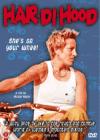
Har-Di-Hood
Let me unpack that statement a little bit. Har-Di-Hood introduces us to a handful of women mountain bikers through a montage of interview clips on a variety of subjects that touch on biking, competition, and just plain life in general. These women certainly are colorful personalities, and the sport they're involved in is certainly not a typical "feminine" activity, so there's plenty of room for exploration of the subject. But director Nicole Hahn never demonstrates a grasp of the larger picture. What, exactly, is Har-Di-Hood about? Is it about the personalities of the women involved in mountain biking? Is it about the sport itself? This is never clear, and the completely scattershot approach severely limits the film. If we are intended to understand these women better, it would help to get to know who they are and what their role is in the sport.
As the film progresses, it appears to follow a very loose structure of "a week in the life of a competitive woman mountain biker." That is, the various interviewees discuss what a typical Monday, Tuesday, Wednesday, and so on are like for them... along with a lot of other topics, including their personal lives and their likes and dislikes. I would really have appreciated getting more information about the sport: seeing these women actually ride, and knowing their place in the sport, would have made the interview footage much more meaningful.
The two most interesting interviewees are Missy Giove, a champion downhill mountain biker, and Jacquie Phelan, a retired racer; but no context is given for either of these two exceptional women. Phelan in particular has some very insightful things to say about what racing, and teaching other women to ride, has meant to her; I found her interview clips to be very engaging, and I wanted to know more about her contribution to the sport. Alas, Har-Di-Hood leaves all these women in comparative obscurity even after presenting them on film for seventy-eight minutes.
One of the things I liked about Har-Di-Hood is that it manages to avoid the "extreme" attitude that often goes with mountain biking. For instance, I was prepared to endure a blaring hard-rock soundtrack, but the music used in Har-Di-Hood is quite restrained and suitable for a serious documentary. Additionally, interspersed within the filmed interview segments is a series of loosely animated sketches with a pleasant, humorous narrator giving us a brief comment on some aspect of mountain biking, from the proper diet for a biker to how many bikes a racer needs (the unnamed narrator lists her eight bikes, and wryly comments that her grandmother thinks she only needs two: one to go up the hill and one to go down it). All in all, Har-Di-Hood was worth watching, but I certainly think it could have offered much more.
Video
Har-Di-Hood is presented in a non-anamorphic 1.85:1 widescreen aspect ratio. Apart from some edge enhancement, the image looks good. Colors are natural-looking, and the print overall appears to be clean, with minimal noise and no flaws showing up in the image. Contrast is a bit lacking in a few dark indoor scenes, but on the whole it's a good transfer.
Audio
The documentary's Dolby 2.0 soundtrack offers a respectable listening experience. The interviewees' voices tend to be a little flat, but clear nonetheless. The music portion of the soundtrack is fairly attractive, and is properly balanced with the other parts of the soundtrack.
Extras
The special features for Har-Di-Hood are a rather odd assortment. The "bonus footage" section offers nine minutes of additional interview footage with various riders, mainly focused on the subject of injuries. "Jacquie's Fanny Pack" offers a four-minute extended sequence of Jacquie Phelan discussing what she takes along with her on a ride. One very weird short piece called "Jumping Dildo" consists of footage of young boys jumping their bikes over a black rubber dildo. (Yes, I did say the special features were a bit odd.) There's also a selection of music tracks from the film and a gallery of trailers for other First Run Features films.
We also get a menu that allows viewing of each of the short animations used in the film independently. While this isn't an additional feature, per se, it's probably the most interesting element in the film, and worth watching on its own.
Final thoughts
Har-Di-Hood is certainly a different kind of film. It has the potential to be an excellent documentary, along the lines of the outstanding A Sunday in Hell, which chronicles one of the most important professional road cycling races, but it lacks the focus necessary to pull everything together. It's a reasonable rental for someone who's already interested in the subject.
|



| Popular Reviews |
| Sponsored Links |
|
|
| Sponsored Links |
|
|
| Release List | Reviews | Shop | Newsletter | Forum | DVD Giveaways | Blu-Ray | Advertise |
|
Copyright 2024 DVDTalk.com All Rights Reserved. Legal Info, Privacy Policy, Terms of Use,
Manage Preferences,
Your Privacy Choices 
| |||||||