
| Reviews & Columns |
|
Reviews DVD TV on DVD Blu-ray 4K UHD International DVDs In Theaters Reviews by Studio Video Games Features Collector Series DVDs Easter Egg Database Interviews DVD Talk Radio Feature Articles Columns Anime Talk DVD Savant Horror DVDs The M.O.D. Squad Art House HD Talk Silent DVD
|
 DVD Talk Forum |
|
|
| Resources |
|
DVD Price Search Customer Service #'s RCE Info Links |
|
Columns


 
|
|
|
Don't Be Afraid of the Dark
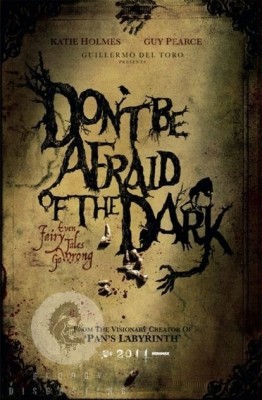
Don't Be Afraid of the Dark isn't the success that one might hope for given the high expectations that naturally come with a project that has Guillermo Del Toro's name attached to it but that is not to say the film is a mess or unworthy of viewing - it's a solid entry in the "scary-house" genre. The film manages to be genuinely spooky with some decent thrills, good acting, and it actually manages to draw viewers into the story surprisingly well considering the simplicity of the storyline.
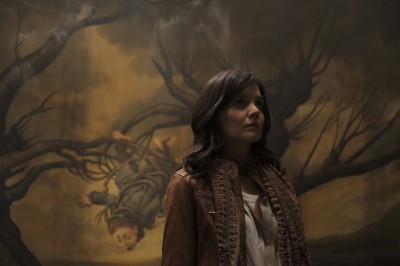
The film begins with a shocking introduction that sets the stage for the rest of the story. Creatures live inside of an old, creepy house and seek the teeth of children to feed on. These scary monsters are the cause of the disappearance of a painter's child. The present day storyline introduces us to Kim (Katie Holmes), who is a fan of the artist and who also lives in the house. Alex (Guy Pearce) is romantically involved with her and moves in with his young child Sally (Bailee Madison). None of them are aware that the house has a mysterious and disturbing past and the entrance of Sally brings these scary creatures back into the limelight (though no literally - as light is one of the only things that these creatures seem afraid of themselves). Can Alex, Kim, and Sally survive their stay in the house? Audiences will consider that the primary plot-question of the entire film.
The film falters somewhat as it occasionally struggles to make the material interesting enough to be a feature length film. The end result is a short movie at only 99 minutes long but the film is one where relatively minor pacing and story issues don't dramatically alter the overall experience.
Del Toro demonstrated his masterful craft with the wonderfully engaging Pan's Labyrinth, a nuanced and multi-layered story that was about childhood, war, and the power of fantasy (and perhaps the importance of it as well). Don't Be Afraid of the Dark is not as thematically rich but it does contain one interesting idea: That it is sometimes best to listen to children and to not doubt them when it comes to serious matters. In the real world we shouldn't listen to a story about frightening supernatural forces and take it to heart, that much is correct, but I don't believe that to be the point. This element can be examined as any real-world scenario. The adults in this film are often either stupid or ignorant enough to ignore the facts discovered by the child and the only reason they don't listen seems to be because she's "just a kid". Considering the type of film this is that obviously leads to some messed up scenarios for everyone involved and it does serve as a reminder to adults to be more mindful.
The screenplay by Del Toro and Matthew Robins (who wrote Mimic with Del Toro in addition to writing one of Del Toro's favorite films, Dragonslayer) often emphasis the importance of character development over having some sort of scare-factor quota. The result is a film with a better story - not because of the plot being particularly innovative (even beyond the extent of this being a remake of an earlier made-for- television film), but because of the emphasis on the characters within the storyline being important.
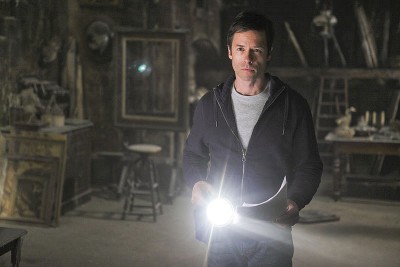
Katie Holmes and Guy Pearce are both well utilized in their roles and it was genuinely nice to see both actors in parts that are worthy of their talents. Pearce has had a bit more success recently than he had for years with performances in films like The King's Speech, Animal Kingdom, and The Road but Holmes hadn't had as many interesting roles as of late (she was excellent in the under-seen Pieces of April and underrated in Batman Begins). Both performers did an incredible job in bringing these characters into believability and they both created a great deal of sympathy for the characters as well. Bailee Madison (who apparently is not a total newcomer) gives an excellent child performance as the character Sally; a character that often had to help carry many frightening sequences.
The best thing about this new version of Don't Be Afraid of the Dark is the fact that it is such a slick and interesting production from a visual standpoint. The overall design for the house and the exterior area surrounding it is quite strong and it does end up helping to make the story seem much more immersive. There are several sequences that are somewhat simplistic in overall design but that have relatively small elements that actually make big improvements to the overall effect the visuals can have: such as when the film focuses on a decidedly creepy looking lamp, uses the haunting paintings featured throughout, and displays doorways with just slightly off-kilter designs that make the film that much spookier when it wants to be. The art direction by Lucinda Thomson and the production design by Roger Ford are quite important to the success of the film. It is also worth noting that while the creature effects and design are effective for the film these are not as distinctive as other films in the genre are sometimes capable of.
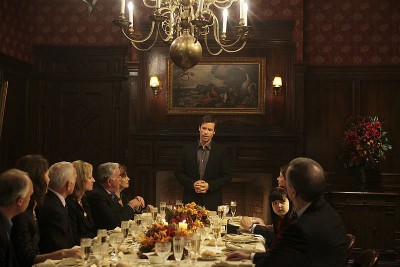
The astoundingly wonderful production elements are complimented by cinematography from Oliver Stapleton (The Cider House Rules). One of the elements of this film that stands out the most is certainly the striking photography and the way in which the entire film seems to have been lit with a particularly effective style that makes the film stand out as being not just "any other" scary movie -- the house interior is always appropriately lit with dark and ominous hues while the outside world can seem significantly brighter in comparison. The atmosphere created for these surroundings was spot on.
In many ways, this is a film with a much higher spooky haunted-house element than it is a genuine start-to-finish fright fest. The overall effect is a sense of general foreboding that lingers around each sequence and it carries the entire film with an aura of a more genuine scary-movie than one that aims to have an audience jumping out of their seats from one moment to the next.
Marco Beltrami (one of the masters of scary movie music) crafts another solid score along with relative newcomer Buck Sanders (who contributed music to other Del Toro productions as well). Like many scary movies the backbone is often found in the score and many sequences would be far less engaging if the nuanced music didn't play a part in heightening suspense.
Troy Nixey proves to be an interesting choice for director of the project. This was his feature length debut and Del Toro picked him primarily because of how impressed he was by Nixey's short film Latchkey's Lament. The atmosphere of the film wouldn't be as impressive without his stylish visual decisions regarding the framing of shots or the general sense of slow-build in each scene as a crucial part to the effectiveness of Don't Be Afraid of the Dark.
Don't Be Afraid of the Dark turned out to be a nice little surprise scary-movie to end the summer season, and while it rarely attempts dramatically new ways to tell its story it is executed with solid craftsmanship and that ultimately makes it all the more effective as a suspense film. Fans of Guillermo Del Toro should definitely consider this remake a worthwhile experiment worth seeing.
Neil Lumbard is a lifelong fan of cinema. He aspires to make movies and has written two screenplays on spec. He loves writing, and currently does in Texas.
|


| Popular Reviews |
| Sponsored Links |
|
|
| Sponsored Links |
|
|
| Release List | Reviews | Shop | Newsletter | Forum | DVD Giveaways | Blu-Ray | Advertise |
|
Copyright 2024 DVDTalk.com All Rights Reserved. Legal Info, Privacy Policy, Terms of Use,
Manage Preferences,
Your Privacy Choices 
| |||||||