
| Reviews & Columns |
|
Reviews DVD TV on DVD Blu-ray 4K UHD International DVDs In Theaters Reviews by Studio Video Games Features Collector Series DVDs Easter Egg Database Interviews DVD Talk Radio Feature Articles Columns Anime Talk DVD Savant Horror DVDs The M.O.D. Squad Art House HD Talk Silent DVD
|
 DVD Talk Forum |
|
|
| Resources |
|
DVD Price Search Customer Service #'s RCE Info Links |
|
Columns
  


 
|
|
|
Quatermass Xperiment, The
MGM // Unrated // October 12, 2011
List Price: $19.98 [Buy now and save at Amazon]
The Movie:
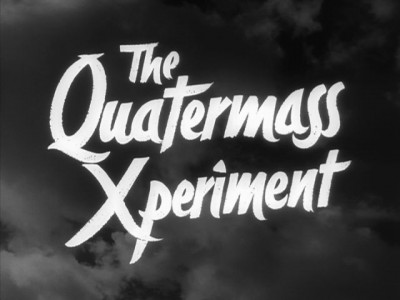
If you mention the word "hammer" to most film buffs, especially horror aficionados, the first thing that will jump into their minds is not a tool for driving nails but the English film studio. From the mid-50's to the 70's Hammer was the dominant horror film studio, holding the same place that Universal had in the 30's and 40's. While the studio had been around since the 30's, mainly shooting "quota-quickies," the equivalent of American B-pictures, but that all changed in 1955 when they released The Quatermass Xperiment (based on the BBC TV serial The Quatermass Experiment that aired two years earlier). The film was incredibly popular and did exceedingly well at the box office. It generated so much buzz that it attracted the attention of United Artists who distributed it in the
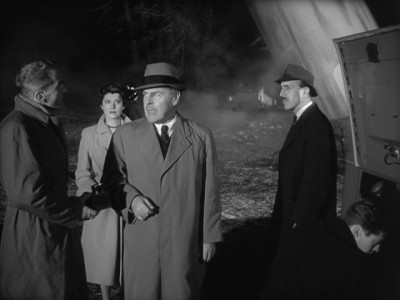
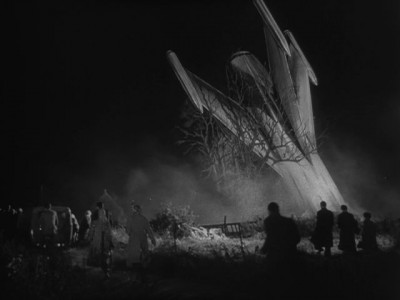
A manned rocket, the first one launched into space, looses contact with its base for hours then crashes back to Earth outside a small British village. The ship is immediately cordoned off by the police, but it's so hot even the fire department can't get near. That's the situation until Dr. Bernard Quatermass (Brian Donlevy), the driving force behind the rocket, arrives on the scene and takes charge. He arranges for the fire department to cool the exterior with water, and then opens the hatch by remote control.
A single astronaut, Victor Carroon (Richard Wordsworth), emerges from the ship and immediately collapses. He's unable to talk and is rushed off to a hospital. When the interior of the ship is examined, the other two space men are no where to be found. Their uniforms are on the ground and there's a lot of strange liquid on the floor, but no sign of the men.
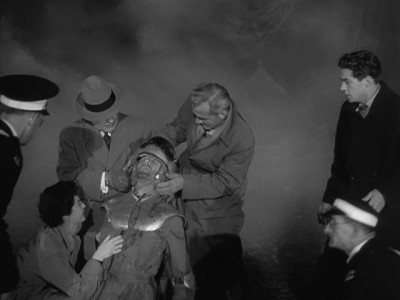
Quatermass and his assistant Briscoe (David King-Wood) set their minds to discovering what happened to Carroon and the fate of his two companions. There are few clues and to make matters worse politicians and the police breathing down the scientists necks, not to mention Carroon's wife, Judith (Margia Dean), who blames Quatermass for her husband's condition.
In an ill conceived move, Judith decides to hire a thug to sneak Victor out of the hospital. While he does escape it goes badly for all those involved. Carroon kills the man who gets him out and scares his wife nearly to the point of insanity. It's clear that something changed him in space, but to what purpose? Now he's free, roaming
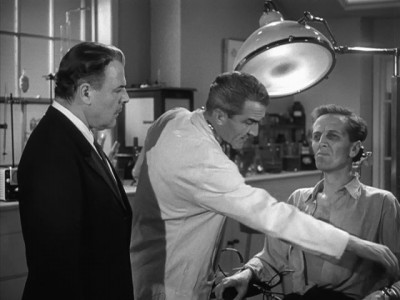
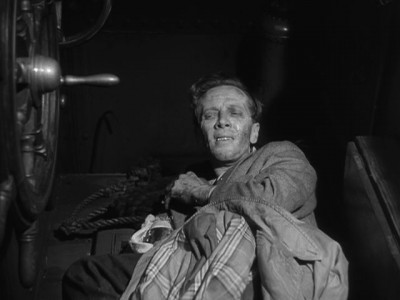
This was a very effective film. Everything from the direction to the acting and even the makeup was very impressive, especially for the time. Director Val Guest films the events almost like a documentary, a sort of fictional cinéma vérité, by filming with hand-held cameras and making good use of location shots. This brings the viewer into the tight script and serves to ratchet up the tension quite effectively. He makes some interesting choices in filming the script that also add to the film's appeal. On of my favorite scenes has Quatermass and Briscoe discussing the nature of the liquid found on the ship. The start talking in front of a glass door, behind which Carroon is in bed with his wife sleeping in a chair. The two scientists walk off, still talking, but the camera stays on the static scene. Soon however, Carroon gets up and slowly starts lurching toward his sleeping wife... all the while Quatermass and Briscoe chat on and on, unaware of what's happening. It was a daring way to shoot the scene and it works beautifully.
The most impressive thing about this movie however was the main character, Dr. Quatermass. Up until this point, scientists in SF and horror films had been weak, absent-minded creatures who did what they were told and when they came up with the way to kill the APE (All Pervading Evil) that was threatening the earth they'd hand the solution to the strong male lead and get out of the way. Bernard Quatermass has nothing in common with those milksops. He's arrogant, pushy, and aggressive. When the police want to know what's going on, he considers it an imposition. When a political flunky warns him to watch out, Quatermass browbeats the worm into silence. The thing that makes him such a great character is that he isn't perfect. He's smart, but he misses things. His hubris is his greatest weakness but when all is said and done, he's often right. The end of the film, with Quatermass walking off into the night planning his next move, followed by a scene that shows what he did, was the perfect way to cap off the movie, leaving it open for a sequel and illustrating just how arrogant Quatermass is.
The DVD:
This disc is made on demand and comes in a standard keepcase with full cover art.
Audio:
The original mono soundtrack is reproduced well on this Dolby Digital disc. The dialog is clear and there isn't any background noise to interfere with the film. It's a nice sounding disc.
Video:
One of the things that I really love about the MGM Limited Edition MOD program is that they go to the trouble to search out the best elements for the films they release. In this case they reportedly went to a 2008 HD master and it looks excellent. (My only disappointment is that it wasn't released on Blu-ray.) The image is clean and crisp and the lines are nice and tight. Contrast is good, especially in the frequent night scenes. The image has a 1.33:1 aspect ratio, which looks correct though it has been reported that it was originally intended to be shown at 1.66:1. There aren't any boom mics in shots or odd compositions. This ratio looks fine.
Extras:
There is a trailer.
Final Thoughts:
This is an important film that should have been on DVD in R1 long ago. It started the Hammer horror films as well as being an entertaining and well crafted film. The MGM MOD disc looks and sounds great too. Highly Recommended.
|



| Popular Reviews |
| Sponsored Links |
|
|
| Sponsored Links |
|
|
| Release List | Reviews | Shop | Newsletter | Forum | DVD Giveaways | Blu-Ray | Advertise |
|
Copyright 2024 DVDTalk.com All Rights Reserved. Legal Info, Privacy Policy, Terms of Use,
Manage Preferences,
Your Privacy Choices 
| |||||||