
| Reviews & Columns |
|
Reviews DVD TV on DVD Blu-ray 4K UHD International DVDs In Theaters Reviews by Studio Video Games Features Collector Series DVDs Easter Egg Database Interviews DVD Talk Radio Feature Articles Columns Anime Talk DVD Savant Horror DVDs The M.O.D. Squad Art House HD Talk Silent DVD
|
 DVD Talk Forum |
|
|
| Resources |
|
DVD Price Search Customer Service #'s RCE Info Links |
|
Columns
  


|
|
|
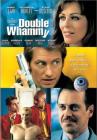
Double Whammy

THE STRAIGHT DOPE:
"Straight-to-video" is a label that few films can survive with their dignity intact. Tom DiCillo's Double Whammy may have its flaws but it is in no way deserving of the cinematic dust bin to which it was assigned by its distributor. When Cinema Gotham took a look at the film and its dilemma last July (click here for the article) it looked likely that the film would never see a theatrical release and that's exactly what happened.
Still, the film is out on DVD and there are a lot of people who'll finally get the chance to see it. Double Whammy is a the slightly superstitious tale of NYPD detective Ray Pluto (Denis Leary), a guy who just can't catch a break. Right from the film's strange, shocking opening scene (in which Pluto's bad back prevents him from stopping a brutal crime) DiCillo alerts the audience both to Pluto's bad luck and the film's odd mixture of comedy and drama. The supporting performances range from cartoonish to gritty as well. A quartet of excellent New York character actors turn in relatively small roles, including Steve Buscemi as Pluto's schlubby, doting partner and Chris Noth as the slick, sharp-eyed Dmitri, Pluto's nemesis on the force. Most surprising of the supporting roles is Luis Guzman, given more to do than his usually bad-ass drug dealer roles allow. DiCillo uses him to excellent effect as the super in Pluto's building. Playing a family man with realistic, recognizable problems (as his daughter, played by Melanie Diaz, storms out of the apartment yelling "I hate you!" Guzman calls after her "No you don't! You love me!" in a sweet, tough, funny way.) Only Victor Argo gets slightly short-changed in the character department, with his police chief blustery and loud but not much more.
The other major player in Pluto's life is his chiropractor, Anne Beamer (Elizabeth Hurley), a woman who's been through the ringer (like Pluto, Beamer was once married) and displays some reservations about going down the relationship road again. DiCillo is smart to use Leary and Hurley in this capacity, as damaged adults having a touch-and-go adult relationship, especially considering how neat and immature romance is in most Hollywood fare. Neither actor is old by any means, but they both have a rumpled, lived-in quality that the starlets of mainstream cinema are a decade away from. Leary is up to the challenge, giving Pluto a gravity that lets you know he's real even though he doesn't always take himself or his life seriously. Hurley tries more here than she usually does but she's still not entirely convincing. She never really manages to get past being Liz Hurley, model and actress, and into her role.
But we also don't really know much about her character. Pluto, on the other hand, has a lot of backstory, including a tragedy for which he blames himself. He's a post-something cop-flick hero, less heroic than just there, taking responsibility on his own shoulders even for things that are totally out of his control. Even by the film's somewhat open-ended finale he never really figures out what happened (Noth's character, however, does) but he still feels the need to work out the emotions.
There's another plot in Double Whammy that needs to be mentioned. Donald Faison and Keith Nobbs play Pluto's neighbors, a screenwriting duo determined to write the next Reservoir Dogs. While on the one hand DiCillo takes pot-shots at Tarantino with this Cannes-worshiping duo, he also introduces another layer to the film. Double Whammy features a lot of samples of overblown media coverage (lots of New York Post headlines calling Pluto "Loser Cop") and this helps make DiCillo's point about the hunger for tragic, violent stories by the public. Without resorting to Oliver Stone hysterics, DiCillo shows us the crime, shows us the so-called news media treatment of it, and shows us the guys writing the shoot-em-up fictional film based on it. From street to print to screen in three easy steps.
VIDEO:
The anamorphic widescreen video looks crisp and colorful. DiCillo and cinematographer Robert Yeoman (who usually works with Wes Anderson) shoot New York in a variety of styles, from realistic to comic book-ish, and the transfer handles all the styles. Compression is not overly apparent and the image is clear and sharp.
AUDIO:
The Dolby Digital 5.1 soundtrack is pretty good. Voices are clear and the diverse score sounds snappy.
EXTRAS:
The only extra of note is the commentary track from DiCillo and John Anderson, a writer for the New York Daily News. This is a particularly interesting commentary given the problems that plagued the film's release. Near the end DiCillo says that the difficulty the studio gave him has made him re-evaluate filmmaking as a career and he sounds like he means it. Given how much fun it seems like he had in the actual making of the film, however, it's doubtful he'll really call it quits just yet. Critics have been unfair to Double Whammy, really jumping on its flaws, but DiCillo and Anderson do a nice job of discussing the film's strong points.
There is also a trailer, accessible by clicking on the Lion's Gate logo.
FINAL THOUGHTS:
Double Whammy is an occasionally challenging, occasionally clumsy film with some very funny performances (especially Buscemi, Nobbs and Faison). Fans of the cast or of slightly-off-kilter independent films should give it a try. It puts a spin on the police procedural that takes what could have been played for straight grit and makes it quirky and unpredictable. DiCillo obviously enjoys switching gears, sometimes mid-scene, and the fact that some viewers will get lost along the way is inevitable. Still, Double Whammy is solid and deserves a shot.
|



| Popular Reviews |
| Sponsored Links |
|
|
| Sponsored Links |
|
|
| Release List | Reviews | Shop | Newsletter | Forum | DVD Giveaways | Blu-Ray | Advertise |
|
Copyright 2024 DVDTalk.com All Rights Reserved. Legal Info, Privacy Policy, Terms of Use,
Manage Preferences,
Your Privacy Choices 
| |||||||