
| Reviews & Columns |
|
Reviews DVD TV on DVD Blu-ray 4K UHD International DVDs In Theaters Reviews by Studio Video Games Features Collector Series DVDs Easter Egg Database Interviews DVD Talk Radio Feature Articles Columns Anime Talk DVD Savant Horror DVDs The M.O.D. Squad Art House HD Talk Silent DVD
|
 DVD Talk Forum |
|
|
| Resources |
|
DVD Price Search Customer Service #'s RCE Info Links |
|
Columns
  



 
|
|
|
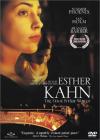
Esther Kahn
I like historical films a great deal. Simply by virtue of having a setting in the past, a film gets a certain amount of "bonus credit" when it comes to me liking the movie, which has on occasion been enough to make an otherwise so-so film reasonably enjoyable. But then there are movies like Esther Kahn, which used up its entire stock of bonus credit in about the first five minutes and started trending steadily downward from there.
Based on a 1905 short story by Arthur Symons, Esther Kahn tells the story of a young girl, Esther Kahn (Summer Phoenix), who grew up in poverty but ended up finding a vocation in acting, despite her inability to relate emotionally with anything in her life. On the surface, Esther Kahn appears potentially interesting, and the production values appear fairly high; what is it that doesn't work?
Well, to start with, the movie gets off on a shaky footing with a set of scenes showing us Esther's neighborhood and snippets from her early life. From the setting, it appears to be set in the 19th century, but both the exact time and the location is curiously ambiguous: is it set in a Jewish district in an English city, or it set in another country, even Israel perhaps? The language issue is muddied, with a blend of Hebrew and English that's at times suggestive that there are two languages being spoken, and at times that they are all speaking Hebrew but having it represented in English for the viewer. It does eventually become clear that we're dealing with 19th century England here, but it's rather clumsily handled. A small issue? Perhaps, but crucial when it comes to understanding the social and cultural context of the story... especially a story that leaves so much unsaid.
Esther herself comes across as an emotional zombie, though there's no traumatic experience or other rationale given for her apathy and coldness even as a child. Certainly some people may simply be like that from birth, but they're not necessarily particularly interesting to watch movies about. The question in my mind was "Why should I care?" and no adequate answer was ever supplied.
Intellectually, I can recognize that Esther Kahn is a film about acting, about Esther struggling to match up her lack of an inner emotional life with the ability to imitate feelings that she doesn't have. But a cold, unfeeling, almost inhuman protagonist is a dangerous element in a film, and Esther Kahn doesn't turn out to have the resources to deal with it. Rather than drawing the viewer into a complex personality as it develops, the film shuts the viewer out from the very beginning, leaving the events of the film to play out as empty actions without meaning.
I might have forgiven the bland characterization, unfocused plot, and even the badly-established historical context, if Esther Kahn had been artistically interesting, but it's not. A bland narrator's voice provides a voiceover consistently throughout the film, but being told about Esther's emotional state is no substitute for seeing the character experience it or seeing the story unfold in a meaningful way... not to mention that the narrator does a singularly poor job of reading his material, giving it an irregular and unconvincing inflection. The overly pretentious cinematography was the final straw in making me dislike the film; sometimes conventional and sometimes appearing to indulge in peculiar camera movements for their own sake, and overindulging in visual tricks at the start of the film, it's yet another element that distances the audience from the story.
The DVD
Video
Esther Kahn is presented in a 1.85:1 anamorphic widescreen transfer. The image is consistently fairly soft, and some edge enhancement is visible throughout the film, more so in some scenes than in others. However, there's little noise and no print flaws in the transfer.
The film's color palette is sharply divided between "cool" and "warm" scenes. The "cool" scenes take place in Esther's neighborhood and in her acting lessons in the empty theater, and are largely presented in tones of black, gray, and brown, while the "warm" scenes are of her on the lighted stage in her actual performances, with much richer red and gold colors and greater detail. The warmer-colored scenes actually don't look as clean as the darker, cooler scenes, as the edge enhancement and general softness of the image is more apparent in these scenes.
Audio
Viewers have the choice of a Dolby 5.1 soundtrack and a 2.0 soundtrack, which is the default setting; the two sound fairly similar as the 5.1 track doesn't make much use of the surround channels. The sound is adequate, if not outstanding; environmental noises and sound effects are carried clearly, but dialogue tends to be a bit flat.
Extras
The Esther Kahn DVD has a few minor special features, but nothing of particular note. A short interview with Summer Phoenix is the first of the extras; it's a fairly generic promotional-style interview with several clips from the film interwoven. One deleted scene, from the early part of the film dealing with Esther's childhood, is included in anamorphic widescreen. For miscellaneous special features, we get a trailer, web links, cast filmographies, and text information on other films by director Arnaud Desplechin.
Final thoughts
Esther Kahn fell as flat as the proverbial pancake for me, but I'm willing to concede that its rather pretentious style may simply have rubbed me the wrong way. For those who are interested in the period setting or the specific actors involved, this film might be worth a rental to see if your opinion coincides with mine. The DVD isn't outstanding in its transfer quality, but it will be satisfactory for those who already enjoy the movie and are looking to add it to their collection.
|



| Popular Reviews |
| Sponsored Links |
|
|
| Sponsored Links |
|
|
| Release List | Reviews | Shop | Newsletter | Forum | DVD Giveaways | Blu-Ray | Advertise |
|
Copyright 2024 DVDTalk.com All Rights Reserved. Legal Info, Privacy Policy, Terms of Use,
Manage Preferences,
Your Privacy Choices 
| |||||||