
| Reviews & Columns |
|
Reviews DVD TV on DVD Blu-ray 4K UHD International DVDs In Theaters Reviews by Studio Video Games Features Collector Series DVDs Easter Egg Database Interviews DVD Talk Radio Feature Articles Columns Anime Talk DVD Savant Horror DVDs The M.O.D. Squad Art House HD Talk Silent DVD
|
 DVD Talk Forum |
|
|
| Resources |
|
DVD Price Search Customer Service #'s RCE Info Links |
|
Columns
  


 
|
|
|
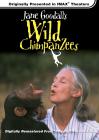
Jane Goodall's Wild Chimpanzees
In the tropical forests of Africa live beings very much like us. Part of a complex social structure, they play with each other, socialize, and sometimes fight their neighbors; they're greatly concerned with social status and being on good terms with the boss. Like us, they make and use tools, and share with us all the emotions of happiness, anger, sadness, joy, curiosity, and humor. No, these aren't aliens in a science fiction movie: these are chimpanzees, and it has been Dr. Jane Goodall's vocation for more than forty years to learn about these fascinating cousins to Homo sapiens, and to educate us humans about the fellow creatures who, sadly, find their homes and their lives threatened by the encroachment of human beings.
Jane Goodall's Wild Chimpanzees takes us into the heart of the Gombe nature preserve to get to know the chimpanzees themselves as well as Dr. Goodall's work. Setting the tone for its impressive use of nature photography, the film opens with forty-year-old footage of the young Jane Goodall on her first research expedition to Africa, including her very first contact with the chimpanzees; this is the real thing, not a reenactment. In the modern footage, the camera has captured a wide range of chimpanzee behavior, and we really get a fascinating glimpse of chimpanzee life as we see them interacting with each other and with Goodall.
But Jane Goodall's Wild Chimpanzees is more than a collection of interesting scenes of the chimpanzees. First and foremost, the film sets out to depict the work that Goodall has done at the Gombe wildlife preserve; in this way, it's very much a tribute to the forty years' labor of love that has been Goodall's work. While the film doesn't go into detail on Goodall's findings, we do learn about the findings that she made that revolutionized the study of primates... and that shook up established views about what (if anything) sets humans apart from the other primates. Not only do we hear Goodall describing her discovery of chimpanzee tool-making and tool-using, we see footage of the chimps themselves doing so. Another very interesting segment shows how chimpanzees have culture, and shows several examples from chimpanzee populations across Africa.
In this sense, Jane Goodall's Wild Chimpanzees is an appreciative but realistic depiction of scientific field research: we get a sense both of the time and patience necessary for Goodall's breakthroughs, and of the significance of these findings. Nor does the film romanticize the chimpanzees: Goodall herself tells us how her observations of the chimps' behavior shattered her own illusions about them as "unspoiled" creatures with none of the violent behavior found in humans. Indeed, humans and chimpanzees share a great deal in the fundaments of our behavior.
More than just focusing on Goodall's research, though, the film brings the viewer into the chimpanzees' world, where we get to know chimps like the elderly matron Fifi, the brutal leader Frodo, and a rare set of twins cared for by their devoted mother. After only a few minutes of seeing these primates in their natural environment, playing, grooming, and interacting with each other, it's startlingly clear just how human are these beings. Indeed, chimpanzees are the closest living relatives of Homo sapiens, and Jane Goodall's Wild Chimpanzees shows dramatically that there are strong cultural and social similarities between us and chimpanzees. As a species, we humans very much need to shake the long-held egocentric view of ourselves as somehow different and better than the "animals": the film gives a strong push in the right direction, with the footage of the chimpanzees themselves speaks for itself in showing that the chimps are, in a nutshell, people... not quite people like us, but close enough that there's a shock of recognition when we see the inquisitive brown eyes of a young chimp looking into the camera.
When the credits rolled on Jane Goodall's Wild Chimpanzees, I very much wanted to know more: more about chimpanzee behavior, more about the baboons who are mentioned briefly but in a very interesting manner, more about the chimps' forest habitat, more about the current research. In short, it's a sign that the film did a great job of stimulating interest in the topics mentioned. When I thought back on all the material that had been introduced in the film, I was amazed to realize that it had all been fit into only forty minutes. Jane Goodall's Wild Chimpanzees is an extremely content-rich film, in fact much more so than I expected from an IMAX piece; without ever feeling like it's crammed in, every minute of the film offers some new insight, whether it's Jane Goodall reflecting on her experiences or footage of the chimps at play.
The DVD
Appropriately for a film whose message emphasizes reaching out beyond national boundaries, Jane Goodall's Wild Chimpanzees is a Region 0 (all region) disc, and will be playable on all NTSC-compatible DVD players.
Video
Jane Goodall's Wild Chimpanzees looks very good in its DVD release, thanks to Slingshot's careful transfer. The film, which is presented in its original aspect ratio of 1.33:1, has a nicely clean print, with no noise visible even in the dramatic open shots of blue skies, and no print flaws either. I was particularly pleased to notice the complete absence of edge enhancement as well. Colors are natural-looking and vibrant. The image does tend to be a little on the "soft" side, but all in all it's a pleasing transfer.
The one problem I have with the IMAX format (and this is nothing that they could do anything about) is that the effect of the visuals doesn't fully translate to the home theater. When an IMAX film, which is in the 4:3 aspect ratio, is played on the IMAX screens, it fills the viewer's field of vision completely simply by its sheer size, but on the smaller home theater screen it just doesn't have the same immersiveness as a widescreen image would have. That said, the visuals are still very enjoyable and impressive to watch; just don't expect the "wow" factor to be as high as in the original theater.
Audio
Where Jane Goodall's Wild Chimpanzees really shines is in its audio tracks: an incredible DTS track as well as a Dolby 5.1 track. There's also a dubbed French soundtrack which is very pleasingly also given a Dolby 5.1 treatment. The default track is the English Dolby 5.1.
The DTS soundtrack is simply outstanding, offering an incredibly immersive surround experience. The film's beautiful and energetic musical score is used extremely well. More than just filling the surround channels, it has been balanced so that different instruments are distinctly heard in different locations: the experience is that of sitting right in the center of the orchestra as it performs. The jungle sounds are similarly handled, with the surrounds used extremely well to localize all the sounds, from the calls of the chimps themselves to the sounds of wind and rain in the trees. On top of that, the dialogue is always crystal-clear, both Jane Goodall's pleasant and quietly understated voice and that of the overall narrator. The overall sound is rich, full, and completely clean.
The Dolby 5.1 soundtrack is also very good indeed, with excellent use of surround and the same overall clarity. It doesn't have the same richness and depth that the DTS track does, though, and the surround sound isn't as impressive; this is a DVD that amply demonstrates why having a DTS decoder is a good thing.
Honestly, I couldn't think of any way that the soundtrack for Jane Goodall's Wild Chimpanzees could be any better than it is, and certainly the amazing sound contributes a great deal to the enjoyable nature of the program. The DTS sound is so good, in fact, that viewers may want to consider picking up the DVD not just for the very good feature, but also to use as a demonstration disc. With its amazing soundtrack, it will certainly show off the highlights of any audio setup very well.
The DVD comes with the option of English subtitles; rather oddly, these are on by default. Fortunately, it's possible to turn them off on the fly.
Extras
Jane Goodall's Wild Chimpanzees comes with a nice set of special features that definitely adds value to the DVD. Of most interest is a fifteen-minute behind-the-scenes featurette that really illuminates the challenges of shooting the film. There's also a full commentary for the film by director David Lickley; he has some interesting things to say about the making of the film, but I was disappointed to notice that portions of the audio commentary are duplicated from the behind-the-scenes featurette.
Another short but interesting featurette walks the viewer through the process of scoring and recording the film's musical score. "Jane's Message" is a four-minute piece in which Jane Goodall explains the work that her foundations do for the chimpanzees and the humans in Africa, such as her Roots and Shoots conservation/education program. There's also a cute interactive "chimpanzee trivia" game, a short promotional clip for Science North, a Canadian science museum that helped fund the film, a trailer for the film, and a set of trailers for other Slingshot nature-themed films.
Final thoughts
Jane Goodall's Wild Chimpanzees is a remarkably substantial documentary for being only forty minutes long; it combines intriguing information with great nature photography to offer an intelligent look at Goodall's work and the chimpanzees at Gombe. The icing on the cake is that the DVD has very good video quality and an absolutely stunning DTS audio track; this DVD is highly recommended.
|



| Popular Reviews |
| Sponsored Links |
|
|
| Sponsored Links |
|
|
| Release List | Reviews | Shop | Newsletter | Forum | DVD Giveaways | Blu-Ray | Advertise |
|
Copyright 2024 DVDTalk.com All Rights Reserved. Legal Info, Privacy Policy, Terms of Use,
Manage Preferences,
Your Privacy Choices 
| |||||||