
| Reviews & Columns |
|
Reviews DVD TV on DVD Blu-ray 4K UHD International DVDs In Theaters Reviews by Studio Video Games Features Collector Series DVDs Easter Egg Database Interviews DVD Talk Radio Feature Articles Columns Anime Talk DVD Savant Horror DVDs The M.O.D. Squad Art House HD Talk Silent DVD
|
 DVD Talk Forum |
|
|
| Resources |
|
DVD Price Search Customer Service #'s RCE Info Links |
|
Columns
  



 
|
|
|
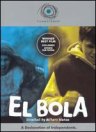
El Bola
Best Film, Best New Director, Best New Actor, Best Original Screenplay: a film that scoops up such a sizable number of top awards in its country's national awards is one that merits close attention. Such is El Bola, the film by Achero Mañas that caused a splash at the 2000 Goya awards (the Spanish equivalent to the Academy Awards).
Mañas shows great confidence with his story from the very first scenes, showing a group of young teenaged boys playing a dangerous game on a railroad track on the outskirts of their Madrid neighborhood. This image of the onrushing train, and the potentially lethal consequences of the boys' game, recurs throughout the film, keeping the viewer always aware of the life-and-death nature of even seemingly small issues.
We meet young Pablo (Juan José Ballesta), nicknamed "El Bola," as well as his seemingly ordinary working-class family; a little later, we meet Alfredo (Pablo Galán), a new boy at school whose family is much less conventional. El Bola challenges us to look beyond the surface, offering us a portrait of two young boys who live quite different lives... the most important insight for the viewer being to see that the differences lie not in the surface details of their lives, but in their more important family relationships.
In seeing the typical activities of the boys, from family dinner to how they spend their free time, we get a glimpse of a different culture than in the United States, which gives El Bola an additional depth and interest. But the themes of the film are broad and reach beyond cultural boundaries to touch on issues that might be faced by any child growing up in an imperfect world.
The film centers around the perspective of the two boys, giving us a glimpse back into the world of childhood where adults are often mysterious figures who often seem peripheral to the boys' own world that revolves around their friends; at the same time, though, the adults are frighteningly powerful in their capacity to grant or deny happiness or security. At their age, both Pablo and Alfredo are torn between the need for a family to depend on and the desire to strike out on their own; both must also deal with frightening events in their lives.
El Bola may be about a child, but it's far from being a happy nostalgic look at childhood. The central thread of El Bola, as we come to see as the film develops, is child abuse; the film gives this disturbing topic an honest and compellingly realistic treatment, forcing viewers to confront the fact that yes, family relationships can go horribly wrong. Mañas handles the material deftly, never shying away from showing the brutal reality of the situation, but at the same time not presenting a tidy, easily resolved situation. The viewer is really an equal participant in this film: not passively receiving a "message," but compelled to continually re-evaluate and update his or her assumptions and preconceptions about the characters involved. In fact, one of the most chilling insights of the film is never explicitly stated; instead, a few clues scattered throughout the film allow the viewer to put the pieces together independently.
Mañas doesn't so much invert stereotypes as discard them completely: his characters are, one and all, individual human beings. The conclusion of the film is as honest as the rest of it: the viewer will find a sense of closure, but will also realize that this is no fairy-tale "happily ever after" ending. Satisfying and unsettling at the same time, in the end, El Bola offers an unexpected development of a story and characters who have come to seem very real.
The DVD
Video
El Bola is presented in a non-anamorphic widescreen transfer that preserves the film's original aspect ratio of 2.35:1. In general, the transfer is very good, and if it had been anamorphically enhanced it would have gotten four stars. The picture is very clean, with no noise appearing at all, and only a very occasional minor print flaw. Edge enhancement is pleasantly minimal. The image does have a slightly grayish tint to it overall; it's slight but it does change the color balance slightly. Contrast is a touch on the harsh side, with a few very dimly-lit scenes being a bit overly dark, but on the whole it's quite satisfactory.
I was very pleased to see that the English subtitles offered for El Bola are optional.
Audio
El Bola's original Spanish soundtrack is delivered in Dolby 2.0. The sound quality as a whole is quite good, with a clean-sounding track that effectively balances dialogue and environmental effects. Viewers may have some trouble understanding the children's speech, as they tend to mumble at times and to use a lot more slang and to speak less clearly than the adults in the film, but this is to a great extent reflective of how children tend to speak in general, rather than a problem with the soundtrack. Optional English subtitles are provided.
Extras
The El Bola DVD is nicely rounded out by its special features. A short behind-the-scenes featurette takes a look at the making of the film; a theatrical trailer and biographies of the actors and directors are also included. There's also a preview for another Film Movement DVD: Richard Lowenstein's He Died with a Felafel in His Hand.
The standout special feature on El Bola, though, has absolutely nothing to do with the feature itself: it's the inclusion of a short claymation film by Mark Osborne, titled MORE. Only slightly over six minutes long, and accompanied only by music, this film packs a tremendous amount of insight into human longing and the pressures of society into a tiny, scintillating package. With its expressive claymation protagonist and its psychedelic animated sequences, MORE wins hands down the prize for most unexpectedly impressive short film. I have no idea why Film Movement chose to include it with El Bola, but I'm glad they did.
Final thoughts
El Bola is the perfect antidote for viewers who are sick of saccharine "movie of the week" treatments of domestic violence. A compelling look into the life of a young boy and his new friend, El Bola doesn't back down on acknowledging either the complexity or the horror of the situation, and doesn't take any easy ways out. Film Movement has given this award-winning film a solid DVD presentation, with a good (if non-anamorphic) video transfer, good sound, and interesting special features. It's highly recommended.
|



| Popular Reviews |
| Sponsored Links |
|
|
| Sponsored Links |
|
|
| Release List | Reviews | Shop | Newsletter | Forum | DVD Giveaways | Blu-Ray | Advertise |
|
Copyright 2024 DVDTalk.com All Rights Reserved. Legal Info, Privacy Policy, Terms of Use,
Manage Preferences,
Your Privacy Choices 
| |||||||