
| Reviews & Columns |
|
Reviews DVD TV on DVD Blu-ray 4K UHD International DVDs In Theaters Reviews by Studio Video Games Features Collector Series DVDs Easter Egg Database Interviews DVD Talk Radio Feature Articles Columns Anime Talk DVD Savant Horror DVDs The M.O.D. Squad Art House HD Talk Silent DVD
|
 DVD Talk Forum |
|
|
| Resources |
|
DVD Price Search Customer Service #'s RCE Info Links |
|
Columns
  


|
|
|
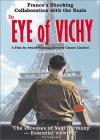
Eye of Vichy, The
THE STRAIGHT DOPE:
Bashing France has become a popular pastime of late thanks to that nation's opposition to the US call to war on Iraq. The big problem with hating the French over this issue is that it leads to direct comparisons between Saddam Hussein and Adolf Hitler. This is a ridiculous game to play - which maniacal dictator is worse? - but at root is a bitterness over the perceived slight considering France's behavior during World War II, when the United States essentially rescued France from Nazi domination. Eye of Vichy is a compilation of WWII-era propaganda created by France to show how much they loved Hitler and even with the stodgy production style it's plain to see why some might look at France's foreign policy with a drop of suspicion.
The short story is that Germany invaded France in May of 1940 and France, under the leadership of Prime Minister Petain, almost immediately folded. This isn't necessarily such a black mark for France: Germany was creaming them and Petain was left in the unenviable position of deciding whether to sacrifice countless of his countrymen or to gamble on giving in and seeing where it led. The response of the French people was surely as complex and varied as any nation's would have been. The Eye of Vichy, however, isn't about the general population, just the government's public statements. The propaganda of the Vichy government is so cheerful and thrilled that it boggles the mind, hindsight or not. Look, as wonderful German soldiers help put out a fire! Wow! French citizens are happy to cheer the German soldiers on! When Germany suggests that they'll free one French POW for every two French citizens that join the German workforce it's obviously the ploy of a confident, overbearing nation. But when France starts sending over workers simply out of solidarity things get ugly. By the time France helpfully starts loading its Jews onto trains for the Germans and shipping them to concentration camps Vichy looks pretty damn disgusting.
The Eye of Vichy is a fascinating historical document. The chance to watch vintage propaganda with little interruption doesn't come around often and when it's on such fertile political and social subject matter as this it demands attention. I'm not a political analyst and will spare you any interpretation of how France's behavior in the early 1940's applies to today's touchy situation but I will say that there's a reason why the name Petain doesn't hold the same power as Roosevelt and Churchill or Hitler and Mussolini. History doesn't look kindly on a sniveling toad and The Eye of Vichy shows plainly - in Petain and his administration's own words - how sometimes war can make a man into a mouse.
VIDEO:
The vintage newsreel footage here looks quite good. Obviously beaten up over time, the full-frame black-and-white images are strong and often clear. Obviously this location footage wasn't shot under the best circumstances and probably hasn't been stored properly either, but it's quite watchable. The transfer is well-handled, with some obvious compression, but mostly acceptable images.
AUDIO:
The Dolby stereo sound is, expectedly, simple and direct. Still, like the picture it has held up well.
EXTRAS:
The only extra of note is an unexciting set of still photos.
FINAL THOUGHTS:
Eye of Vichy is a fascinating piece that functions on several levels: As a history, thanks to the modern perspective, as a study of the use of propaganda as a medium for delivering a message, and as an analysis of France's behavior in World War II. Many viewers will likely watch it for comparisons with France's current foreign policy (You'll notice that I've been a good boy and haven't engaged in France bashing!) and certainly it is valuable for that. But even beyond the world's current predicament, Eye of Vichy has lessons about the way governments work.
|



| Popular Reviews |
| Sponsored Links |
|
|
| Sponsored Links |
|
|
| Release List | Reviews | Shop | Newsletter | Forum | DVD Giveaways | Blu-Ray | Advertise |
|
Copyright 2024 DVDTalk.com All Rights Reserved. Legal Info, Privacy Policy, Terms of Use,
Manage Preferences,
Your Privacy Choices 
| |||||||