
| Reviews & Columns |
|
Reviews DVD TV on DVD Blu-ray 4K UHD International DVDs In Theaters Reviews by Studio Video Games Features Collector Series DVDs Easter Egg Database Interviews DVD Talk Radio Feature Articles Columns Anime Talk DVD Savant Horror DVDs The M.O.D. Squad Art House HD Talk Silent DVD
|
 DVD Talk Forum |
|
|
| Resources |
|
DVD Price Search Customer Service #'s RCE Info Links |
|
Columns
  


 
|
|
|
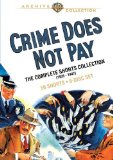
Crime Does Not Pay: The Complete Shorts Collection
Warner Archive // Unrated // July 6, 2012
List Price: $49.99 [Buy now and save at Wbshop]
The Movie:
During the Great Depression MGM was the movie studio. With the biggest stars (and boasting that they had "More Stars than There are in Heaven") and a solid cash flow (it was the only studio to pay dividends through the depression) they were the studio that every wannabe star dreamed of signing with. Constantly on the look for the next heart throb or celluloid luminary, MGM had a very active shorts department where crew on both sides of the camera could hone their craft (for the new talent) or pass their skills on to the next generation (for the people past their prime). They released several series of shorts that would play before their features including the Dogville Comedies, Our Gang (after 1938), and the Pete Smith Specialties. One of their most well known series is Crime Does Not Pay, a collection of 50 shorts released between 1935 and 1947. The entire series has now been released through the Warner Archive Collection, a magnificent MOD (manufactured on demand) program that distributes lesser know features that wouldn't otherwise see the light of day, and it's one of their best releases yet (and that's saying a lot!)
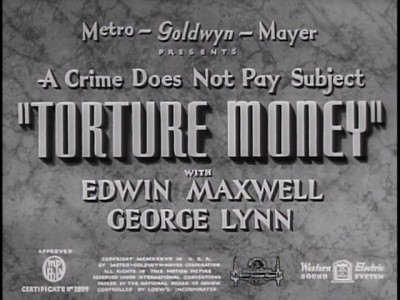
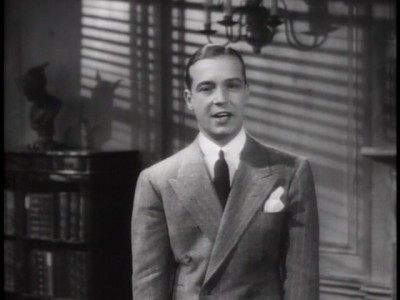
Each short, introduced by the "MGM crime reporter," was a tale cautioning the viewers to avoid a life of crime since criminals never prosper. The crime reporter would interview someone at least tangentially related to crime prevention or protecting the public who would relate an amazing case, all of which illustrated the point that Crime Does Not Pay. Starting at the height of the depression, it was probably seen as a public service to counteract the glamorization of some bank robbers such as John Dillinger, Pretty Boy Floyd, and Bonnie and
The great thing about this series is that each short is a bit different. Some are police procedurals, others are courtroom drama, some are simply cautionary tales showing that even the smartest crook ends up behind bars and they also served as a warning against being conned with several installments devoted to exposing frauds. They weren't cookie cutter plots either; some of them were quite intricate.
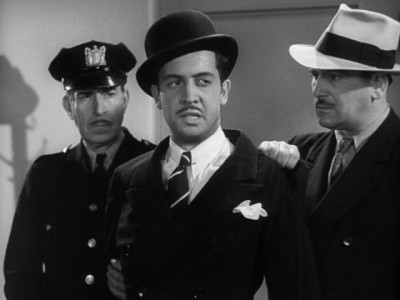
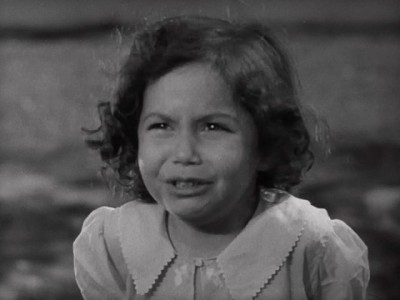
The very first episode is a great tale with several twists. Entitles Buried Loot, it tells the extraordinary tale of a man, Al Douglas, who embezzles $200,000 from the bank where he works and then confesses before he's even suspected. He tells the manager that he's gambled the money away, and he would rather pay his debt to society than spend the rest of his life on the run. He's tried, found guilty, and sentenced to 5-10 years in the pen.
It turns out that Al didn't gamble the money away. He buried it where no one would find it, and after he serves his time he'll dig it up and live on easy street. It's quite a plan until his cellmate starts talking about how things change on the outside and Al starts to worry that his money isn't as safe as he thought it was. Concerned that someone else will find his stash, Al breaks out of jail and runs to
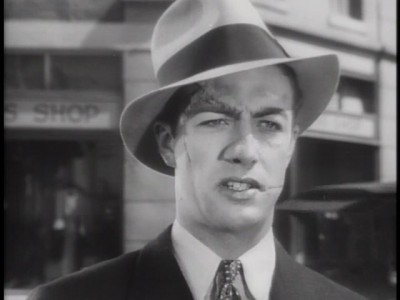
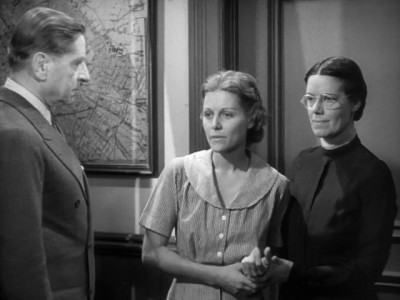
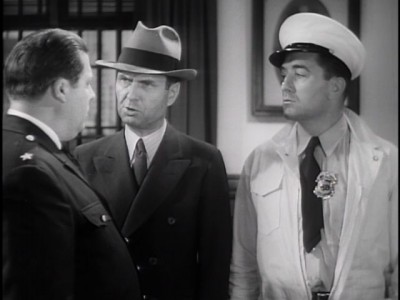
Like Buried Loot, each short is a mini gangster flick filled with a lot (for the time) of violence, sex, and greed. Since these were made at MGM, they have excellent production values too. The sets, lighting, design, and scripts are all top-notch and nearly equal to the features of the time. That should come as no surprise given the people who worked on these films. Some of these were directed by Fred Zinnemann (From Here to Eternity) and Jacques Tourneur (Cat People), and Robert Taylor (Magnificent Obsession,
The Blu-ray:
This MOD (manufactured on demand) set comes on six discs housed in a single-width keepcase.
Audio:
The unrestored original mono soundtrack that goes with each short is surprisingly clean. There's little to no background noise and the occasional pop or crack is pretty rare. Being made in the 30's and 40's the sound quality is limited by the technology of the time, but these all sounded very good and much better than I expected.
Video:
The full-frame image also looks surprisingly good. Not perfect, there is some dirt and print damage here and there, but the contrast is generally excellent and the level of detail is good. Viewers will be very pleased with this collection.
Extras:
Also included is the short Eyes of the Navy, the Top Gun of its day. It shows how much fun, excitement, and travel a young man can have by becoming a pilot in the Navy. Made before the
Final Thoughts:
These shorts are addictive. I kept telling myself "I'll watch just one more..." and was always surprised when it was time to change discs. This is a collection of very enjoyable films made even more so by the sometimes absurd plans the criminal devised. Though the movies are not restored both the image and sound are very good for films that are this old. If you're a fan of gangster movies, shorts, or just classic
|



| Popular Reviews |
| Sponsored Links |
|
|
| Sponsored Links |
|
|
| Release List | Reviews | Shop | Newsletter | Forum | DVD Giveaways | Blu-Ray | Advertise |
|
Copyright 2024 DVDTalk.com All Rights Reserved. Legal Info, Privacy Policy, Terms of Use,
Manage Preferences,
Your Privacy Choices 
| |||||||