
| Reviews & Columns |
|
Reviews DVD TV on DVD Blu-ray 4K UHD International DVDs In Theaters Reviews by Studio Video Games Features Collector Series DVDs Easter Egg Database Interviews DVD Talk Radio Feature Articles Columns Anime Talk DVD Savant Horror DVDs The M.O.D. Squad Art House HD Talk Silent DVD
|
 DVD Talk Forum |
|
|
| Resources |
|
DVD Price Search Customer Service #'s RCE Info Links |
|
Columns
  


 
|
|
|
Day The Earth Stood Still, The
Possibly the most beloved Science Fiction movie of them all, The Day The Earth Stood Still was produced before Hollywood got the notion that this kind of picture could be made dirt cheap, and still draw an audience. After a flurry of top-end product, the space & monster operas were consigned to the independent ghetto, with only an occasional freak like 20,000 Leagues Under the Sea or Forbidden Planet emerging from the studios with the grandeur the genre was capable of providing.
There's a lot to discuss about this appealing, audience-pleasing movie - it's pacifist and fascist at the same time, so captivating that the Watergate liberal students of the 70s didn't look past the 'Socialists from Space' angle to see what kind of conceptual rhubarb writer Edmund H. North was selling. Who cared? The Day The Earth Stood Still pushed the right Cold War buttons, and pulled us into its post-modern thrills. We can save the world, but only if we can remember those three magic words.
The Day The Earth Stood Still was one of Cinefantastique magazine's first classic profile articles of the early 70s; researcher Steve Rubin collected the entire backstory of its making (conceived before Destination Moon , Claude Rains first choice for Klaatu, etc.) and even showed us the first color photos of the production. He also nailed the movie's three dominant themes - two of them hot-button topics that could only be approached through the smokescreen of genre filmmaking. Deservedly or not, this is the cornerstone of Deep-Think Sci Fi of the Liberal Kind.
The first theme is of course the Flying Saucer craze. The Man From Planet X actually touched down first, and was also a confused and potentially benign alien - the Close Encounters of the Third Kind fans who thought all Sci Fi movies featured hostile invaders, didn't realize that the initial efforts, like It Came From Outer Space, that soft-pedaled the menace. Then War of the Worlds hit, and from then on visitors from the stars were all ray guns and destruction.
The Flying Saucer hysteria, based on several hard-to-discount sightings in the late 40s, has since been pegged as a religious phenomenon. Scholars who study belief systems, from Christianity to phrenology, think that people invested their faith in Flying Saucers because they had an immediacy missing from their organized churches. Why not believe in something possible - that an advanced civilization of interstellar people, perhaps our root culture from ancient visitations or migration, would soon come from the skies to solve all our problems? The Day The Earth Stood Still definitely has that feeling, likening the miraculous landing of a space ship to the biblical Rapture - an irrationality best mined in Close Encounters.
Then there's the straight-on Church theme - America was in the throes of a strong revivalist movement, spurred on by electronic preachers like Billy Graham taking advantage of radio and the fledgling TV to spread their Good Word. It was the widening of a political fundamentalist streak that has been growing in America for half a century. The revivalists hit the theme of the Second Coming for all it was worth, and a sizeable segment of the country began living their secular lives, and casting their votes, exactly as dictated from the pulpits.
Unfortunately, the fundamental messages were mostly isolationist, know-nothing, and backward; based on a Love that was 9/10ths paternalistic authoritarianism and Fear. Foreigners, non-whites, non-fundamentalists were all to be considered suspicious, and anybody trying to think freely or improve the system was a dangerous intellectual.
The Fundamentalists and the Anti-Communists fell right into line - the scholars even list 'Anti-Communism' as a belief system. An enemy to loathe seemed to be all the faith many Americans needed - the belief that America had been betrayed to the Russians or the Red Chinese by some Original Sinners who must be rooted out.
The Day The Earth Stood Still shows us an America with problems, that usually were seen only in independent movies, the kind that led to blacklisting and witch hunts. 6 Even if they didn't realize what they were watching, audiences of 1951 recognized the America that greets Klaatu. It's basically a country at perpetual war, railing at enemies on all sides, fearful that their victory over the Nazis had been betrayed, and that maybe we had been fighting the wrong enemy all along. Anything that wasn't working right was blamed on Communists in the government; massive arms, aviation & space research programs were under way to counter perceived superweapons the Soviets were said to be preparing.
On the streets, people were just plain scared. Bombs might fall at any time. Media pundits gained popularity by hyping the invisible menace. People were so suspicious then, the joke went that if Jesus came back, we'd nuke him.
The Day The Earth Stood Still is basically a Sci Fi parable on that theme. The original short story, Farewell to the Master was an okay thriller with a twist - the 'servant' robot Gnut turns out to be the dominant alien, and Klaatu merely the living PR person, along for the ride. Here we get a full-on allegory.
The Christ parallel is very well known. Klaatu comes with a message of paternal authority from all-powerful superbeings. He's murdered by thoughtless and wicked mankind, but returns from the dead with final words of hope for our backward race. Further wrinkles have Klaatu fretting over just the perfect non-violent Miracle to convince mankind of his limitless power; he takes the name Carpenter, etc. One of the first dialogue lines is, "Holy Christmas!" Not often cited is the detail, during a nightttime visit to his ship, of the Army's barbed wire falling across Klaatu's face - a modern crown of thorns.
Klaatu's noble superiority is evident from the beginning; he's only slightly bemused by the authorities' attempt to keep him under lock and key. Sane and rational, he falls into an immediate mutual attraction with war widow Helen Benson and her son - Patricia Neal plays the woman with a perfect sense of dignity and scepticism. She's our surrogate in the story - when she finally buys into Klaatu's mission, defying the military (which seems to be in charge of everything), she basically finds a higher truth to follow than official fear. 7
The religious angle is, I think, what deflected the radar of conservatives in and outside of Hollywood. Except to label leftist writers as traitors, and to regularly rail against Charlie Chaplin, the press and the government ignored movies, particularly such 'insubstantial entertainment' as a lowly Science Fiction film. The fundamentalists probably saw the show as a covert acknowledgement of the rightness of Church over State. And Hollywood was certainly in step with that aspect - the censors' only objection to the script, was to demand that it be made clear that Klaatu's life was of Godly origin.
In his article, Steve Rubin did a beautiful job of placing The Day The Earth Stood Still in American Graffiti -like perspective, going so far as to extrapolate the characters into the 70s. Bobby becomes a casualty of Vietnam, the opportunist Tom Stevens runs for congress, basically becoming Richard M. Nixon. His selfish "I don't care about the rest of the world' might be a mantra for America today.
What he didn't attack head-on was the disturbing Utopia Klaatu brings with him from his 'confederacy of planets' beyond the stars. Jesus preached Love and forgiveness, and a reprieve from the blood & thunder of the Old Testament Jehovah, who had already destroyed the world once in anger. Klaatu doesn't come with a message of enlightenment; he brings no helpful miracles from space, and his race doesn't seem to be very interested in Earth culture. 1
Nope, he's not here to save the heathen, but to smite the wicked. His final speech, a kind of rebuttal to Oswald Cabal's Ode to Conquerors of the Universe in Things to Come, is a final warning, a direct threat, an ultimatum. 2
Klaatu's spacemen don't care about our petty squabbles, and aren't leaving any monoliths behind to help us along. We're to get our act together, or we'll be annihilated without a second thought.
Surely the pacifists of 1951 were ecstatic to hear this labeling of America as the aggressor, a position we of the flaky counterculture cheering section of the early 70s claimed as our own - we had Easy Rider to assure us that America was Evil, dude, with Vietnam as evidence. But did anybody think about the society Klaatu describes? It's a Robotocracy of implacable mechanical policemen who watch over everything, responding to 'aggression' with ruthless force. Klaatu's race has ceded control over everything to the robots, and all is supposed to be just peachy out there - no wars, no dissent. Of course, if they ever decide they don't need robotic executioners on every street corner, they're out of luck - Gort doesn't have an Off switch. The Day The Earth Stood Still is a good think-piece for those who promote Law And Order as a universal solution. Whose law? Whose order? 3
What Klaatu's really selling is membership in a dictatorship far worse than anything Stalin or Mao could dream up - and we're supposed to approve? If what we worship is power, then I suppose so. A classic and perhaps a masterpiece, The Day The Earth Stood Still is a great parable about the petty differences between Earthly nations. If we can get along with a total alien like Klaatu, why can't we just settle our differences with our brother nations and get on with living? Poor Mr. Harley's protest that things are too complicated to fulfill Klaatu's demands, earns the spaceman's dismissal, and our scorn. Klaatu isn't much different from the colonists who went to America or India, couldn't make the natives see things the 'right' way, and started shooting. It's always about brute force, folks. Behind Klaatu at all times stands Gort, the enforcer. Just like a government dominated by the military, it's the weapons that speak the loudest, even when they're just sitting quietly.
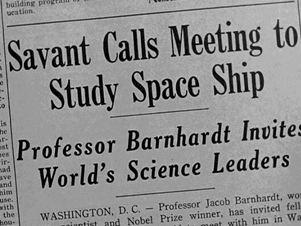
As an emotional experience, there's little in Sci Fi that can beat Robert Wise's show. The documentary surface ups the tension, and Bernard Herrman's sublime score tells the story in its own operatic way. We have rational, likeable characters to root for like Helen Benson and the 'savant' Einstein substitute, Professor Barnhardt, and a villain who's doing the wrong thing (finking on Jesus) for the selfishly right excuse ("Somebody's got to get rid of him!"). 4
Darryl Zanuck's production is sublime. The simple design of the saucer, the robot Gort and Klaatu's garb do indeed seem the products of alien technology. Robert Wise's mixture of Fox location semi-docu stylishness mesh perfectly with his Val Lewtonesque touches of personal unease. Bobby's cross-Mall night walk is as tense as anything in The Cat People; Helen's panic when stalked by a menacing robot is sheer unthinking terror.
The picture manages warm touches and a lively sense of humor, rare indeed in early Sci Fi. Billy Gray is terrific as the normal kid-cum-diamond thief. Klaatu's power outage demo has its amusing aspects, and Professor Barnhardt happily gloats when his secretary admits that she's very frightened.
The sparingly-used but effective optical magic of saucer landings and death rays are superb, greatly aided by sound effects and Herrmann's quavering theremin. With his visor sliding open to reveal a living & pulsing light of death that shoots like a bullet (a reverse ricochet sound, actually), Gort is an inverse Knight of the Round table - one who responds to cold programming instead of a chivalric code.
The Day The Earth Stood Still is so good, and pulls its audience so firmly into its spell, that the inconsistencies of the show only become obvious after repeated viewings. Klaatu's wounding by a nervous soldier gets big gasps and 'boos' from audiences, but the spaceman kind of asked for it - try reaching into your clothing for an unfamiliar device, and holding it up to a crowd of L.A.P.D's best, and see what happens. Klaatu tells us our ignorance is no excuse, but that's a two-way street - and his race could have studied ours if it wanted to. The Army guards the saucer and Gort, a limitless weapon of mass destruction, with only two soldiers, and doesn't even restrict access to the site. At the very least, they'd probably evacuate the city, and bring more troops and firepower around the saucer. A real flying saucer and alien robot is just sitting out on a baseball diamond in the park, and nobody seems to care. After the first day or so, there isn't even a reporter hanging around to see if Gort twitches. If it really happened like this, the Mall would more likely than not be the destination of a mass exodus - everyone on their way to Mecca or to see the Pope would reroute themselves to Washington.
Klaatu apparently loses his life, and returns to us as a zombie on borrowed batteries. But nobody frets over the two luckless Army guards who get dis-zintah-graded (Duck Dodgers-speak) as the aliens vent their rage. And how about the earlier two soldiers? Are they 'konked out' or were their skulls crushed? Does Gort respond with violence to every situation?
Klaatu's language is extremely efficient. Gort, Klaatu barada nikto is the message (and a wrong one - Helen doesn't repeat Klaatu's exact words). If her first two words are names, than barada nikto translates roughly as, "Stash the lady in the ship and call headquarters for instructions." Either that, or it also tells Gort to recover Klaatu's body and warm it up in the microwave.
Gort, a ten-foot metal Golem, burns his way out of a solid block of plastic, marches across a major city, burns down the wall of a jail, and carries Kaput Klaatu back to the Mall - and nobody sees him! That's pretty good when one considers that Klaatu couldn't escape the Army's dragnet an hour before. 5
Relax, Savant, it's just a movie. All of these objections are hooey in a film that keeps us at the edge of our seats, eager to hear every detail and catch every nuance. The poor audience for Klaatu's imperious ultimatum, an international group of scientists, has no power to implement any of his demands. Who listens to scientists? Our days to becoming a burnt-out cinder are numbered indeed.
We're more concerned with the walking-dead version of Klaatu. Does his smile to Helen have a tinge of bittersweet interstellar romance? Has he maybe got a twin brother who'll come back to spirit Helen away to a galactic Casbah, before the curtain rings down on Earth? Or is Gort a death ray-packing chaperone, there to roast playboy Klaatu, should he go soft for the Earth dames, like Captain Kirk?
Also recommended, Mark Bourne's DVD Journal Review of Day The Earth Stood Still, which stays on topic a bit better than Savant, and says as much or more using a fraction of the wordage.
Fox Home Video's Classic Collection DVD of The Day The Earth Stood Still continues the slick video restoration happiness of their earlier titles, especially when it comes to using image enhancement & cleanup technology without destroying the texture of the old b&w image. Savant saw only a few scenes here and there (like Gort's blurred cu, turning to face Klaatu's flashlight) that don't handle the image well. The Day The Earth Stood Still was always an undetailed film: when I saw it in 35mm for the first time, I was surprised to find there was no more detail in Gort, in most anything. What we appreciate here, besides the absence of scratches and mottling that marred earlier videos, are the sparkling highlights in Patricia Neal's eyes, and the forest of wires that support her when Gort carries her off.
The audio gives a choice of Mono original or a synthesized stereo track. I don't believe there was ever a stereo recording of the music. Both sound great - this is one picture that's easy to see for the umpteenth time, just to savor the weirdness of Herrmann's score.
There are a stack of extras on the disc, most of them from the pricey 1995 or '96 laser special edition (my copy succumbed to laser rot, but I still have it). The docu is long but covers all the bases, even though almost all the material is repeated in the commentary with director Wise and host Nicolas Meyer. The most disappointing thing is Patricia Neal's dismissive attitude to the film, which she clearly doesn't want to be remembered as a high point of her career (sorry, but you're too darn good in it, Ms. Neal). Robert Wise is on hand to say that, no, those Christ parallels were NEVER intentional. He can be forgiven for prevaricating, because to say yes would open a can of holy worms that would have to be explained in detail.
The Day The Earth Stood Still is a blatant telegram movie. Its Christian message is ultimately a muddle, but it does communicate some things loud and clear. War is an atrocity to be avoided at all cost. Interstellar peace begins with treating our friends and relatives and everyone we meet, with kindness and respect. And true Christians don't allow suspicion and fear to guide their actions, or mask weakness with blind aggression.
This is one Science Fiction movie that will never fade away.
On a scale of Excellent, Good, Fair, and Poor, The Day the Earth Stood Still rates:
Movie: Excellent
Video: Excellent
Sound: Excellent
Supplements: Commentary by Robert Wise and Nicolas Meyer, Making the Earth Stand Still Documentary, Movietone Newsreel, Restoration Comparison, 5 Still Galleries, Shooting Script, Trailer
Packaging: Keep case
Reviewed: March 15, 2003
Footnotes:
1. Klaatu speaks perfect Oxford English, but is ignorant about the details of how we live - trains, flashlights and locked doors are quaint to him. More importantly, he is unaware of what our wars are really like.
Return
2. The more sensible Spanish-language title that Savant found in reference books is Ultimatum a la Tierra - Ultimatum to Earth. The disc contains a Spanish and a French track, but the Spanish track gives a literal title up front. It may not be the original release Spanish version, because it was obviously made from a composite English track: every time someone speaks, the music drops out. A klunky piano and keyboard cue is crudely inserted over Klaatu's final speech.
Return
3. This became a cautionary message in Colossus: The Forbin Project, about 16 years later - America and Russia hand over their strategic defenses to computers, who immediately take over the world, enslaving us to save us from ourselves.
Return
4. As witness Invaders from Mars and Them!, little tow-headed American boys are the darlings and first boosters of our U.S. Army. Tom Stevens is a known rat right from the beginning. The real Judas of The Day The Earth Stood Still is that jerk kid outside the boarding house who cheerfully tells the M.P.'s that Klaatu Went Thataway.
Return
5. This record for stealth was only broken by Dean Parkin and Bert Gordon in 1958's War of the Colossal Beast: a 60 foot giant breaks loose from his confinement in a hangar at Los Angeles International Airport, and disappears into the city (!) only to turn up later, 22 miles away in Griffith Park! He must have worn quiet tennis shoes.
Return
6. Pictures from the time like Try and Get Me (America is a know-nothing lynch mob, incited by irresponsible newspapers) and The Prowler (the lure of easy money and comfort will corrupt anyone, even our police) helped earn their makers one-way trips into exile.
Return
7. I really like the maturity of Patricia Neal's character. Both this film and The Fountainhead have her in the thrall of a superior super-male. The Ayn Rand character is all sexual confusion and hysteria, but by the end she's cured to find a glorious destiny as the consort of the all-powerful Howard Roarke. By contrast, Helen Benson has already lost the love of her life through war. She's shed her tears and is simply willing to to what's best for her son, even marrying the unpromising Tom Stevens. There's a strong sexual undercurrent to her relationship with Klaatu (and his brute alter-ego, Gort), but Helen keeps her dignity and character intact - she's woman enough to say goodbye to the super-man from space, without as much as a whimper of personal feeling. It's all in the eyes - Helen's is the kind of love than can save the world, and ask nothing for herself.
Return
| |
|



| Popular Reviews |
| Sponsored Links |
|
|
| Sponsored Links |
|
|
| Release List | Reviews | Shop | Newsletter | Forum | DVD Giveaways | Blu-Ray | Advertise |
|
Copyright 2024 DVDTalk.com All Rights Reserved. Legal Info, Privacy Policy, Terms of Use,
Manage Preferences,
Your Privacy Choices 
| |||||||