
| Reviews & Columns |
|
Reviews DVD TV on DVD Blu-ray 4K UHD International DVDs In Theaters Reviews by Studio Video Games Features Collector Series DVDs Easter Egg Database Interviews DVD Talk Radio Feature Articles Columns Anime Talk DVD Savant Horror DVDs The M.O.D. Squad Art House HD Talk Silent DVD
|
 DVD Talk Forum |
|
|
| Resources |
|
DVD Price Search Customer Service #'s RCE Info Links |
|
Columns
  


 
|
|
|
Umineko When They Cry Volume 1 & 2 - Premium Edition
NIS America, Inc. // Unrated // December 4, 2012
List Price: $79.99 [Buy now and save at Amazon]
The Series:
I really, really liked When They Cry the first anime series based on a game of the same name. It was an eerie and macabre show that consisted of several stories taking place in a small town over the same brief time period. The unique thing is that each story was in a different reality: some characters would die in one story but still be alive in the next. That added a lot to the otherworldly feeling of the show. So I was excited when I heard that NIS America, one of my favorite anime publishers, was releasing the sequel series, Umineko: When They Cry, here in region one. Having seen this second series I have to admit that it does not outshine the original. Still, it's a good show and has some spooky sections and some rather grisly moments that make it worth watching.

Every year the prosperous and powerful Ushiromiya family gathers on
No one is sure how sane the family patriarch is either. The story he has told about the creation of the Ushiromiya business is a little... odd. His ancestors were rich and powerful too, until an earthquake destroyed their factories and they went bankrupt. Kinzo says that he met a lady named Beatrice, the Eternal Witch, who gave him ten tons of gold in exchange for his soul when he dies.
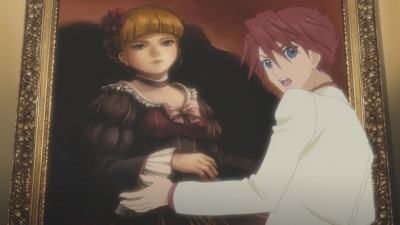
He only saw her that once, but Kinzo fell in love with the witch. In the last few years he has been trying to contact Beatrice, his one wish is to see her once again before he dies. To that end he commissioned a life-sized painting of the mysterious woman. Some say she's really an old mistress and others think she's his illegitimate daughter, but everyone is surprised when Kinzo announces that whoever can solve the riddle of Beatrice's Epitaph, a poem inscribed beneath her painting, will win his ten tons of gold as well as becoming the leader of the family.
As soon as everyone has arrived, a typhoon blows in and the phone lines to the mainland go out isolating the family and the servants, 18 people in all. Soon after that, people start dying in gruesome ways and seemingly impossible circumstances. They are often found in locked rooms with no way in or out. Could the Witch Beatrice really be killing the members of the Ushiromiya family as the epitaph suggests? Many are starting to believe that she is, but not one member of the group, Battler Ushiromiya. He's convinced that there's no such thing as witches and he refuses to believe in them, even when Beatrice shows up in person.
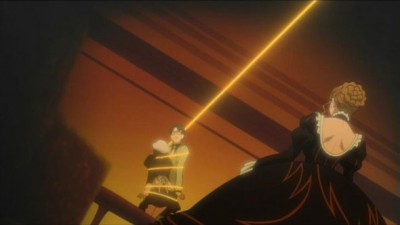
Like the original series, this saga replays the events on the island on that fateful weekend again and again, examining what different people do. It's not a Rashomon-like story though because the main events change with each telling. There are major characters that are added and there are some significant differences between each retelling. But that's one of the show's flaws: they reinterpret the same basic saga several times (as where the first season told different stories with the same characters). Yes, things are different, but the third time that six people die on the first night, it's not really a shock or surprise.
The other mistake that the creators made is that they created a sort of framing device after the first story (I won't explain it for fear of giving too much away) to explain why the same tale is being repeated. This device seemed forced and convoluted, and I would have preferred if they had just left it out, though it does become pretty integral to the story by the end. I liked the way the first series did things better... it just told creepy stories and let the viewer worry about why someone who died in the last one was alive in the next.

Having said that, I have to admit that I really enjoyed watching this series. There were some wonderfully grotesque murders, some very odd mysteries, and some pretty big surprises sprinkled through the show. I have to admit that it did keep me guessing the whole way through, and I always wanted to watch the next installment, even if it was getting late. If you've only seen mecha anime, you might not want to branch out with this particular program, but if you're a fan of the odd and unusual, give it a try.
The Blu-ray:
Like 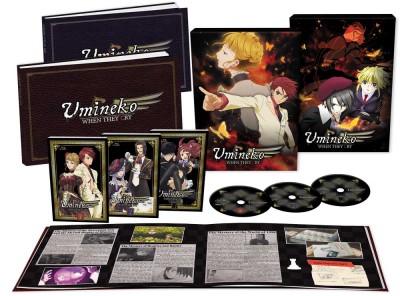
Audio:
This release arrives with the original Japanese soundtrack in lossless LPCM stereo. It sounded very good, with full range and some nice separation. There are optional English subtitles, but there is not a dub track, which is fine with me. I prefer watching anime in Japanese since that was the way it was created to be seen.
Video:
The 1.78:1 anamorphic image looks very good. The colors are strong and solid and they're accurately reproduced and come through clearly. The level of detail is very good and the lines are tight. Digitally it also looked very good with aliasing, which often plagues anime, being nonexistent.
Extras:
The discs themselves include a clean opening and three virgin closings, something I really enjoy seeing, as well as a pair of 'original picture dramas." These are still images with clips of animation from the series that tell a couple of side stories. The two stories, Gala Preparations and Little Spirit Theater, run 19 and 15 minutes respectively so they're almost as long as a full episode. Worth checking out.
In addition there's also a very nice hardcover book included with each set. This time the book reads left-to-right, the way books are read in the
Final Thoughts:
This is a hard show to rate. While I realize it's not prefect and that there are some flaws in the way the story is told, I did enjoy watching it. The show kept me guessing, and while it was hard to keep all 18 characters straight, it's not terribly important to do so. By the time the story is half way over you'll know just who all the players are and how they're connected to each other.
Umineko: When They Cry is a solid program and is recommended.
|




| Popular Reviews |
| Sponsored Links |
|
|
| Sponsored Links |
|
|
| Release List | Reviews | Shop | Newsletter | Forum | DVD Giveaways | Blu-Ray | Advertise |
|
Copyright 2024 DVDTalk.com All Rights Reserved. Legal Info, Privacy Policy, Terms of Use,
Manage Preferences,
Your Privacy Choices 
| |||||||