
| Reviews & Columns |
|
Reviews DVD TV on DVD Blu-ray 4K UHD International DVDs In Theaters Reviews by Studio Video Games Features Collector Series DVDs Easter Egg Database Interviews DVD Talk Radio Feature Articles Columns Anime Talk DVD Savant Horror DVDs The M.O.D. Squad Art House HD Talk Silent DVD
|
 DVD Talk Forum |
|
|
| Resources |
|
DVD Price Search Customer Service #'s RCE Info Links |
|
Columns
  


|
|
|
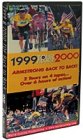
Lance Armstrong Back to Back - 1999 & 2000 Tour de France
2,000 miles. 180 riders. 20 teams. 21 days of racing. 2 mountain ranges. The Tour de France is officially the largest individual sporting event in the world, an athletic spectacle of truly epic proportions... how can it be captured on merely three and a half hours of coverage? Lance Armstrong Back to Back makes an effort to do exactly that, with a total of about seven hours of running time on this four-DVD set, equally divided between the 1999 and 2000 Tours de France. In the 1999 Tour, we see Lance Armstrong tackling this epic three-week race for the first time since his recovery from cancer, and in the 2000 Tour we see his triumphant return to defend his title.
When it comes to race coverage, I admit to being thoroughly spoiled by World Cycling Productions' outstanding DVDs of the one-day Classic races like the Tour of Flanders or Paris-Roubaix. When a race like that is given a full four hours, the idea of compressing 21 days of the Tour de France into a measly 3.5 hours boggles the mind. But is a short Tour better than no Tour at all? Absolutely. It's great to have these two editions of the Tour de France out on DVD, because even though they are more like a light snack than a full meal when it comes to fulfilling the desire to see all the Tour action, it's much better than going hungry.
Lance Armstrong Back to Back appears to be aimed primarily at introducing new viewers to cycle racing, because a substantial amount of the running time of each race is given over to informational pieces on specific riders, retrospectives on past stage and Tour winners, background on the race or the individual stages, and so on. This material provides some very important background that will help new viewers understand and appreciate what's going on.
What I wish, however, is that this material had been included in the special features section rather than interleaved with the actual racing footage. As it is, hard-core cycling fans, or anyone on a second viewing, will end up reaching for the fast-forward button on the remote far too often (not to mention wishing that more space had been devoted to the race itself). The interleaving of the race and supplemental material will prove even more aggravating to cyclists who want to watch the race while riding their bicycle on an indoor trainer, which is a very common way to liven up winter stationary training; you sprint when the riders reach the finish line, use a big gear when the riders are going uphill, and so on, making an otherwise dull training session more fun. I hope that in future DVD releases, WCP will take advantage of the DVD format and create a separate special features section for material like this, and leave the main feature to be exclusively racing.
Let's take a look at the content of the two Tours themselves:
1999 Tour de France
The first fifty minutes or so of the coverage deals with the first five stages, moving through these flat stages quickly but not too much so. The excitement in these stages comes at the end, in the sprint finish, and the coverage for each of them is very well done. The coverage picks up at about the last kilometer of racing, and with a combination of motorcycle shots from the side and helicopter shots giving us a top-down view, we get a great presentation of the tactical maneuvering as well as pure speed and strength on display as the bunch roars up to the line. The bunch sprints in the first week are also particularly exciting in terms of tactics and individual efforts, especially since the green jersey of "most consistent rider" is hotly contested between Erik Zabel and Stuart O'Grady.
The time trial and mountain stages are covered reasonably well, though not in the depth that I'd really like to see. Overall, this Tour isn't as exciting as some of the others, due to the dominance of Armstrong from the beginning; much of the excitement comes from the fight for the other podium positions. Fans of the Spanish climber Fernando Escartin will enjoy his performance here; indeed, the aggressiveness of the Kelme team adds spice to the race on a number of occasions.
A number of "Tour de France Plus" segments provide commentary on various aspects of the race other than what's actually happening on that day's stage, from the doping scandal of the 1998 Tour (and why the ONCE team and rider Richard Virenque are in the 1999 race despite the organizers' objections), to several sprinters' attempts to break the record of the most stage wins in a row at the Tour de France (three), to Mario Cippolini's clothing style (he is often fined by the organization for showing up in non-regulation gear). Not surprisingly, the 1999 Tour coverage features a substantial number of interviews with Lance Armstrong, as well as footage from his various press conferences and public statements.
2000 Tour de France
This Tour shows promise from the beginning of being a more exciting and highly contested race than the 1999 edition. Former Tour winners Jan Ullrich (riding for Telekom) and Marco Pantani are back in the race, along with French legend Laurent Jalabert, riding for ONCE. And this time, no nasty crash in the early stages opens up any killer time gaps among the leaders, so returning champion Armstrong is pitted against his competitors on a more level playing field.
The early sprint stages are very well covered, as in the 1999 Tour, with typically an excellent presentation of the last kilometer or even the last several kilometers showing the tactical maneuvering of the riders and their teams. We get a good sense of the roles of the "lead-out men," those riders whose job it is to pull their team's top sprinter close to the finish line and then drop out, all their energies exhausted, while their leader takes off for a victory bid. The Belgian Tom Steels is a hot contender for the green jersey of most consistent rider, as is Telekom's Erik Zabel and the Australian Robby McEwen.
While the coverage of the sprints is excellent, the tactical moves in the stages that don't end in a bunch sprint are not given as good a treatment. Typically the coverage picks up after the key move of the day has been made, and then just follows the victor, or the small breakaway group, to the finish. Most of the time, we don't get to see the actual key moves, the attacks and counterattacks that are the most interesting part of the race. Unfortunately, this saps some of the life out of stages that could otherwise have been quite exciting.
The major mountain stages are given a decent, if variable, treatment; some (like the Hautacam climb) are reasonably covered, but the example of stages like the Mont Ventoux climb shows what the best coverage is like: here we see the multiple attacks and counterattacks all the way up the climb, with Pantani shaking things up and Armstrong quick to respond. I'd just like to see more of this level of coverage on all the stages.
The DVD
The two Tours de France are spread out across four discs, two for each Tour, packaged in an extra-wide keepcase that securely holds all four DVDs.
Video
The picture overall looks very good, with colors consistently bright, vibrant, and clean, allowing us to easily identify the team jerseys as well as appreciate the visual appeal of the colorful peloton. The level of detail is usually quite good, especially considering that this is taken from broadcast television footage. The image is very clean, with no noise or print flaws at all. We do see a few instances of interference and picture break-up, but this is entirely due to technical difficulties during the race itself, not the DVD transfer; it's not always easy to get the TV signal out, especially when the riders are in the high mountains, or in rainy or very foggy conditions. But this interference happens very seldom, and the rest of the footage looks excellent; all in all, the Tour looks great on DVD.
Audio
The straightforward soundtrack for these races is quite satisfactory. Commentators Phil Liggett and Paul Sherwen are clear and easily understandable throughout the program.
My only quibble is with the 1999 Tour: at times, some portions of this race are presented with background music; the music itself is rather nondescript and is sometimes played almost inaudibly and other times played more distinctly. It doesn't add anything to the viewing experience, and in fact tends to distract from the impression of watching the race "live"; it would have been better if WCP had opted for the music-free style of their coverage of the Classics. Fortunately, this musical experiment seems to have come to an end, and the 2000 Tour's soundtrack is commentary-only.
The sound quality overall is very good and offers a pleasing audio experience, with no background noise or distortion at all.
Extras
There aren't any special features included in this DVD set, though by rights there should be: the "bonus features" are integrated into the main race coverage, instead of being conveniently presented as extras. The DVDs do have chapter stops, but not as many as would be really useful; it would be nice to be able to skip past the "bonus" sections, but these are not self-contained.
The menus are very straightforward and easy to use. I was very pleased to note that the image in the background is a stylish picture of the peloton that doesn't give anything away about the outcome of the race. I mean, we all probably know who wins, but it's nice to be in suspense about the second and third places, so I'm glad to see these spoiler-free menus.
Final thoughts
For new viewers, those who are interested in the exciting world of professional bicycle racing but who don't know much (if anything) about cycling to start with, this is a solid DVD set to start with. Most viewers will be familiar at least with U.S. Postal's lead rider, Lance Armstrong, and by the end of the DVD, viewers will have learned a decent amount about some of cycling's top riders and about cycle racing in general. Also, the double billing of the 1999 and 2000 Tours is a plus for new viewers, because after watching the 1999 edition, viewers will recognize many familiar faces in the 2000 edition and be more able to appreciate the overall tactics of the race. (Viewers who enjoyed the 1999 and 2000 Tours may also want to check out Road to Paris for a look at how Armstrong prepared for his third Tour attempt.)
It's a tougher call for cycling fans... a short Tour is better than no Tour, but it's not really possible to do justice to the Tour de France with only three and a half hours of coverage for each edition. This is, I suspect, why WCP has started producing 8-hour and 10-hour versions of the Tour de France... though for the 1999 and 2000 editions, they're not available on DVD yet. Given the scope and drama of the Tour, these longer versions are what will really do it justice for cycling fans; I hope to be able to report on their merits on DVD in the future.
Lance Armstrong Back to Back is a very good choice for new viewers, and a decent choice for die-hard cycling fans who can't wait for a longer version to be available on DVD; it's recommended.
|



| Popular Reviews |
| Sponsored Links |
|
|
| Sponsored Links |
|
|
| Release List | Reviews | Shop | Newsletter | Forum | DVD Giveaways | Blu-Ray | Advertise |
|
Copyright 2024 DVDTalk.com All Rights Reserved. Legal Info, Privacy Policy, Terms of Use,
Manage Preferences,
Your Privacy Choices 
| |||||||