
| Reviews & Columns |
|
Reviews DVD TV on DVD Blu-ray 4K UHD International DVDs In Theaters Reviews by Studio Video Games Features Collector Series DVDs Easter Egg Database Interviews DVD Talk Radio Feature Articles Columns Anime Talk DVD Savant Horror DVDs The M.O.D. Squad Art House HD Talk Silent DVD
|
 DVD Talk Forum |
|
|
| Resources |
|
DVD Price Search Customer Service #'s RCE Info Links |
|
Columns
  


 
|
|
|
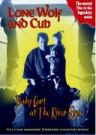
Lone Wolf and Cub: Baby Cart at The River Styx
The Movie
In Tokugawa-era Japan, Ogami Itto was the Shogun's kaishakunin, his official executioner. His swordplay (especially his renowned wave-slicing stroke) was second to none, his position of power coveted by all, and his will and fierce determination indomitable. Everything changed when his wife was murdered and he was framed for disgracing the holy crest of the Shogun. Ordered to commit the ritual suicide of seppuku, Ogami and his son Daigoro instead fled Edo, gaining employment as an assassin and vowing vengeance on the accursed Yagyu clan for destroying his name and murdering his wife. From that point on, father and son walked the Japanese countryside as forces of nature to be feared and hunted, between the six paths and the four lives, treading the road to Hell as Lone Wolf and Cub.
Fair enough: that reads like sales copy, doesn't it? But when it comes to Lone Wolf and Cub, I can hardly call myself an unbiased observer. The manga series upon which the films were based are the stuff of legend: 28 volumes, over 110 installments, and over 3000 pages of art upon which were created one of the richest and most satisfying sagas ever told. To read more about the history of the series, please refer to my review for the first film, Lone Wolf and Cub: Sword of Vengeance, where I wax poetic and gush with unashamed Geek Pride about this phenomenal piece of storytelling.
If Sword of Vengeance, the first in a six-film adaptation of the manga, does have a flaw, it is only because the film exists primarily as set-up. While the manga begins in media res, the first movie shows us Ogami Itto at the beginning of his tale. We see his betrayal, his initial skirmish with the Yagyu clan, his promise of vengeance towards the Yagyus, and one of his first missions as an assassin. In Lone Wolf and Cub: Baby Cart at The River Styx, the story moves into overdrive. Without the baggage of set-up and exposition, the movie is more liberated to explore the world of Lone Wolf and Cub. The plot is better structured, the story more satisfying, and the action, violence, and geysers of bloodshed are increased several notches.
In Lone Wolf and Cub: Baby Cart at The River Styx, Ogami Itto and son Daigoro agree to assassinate a clan defector who holds the secret to his clan's dye-making prosperity and is attempting to deliver it to the Shogun. The legendary Benterai brothers -- three powerful ninja whose legend and deadly prowess make both the yakuza and the Shogunate tremble with apprehension and respect -- are protecting the defector as he travels to Edo. Thus, a bloody showdown with Lone Wolf is inevitable. In the meantime, the Akashi-Yagyu -- an elite clan of deadly female ninja who, in a display of power, perform a Monty Python/Black Knight decapitation number on a fellow Yagyu ninja just to demonstrate their prowess -- have been hired to destroy Ogami at the earliest opportunity.
This movie has everything for the action lover. The blood and body parts fly fast and freely, but Lone Wolf and Cub: Baby Cart at The River Styx is hardly just a violence and gore-fest. There's a poeticism to the affair, a permeating aura of sadness and regret -- the Samurai class slowly but inexorably died during the Tokugawa Unification, and this theme is explored in haunting detail throughout the Lone Wolf and Cub saga. This elevates Lone Wolf and Cub: Baby Cart at The River Styx from being yet another action film. It's a brutal but beautiful entry into a tragic but thrilling storyline.
As the second Lone Wolf and Cub DVD release from AnimEigo, Lone Wolf and Cub: Baby Cart at The River Styx is just as thrilling and satisfying as the first. The presentation is simply wonderful, a testament to the hard work, dedication, and love the company has demonstrated in providing a first-rate presentation of a much-beloved film.
The DVD
Video:
Instead of pushing an inferior product out the door when the demand was high, AnimEigo took the time to properly restore Lone Wolf and Cub: Baby Cart at The River Styx. During transfer and processing, they reduced noise and grain levels while restoring color levels. The result is an absolutely beautiful transfer that does the film a mountain of justice. Presented in its original aspect ratio of 2.35:1 and enhanced for widescreen televisions, the video presentation is very impressive. The color scheme is rich and varied, with a lush palette that never appears bleeding or oversaturated. The sharpness of the transfer displays remarkable clarity and image detail, although there are a few shots that seem slightly soft in comparison with the rest of the film. The transfer does display some scratches, marks, and debris from the negative, but for most of the film the video is relatively clean. Black levels are deep and rich, sporting excellent contrast levels without edge-enhancement or any obnoxious haloing, moiré effects, or jagged edges. Grain levels are visible but minimal, and compression noise and pixellation artifacts are non-existant. If I had to rate the video of this film against the first release, I would say the transfer on this film is just a shade behind in terms of quality. However, the four-star rating is appropriate; this is a beautiful transfer.
Audio:
Presented in Dolby Digital 2.0 in the original Japanese soundtrack language (with removable English subtitles), the audio presentation is very satisfactory if not overly remarkable. This is a center channel affair, with adequate rendering of the dialog and score, although I noticed occasional high-end distortion and clipping on the soundtrack. While the soundstage lacks directionality or aggressive spaciousness in the delivery, in the end it adequately provides a solid audio delivery.
The Extras:
There are four Trailers for other AnimEigo products, including Baby Cart in The Land of Demons, White Heaven in Hell, Zatoichi the Outlaw, and Zatoichi: The Festival of Fire. You can watch any of them individually or play all four at once. (Incidentally, if you are just getting into Samurai cinema, the Zatoichi films are must-viewing!) The Liner Notes section contains twenty-five pages that describe the setting of Tokugawa Japan, the locations of Ogami's travels, the secret of the "untranslated song", and other fascinating background material. This information is also repeated in an interior booklet and is reprinted online at the AnimEigo website. Finally, the Credits section contains the full credit list for the film as well as the AnimEigo restoration team.
Final Thoughts
Again, I have to tip my hat to the folks at AnimEigo for taking the time to present Lone Wolf and Cub: Baby Cart at The River Styx in a magnificent transfer (If you had ever seen the films on VHS, you would be familiar the condition the property was in before restoration: drab colors, video noise, soft transfer, etc.) The movie simply looks great from start to finish.
I'd be the first to admit that the Lone Wolf and Cub movies are action films first and foremost, but they do reward the viewer with something more than simply guts, gore, and decapitations. While perhaps not as lyrical or contemplative as the films of Kurosawa or Inagaki, they retain the majesty and pageantry of feudal Japan while presenting the tenets (and the eventually demise) of bushido, the Samurai code. This film adapts some of my favorite Lone Wolf and Cub stories, including the brilliant Flute of the Fallen Tiger, and the on-screen presentation of some of the greatest tales told by manga legends Kazuo Koike and Goseki Kojima is rich and satisfying, from both a visceral and narrative standpoint. With a great film and an excellent transfer, AnimEigo's Lone Wolf and Cub: Baby Cart at The River Styx DVD receives a well-deserved recommendation.
Please note that the Lone Wolf and Cub: Baby Cart at The River Styx DVD can only be ordered from AnimEigo's web site (http://www.animeigo.com), and will available at finer retail/online stores everywhere by late-summer 2003.
|



| Popular Reviews |
| Sponsored Links |
|
|
| Sponsored Links |
|
|
| Release List | Reviews | Shop | Newsletter | Forum | DVD Giveaways | Blu-Ray | Advertise |
|
Copyright 2024 DVDTalk.com All Rights Reserved. Legal Info, Privacy Policy, Terms of Use,
Manage Preferences,
Your Privacy Choices 
| |||||||