
| Reviews & Columns |
|
Reviews DVD TV on DVD Blu-ray 4K UHD International DVDs In Theaters Reviews by Studio Video Games Features Collector Series DVDs Easter Egg Database Interviews DVD Talk Radio Feature Articles Columns Anime Talk DVD Savant Horror DVDs The M.O.D. Squad Art House HD Talk Silent DVD
|
 DVD Talk Forum |
|
|
| Resources |
|
DVD Price Search Customer Service #'s RCE Info Links |
|
Columns
  


 
|
|
|
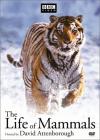
Life of Mammals, The
Every now and then, a documentary film comes along that makes you sit up and take notice of the world around you: it makes you realize what a wondrous world we live in, appreciate the amazing complexity of life, and feel the exhilaration of learning new things. The Life of Mammals is one of these documentaries, doing for the world of mammals what Blue Planet: Seas of Life did for the oceans and Cosmos did for science in general. Written and narrated by David Attenborough, who is famous for his wildlife programs including The Living Planet and The Life of Birds, The Life of Mammals is everything that a documentary should be: fascinating, compelling, intelligent, and stunningly beautiful.
The series is intensely interesting from the very first moment. The first episode, "A Winning Design," explores the question of what is a mammal, and shows how the mammalian adaptations of warm blood, fur, and milk production help make mammals of all kinds highly successful. After that solid opening, the series continues to be extremely well organized, with each episode tightly focused on a particular group of mammals: insect eaters, meat eaters, water dwellers, tree dwellers, and so on. The episodes move in the direction of increasing evolutionary complexity, starting with the mammals that are most similar to the earliest mammals who shared the Earth with the last of the dinosaurs, and then showing how mammals adapted themselves to different food sources and habitats.
All of the episodes open up a window into the natural world to give us a fascinating look at the lives and behavior of a wide variety of mammals. A total of ten 50-minute episodes make up the series, starting with "A Winning Design" and moving on to "Insect Hunters" and "Plant Predators," exploring some of the earliest adaptations that mammals made as they expanded into new evolutionary niches after the extinction of the dinosaurs. "Chisellers" discusses the mammals who have developed special tools to feed on tough materials like seeds, while "Meat Eaters" takes a look at what it takes to be a predator of more than just insects, and the title of "Opportunists" refers to omnivores, creatures whose willingness to eat whatever comes to hand makes them quite adaptable. The next two episodes focus on habitat rather than diet: "Return to the Water" examines the mammals, like seals and dolphins, that returned to the sea, and "Life in the Trees" shows us what it takes to make a living far above the ground. The final two episodes move closer to home, encouraging us to examine our place in the mammal world: "Social Climbers" looks at the complex social behavior of monkeys and apes, and "Food for Thought" wraps up the series with a look at one very adaptable and successful mammal: Homo sapiens.
The photography in The Life of Mammals is nothing short of amazing, on a par with the incredible footage captured in Blue Planet: Seas of Life. The creators of The Life of Mammals must have gotten the best of the best to film the animals documented here. We see even the most reclusive of mammals in their natural habitat, going about their daily business, revealing the secrets of their habits as if no one were watching at all. Much of the camera work reveals extraordinary preparation and foresight, such as when we see a perspective of an anteater slurping down termites... from the point of view of inside the termite mound.
I'm used to the "disembodied voice" style of documentary narrators, as we get, for instance, in Attenborough's narration of Blue Planet: Seas of Life, so I was a bit surprised at first to see Attenborough himself in the picture, speaking directly to the camera and leading us himself to all the different locations of the series. I quickly saw that this in-person style works very well in The Life of Mammals, and indeed it makes sense, since this is very much Attenborough's own project. One of the benefits of Attenborough's presence in the episode is that he often demonstrates the ways that scientists have been able to find out so much about the mammals that we see: from tiny flexible cameras inserted into a burrow to cranes reaching up to the rainforest canopy, we see the methods as well as the results of scientists' work.
The Life of Mammals is full of fascinating information, but that is far from the only thing that makes it great: on top of that, Attenborough's narration ties together all the information into a logical structure, with everything explained in an extremely clear and understandable manner. Attenborough always addresses the viewer as an intelligent partner in discovery: there's none of the condescending tone that crops up all too often in documentaries that try to "make it easy" for the viewer.
One mark of a great program is that you don't notice the time passing as you watch it, and that's certainly the case here. With every episode, I was completely absorbed into the fascinating world that Attenborough opened up before me, and when he wrapped up and the end credits rolled, I was always surprised: is it over already? And each episode left me hungry to know more, not because there was anything left unexplained in the episode, but because the subject was so interesting.
The Life of Mammals is without a doubt a fantastic series for the entire family. It's not written with children particularly in mind, but in my view that makes it even better: there's no silliness here of trying to "make learning fun" (which always carries the subtext that learning really isn't fun, but rather a chore to be sugar-coated), but rather a wholehearted and contagious enthusiasm for exploring the wonders of the natural world.
The DVD
The Life of Mammals is attractively packaged as a four-disc set, with each DVD in its own plastic keepcase, inside a beautiful glossy paper slipcase.
Video
The Life of Mammals is a stunningly beautiful program as well as an incredibly rich one. Presented in its original 1.85:1 widescreen aspect ratio, and anamorphically enhanced, the image here is clean, clear, and simply gorgeous. Colors are bright and vibrant, but always natural as well. The image is clear, with fine detail present at all levels, thanks in no small part to the almost total absence of edge enhancement. What's even more amazing is that all of the footage looks fantastic: not just the regular shots of Attenborough talking, or of the landscape, but even the images of tiny, reclusive mammals whose picture was captured using special hidden cameras, infrared, or underwater photography. I don't know how the photographers did it, but it's amazing.
The Life of Mammals also gets high marks because it uses a variety of image techniques to present information in the most effective manner possible. In addition to the traditional camera work (which is impressive enough as it is), we are shown radar pictures, infrared images, and even computer-generated images at times, all seamlessly integrated into the program to produce the right effect at the right time. At no time are special visual effects used just for their own sake: what we get is a harmonious whole in which the visual element, along with the audio element and the content of the program, all work together to create a stunning result.
Audio
The Life of Mammals is an exemplar of "how to use sound well." The Dolby 2.0 soundtrack is used to present information in ways that couldn't be done with an image or by explaining it verbally. As just one example, in "Insect Hunters," we are shown bats who hunt by using sonar, pulses of sound beyond the hearing range of humans, and their recorded cries are "translated" into frequencies we can hear, giving us an entrance into the noisy bat world. What's more, we're then introduced to bats who find their prey not by sonar but by their incredibly sensitive hearing: the audio track mutes out the background noise and lets us actually hear a moth flapping its wings, letting us experience with our own ears the way that the bat hunts.
In addition to this, the sound quality is also excellent, offering a clear, clean, and always perfectly understandable audio experience. English subtitles for the deaf and hard of hearing are also provided.
Extras
The special features here offer a modest degree of additional value. Each of the four discs has a section of "fact files" that provides further text information on some of the mammals presented in the episodes on that disc, and a photo gallery.
Trailers for other BBC releases are shown automatically at the start of each disc (but are fortunately skippable): with one trailer per DVD, we get a glimpse of Building the Great Pyramid, Walking with Cavemen, Blue Planet: Seas of Life, and Walking with Dinosaurs.
The first disc also includes a ten-minute video of scenes from the series, set to music; it looks a lot like a giant trailer for the series, but without a voiceover. An isolated musical score is also provided on this disc, with seven different sections of the score accessible.
On the third disc, three short behind-the-scenes featurettes are included: "Platypus" (8 minutes), "Elephants" (6 minutes), and "Big Cats" (8 minutes). Though short, these are quite interesting, as they're presented and narrated by Attenborough just as the main feature is, and offer additional information and insights into these mammals.
The menus for The Life of Mammals are very pleasing, with fully skippable preliminary material and clear, easy-to-navigate screens.
Final thoughts
What can I say? Go buy this set. The Life of Mammals is a stunning knockout of a documentary, with writer and narrator David Attenborough taking viewers on a compelling and fascinating journey through the animal kingdom that we're a part of. Any viewer who appreciated the Blue Planet: Seas of Life documentary will absolutely want to see The Life of Mammals, which is even a bit better than that ground-breaking ocean documentary. The Life of Mammals gets a well-deserved DVDTalk Collector's Series rating, so stop reading and go order this set. You'll be glad you did.
|



| Popular Reviews |
| Sponsored Links |
|
|
| Sponsored Links |
|
|
| Release List | Reviews | Shop | Newsletter | Forum | DVD Giveaways | Blu-Ray | Advertise |
|
Copyright 2024 DVDTalk.com All Rights Reserved. Legal Info, Privacy Policy, Terms of Use,
Manage Preferences,
Your Privacy Choices 
| |||||||