
| Reviews & Columns |
|
Reviews DVD TV on DVD Blu-ray 4K UHD International DVDs In Theaters Reviews by Studio Video Games Features Collector Series DVDs Easter Egg Database Interviews DVD Talk Radio Feature Articles Columns Anime Talk DVD Savant Horror DVDs The M.O.D. Squad Art House HD Talk Silent DVD
|
 DVD Talk Forum |
|
|
| Resources |
|
DVD Price Search Customer Service #'s RCE Info Links |
|
Columns
  


 
|
|
|
Faust
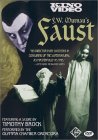
 After the international successes of his films Nosferatu and The Last Laugh, Ufa studios gave F. W. Murnau carte blanche to bring to the screen his version of Goethe's classic tale Faust. Here an artist had a huge budget and the power of a large studio behind him. He created a technical marvel and remarkable film.
War, Famine and Pestilence ride across the sky. The Devil (Emil Jannings) looks on as they spread their disaster, his large wings expanding to engulf the world. But rays of light shine out from behind the Devil. An Angel of the Lord appears and reminds Satan that he does not have dominion over the Earth. The Devil claims that the Earth is his since he can corrupt any one he wants to. The Angel points out Faust (Gösta Ekman,) and asks if he is corruptible. The Devil and the Angel make a wager: If the Devil can corrupt Faust, he will gain control over the Earth, if not, he must leave the world alone.
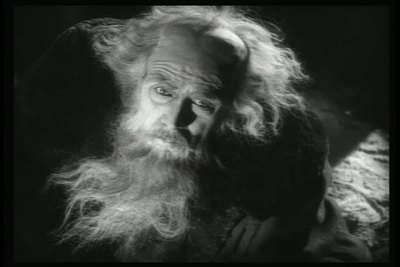
The Devil starts by casting a plague on Faust's village. In a few day, half the people have died. Faust prays for an entire day and night, but the medicine he has still doesn't help cure the stricken. In a moment of rage at his uselessness, Faust throws his books into the fire. While one is burning, it opens up and Faust reads an incantation for summoning Mephisto and gaining earthly powers. He pulls the book from the fire.
The next evening he goes out to the crossroads and summons Mephisto. Startled and frightened when he appears, Faust runs home, only to find the Devil waiting there for him. Mephisto tempts him, and Faust finally concedes to renounce God for one day, if the Devil will do his bidding. They sign in blood. The first thing Faust does with his new found powers is to cure the people in his village. He is successful until a girl arrives clutching a cross. He cannot get past the crucifix and the people realizes that his power comes from the Devil and start to stone him.
He escapes to his room where the devil tempts him once again, this time with youth. The old man can not resist this offer, and is transformed into a charming young man. Mephisto then takes Faust to a beautiful princess and helps him seduce her. But just as he is getting ready to join her in her bed, his time runs out. Faust can not stand the thought of becoming old again, so he agrees to make their deal permanent. With the Devil always one step ahead of him, is there anyway for Faust to save his soul and all of humanity with it?
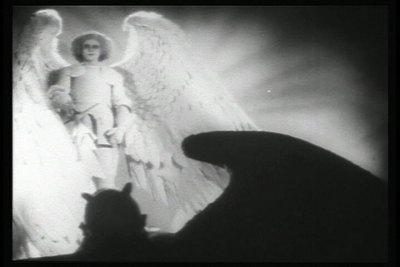 This is an amazing film. The effects were great for the time, and still impress. It is interesting to note that Murnau filmed this movie entirely on sound stages, eschewing location shoots that he used so effectively in Nosferatu (and would use again when filming Tabu.) He wanted the control over all aspects of the film that a studio shoot would give him, and he used it to the fullest advantage. The intricate special effects and camera tricks he was able to create make the film a masterpiece. The camera works was exceptional, with many shots blocked out to make them look like paintings. The smoke and flowing costumes all added to the effect.
Murnau liberated the camera in this movie too, like he did in The Last Laugh (though not to the extent he did in the earlier picture.) He controlled the film's space, and filled it with movement and detail. A gorgeous film to watch.
The acting was first class all around. Lillian Gish was originally cast as Gretchen, but wouldn't do the movie unless her cameraman, Charles Rosher, could shoot it. Ufa refused to this demand, and Camilla Horn, an unknown German actress was given the part. She would go on and have a successful career in movies and TV that lasted well into the 1980's. Gösta Ekman did a wonderful job as both the young and old Faust. His movements and gestures when he was old were very realistic and convincing. But the star of the show was Emil Jannings as Mephisto. He played the role with the right mix of evilness and humor (it really looked like he was enjoying putting poor Faust through the ringer.) Truly a masterpiece of early film art.
The DVD:
Audio:
The sound track was provided by a the Olympic Chamber Orchestra conducted by Timothy Brock who composed the score. As with the score that Brock composed for The Last Laugh, this composition is wonderful. It is full and bold, and the music emphasized the emotions playing out on the screen. The stereo mix was very good too, with no noticeable hiss. A clear and clean sound track that matches the movie very well. A great choice.
Video:
The video was excellent, amazing for a 75 year old film. The print was taken from a restored 35 mm archive print, that has very good contrast and definition. There are a wide variety of gray tones and details are visible even in light shadows. The picture was fairly soft, and there are some scratches and dirt on the print, but this is a minor problem with this film. The few spots where emulsion damage or other major print defects occur are very rare, but there are some. A great looking silent film.
The Extras:
The only extra is a photo gallery with a selection of production stills and behind the scene photographs.
Final Thoughts:
This was Murnau's last film in Germany. After filming Faust, Murnau left Ufa and went to Hollywood. This artistic yet attention-grabbing film was a fine ending to his German period. The special effects were awe inspiring for the time, and the morality play was interesting. The picture on this DVD is outstanding for a film this old, and the musical sound track was one of the best I've heard in a while. One of Murnau's great films on a great DVD. Highly Recommended.
|



| Popular Reviews |
| Sponsored Links |
|
|
| Sponsored Links |
|
|
| Release List | Reviews | Shop | Newsletter | Forum | DVD Giveaways | Blu-Ray | Advertise |
|
Copyright 2024 DVDTalk.com All Rights Reserved. Legal Info, Privacy Policy, Terms of Use,
Manage Preferences,
Your Privacy Choices 
| |||||||