
| Reviews & Columns |
|
Reviews DVD TV on DVD Blu-ray 4K UHD International DVDs In Theaters Reviews by Studio Video Games Features Collector Series DVDs Easter Egg Database Interviews DVD Talk Radio Feature Articles Columns Anime Talk DVD Savant Horror DVDs The M.O.D. Squad Art House HD Talk Silent DVD
|
 DVD Talk Forum |
|
|
| Resources |
|
DVD Price Search Customer Service #'s RCE Info Links |
|
Columns


 
|
|
|
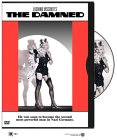
Damned, The
An epic along the lines of The Godfather, Luchino Visconti's The Damned is a complex Nazi soap opera that turns a German family of industrialists into a doomed updating of some evil clan like the Borgias. The recreation of ancestral castles and SA Brownshirt orgies is as impressive as the acting. Only a diminishing dramatic interest in the last third bogs the picture down, as does a generally unfocused directing style.
The Damned got plenty of attention in 1969 for its parade of depraved behaviors. I believe it was originally rated X, but was later re-rated R, in an MPAA backtrack.
The real strength of The Damned is its intelligent and dispassionate script. What it lacks in melodramatic surprises, it makes up in believability. If this isn't the inside story of exactly how the Nazi SS consolidated corporate power in Hitler's Germany, it could be awfully close.
Hitler has the government in his hands, and the collapse of the Essenbeck empire plays out against a backdrop of Nazi power plays - the burning of the Reichstag, the Night of the Long Knives when the SS eliminated the leadership of the SA, a rival military force. The Nazi politicos couldn't just wipe out the Essenbecks as they did most other elements of German society. Although they think their essential steelworks make them untouchable, the Essenbecks are wholly vulnerable to attack from within.
Although the various Essenbeck heirs are the main characters, the most important figure in The Damned is Helmut Griem's Aschenbach, a completely self-contained schemer who plays the Witches to Bruckmann's MacBeth. Dirk Bogarde as Bruckmann is cleverly cast - an ambitious fool, he starts with a strong hand but quickly shows his weaknesses. He unwisely takes some relationships for granted, especially the goodwill of his SS mentor Aschenbach.
The film revels in displays of Essenbeck excess and depravity. Foolish liberal Herbert Thallman mouths off against the Nazis, and thus cannot hold the presidency of steel mill or defend himself when Bruckmann frames him for murder. Direct heir Martin (Helmut Berger) is a degenerate molester of young girls. His mother Sophie is a monster who has dominated her son since childhood to serve her own wish for power. Brutish heir Konstantin (René or Reinhard Koldehoff of Playtime and Soldier of Orange) makes his big play for power by blackmailing Martin.
Aschenbach plays all of these greedy aristocrats like pawns on a chessboard, getting them to eliminate one another and compromise themselves. By making the surviving Essenbecks accomplices in Nazi crime, Aschenbach steals the independence that the old patriarch Joachim had preserved so well. Bruckmann and Sophie think they are being groomed to become industrial monarchs, when the Nazis simply want them eliminated. In the backwash of intrigues and murders, Aschenbach finds it easy to marshall the disillusion and hatred of the youngest Essenbeck, Gunther (Renaud Verley). The Essebecks are reduced to being Nazi pawns, and their steel empire becomes an unofficial state enterprise.
Although they're tame now, the most-discussed scenes in The Damned were the episodes of perversity. Martin starts things off with a drag version of a Marlene Dietrich tune that provided the show with its key Ad image. That the old scion Joachim tolerates the display only makes sense in a family where incest is practically out in the open, along with Martin's victimizing of the tiny daughters of the company president. Visconti carefully details the disturbing molestations, which stay off-screen but imply everything, especially when Martin drives a diminutive Jewish girl to a terrible end a bit later on.
The centerpiece of the film is an elaborate SA orgy at a lakeside resort, a restaging of the historical Night of the Long Knives when Hitler's elite SS eliminated the grass-roots SA organization, the thugs that brought him to power. The beer-drinking SA men chase women around but mostly indulge in a big homosexual bash that's equated with Nazi evil. All the sex in this film is Evil. Although the Night of the Long Knives is tied into the Essenbeck story when Bruckmann is compelled to participate, it comes off as somewhat gratuitous and decorative diversion. 1
The vicious power plays culminate in some strong scenes of extreme family stress, to say the least. Sophie has an emotional breakdown that involves a rape, and finishes catatonic in a ghastly makeup. Her final struggle with Martin is partially bathed in green light, mirroring her entrance in red during Martin's drag performance. Visconti concludes with a hellish wedding attended by SS degenerates and their prostitute girlfriends. 2
The acting is fine all around; the detail gives most of the cast the opportunity to sweat profusely as each is put on the spot. Star Bogarde is appropriately craven, and Ingrid Thulin is successful in the impossible part of an imperious matriarch who is also a power-mad fiend. Charlotte Rampling plays one of the few characters who doesn't want to cut someone's throat, so we can guess early that her end is not going to be a happy one. The part with the biggest arc is Renaud Verley's Gunther. He begins as a cherubic cello player and ends as a convert to the SS cause. Helmut Griem's SS mastermind is one of the best Nazi characterizations ever. He's as Aryan and plastic-looking as a Thunderbirds puppet, but makes Aschenbach both brilliant and frighteningly charismatic. We always knew that real Nazis couldn't have been goonish movie thugs, like Konstantin Von Essenbeck.
Leading player Helmet Berger is introduced in this film but previously worked in Visconti's episode of The Witches, the segment entitled The Witch Burned Alive. 3 His ambibvalent presence, and the obvious relish with which Visconti presents the homosexual frolics of his jolly SA beer buddies creates a confused overtone - Visconti is never explicit with his sex or his violence, and thus seems to be toying with the content. Just showing the men dancing in female underwear is supposed to be shocking on its own?
The main story of cold-blooded murder schemes and power grabs is chilling enough and doesn't need the decoration of the 'perverse' scenes. (spoiler) Likewise, having Martin rape his own mother is meant to make the audience share Sophie's catatonic shock, but by that time we're far too dulled by the parade of cruelties.
I'm still not thrilled by much of Visconti's directing style. Scenes are frequently shot with a telephoto zoom, giving the impression of haste, even though shooting with multiple cameras (my guess) enabled scenes to play without interruption. Many shots start or end with zooms just beginning or ending, as if the cameras were 'hosing down' the scene like rehearsed TV coverage. One key closeup of Dirk Bogarde by Ingrid Thulin's bedside is grossly out of focus, until the actor re-finds his mark and pops into sharpness. Only part of the film is shot this way, but whenever the style is used, the camera seems to be randomly recording instead of looking for an expressive viewing position.
Warner's DVD of The Damned is a beautiful presentation of the English version of this title. Everyone seems to be speaking in English, which makes me think that language was a requirement of Warners' production participation. 4
The enhanced 1:85 transfer is stunning-looking, preserving the deep hues of the interiors and the clogged gloom of the funeral procession. At 157 minutes, the show also seems to be at complete full length.
There's a crisp American trailer included that approaches the subject with intensity and makes the picture look exciting and very evil. A longish piece on Visconti profiles the director with even more fawning reverence than the featurette accompanying Death in Venice. Once again, Visconti is embalmed with statements saying that he is the greatest filmmaker ever, along with Fellini and Antonioni. We do see some okay behind the scenes footage and hear some more praise from his actors. The color on the featurette is almost completely gone, making me think that it might be a surviving copy of an unreleased show.
On a scale of Excellent, Good, Fair, and Poor, The Damned (Götterdämmerung) rates:
Movie: Good
Video: Excellent
Sound: Excellent
Supplements: Featurette Visconti, original trailer
Packaging: Snapper case
Reviewed: February 13, 2004
Footnotes:
1. Although there were certainly exploitative Nazi atrocity films before The Damned, I believe this Visconti film sparked off a subgenre of European films called Nazistas, that used stories of Nazi terror for trashy sex-related fantasies. Even the titles for some of these pictures were pornographic, but there were quality films made with the same themes of sex and fascism, both directed by women - Lina Wertmuller's Seven Beauties and Liliana Cavani's The Night Porter.
Return
2. One of these is Florinda Bolkan, the radiant Brazilian who starred in many notable Italian films, especially De Sica's A Brief Vacation.
Return
3. The episode was not about a real witch, but a movie star (Silvana Mangano) harassed by her public, the press and other women's husbands.
Return
4. The English-language title must have been a tough one to decide upon. It keeps the Götterdämmerung subtitle on screen. That would be far too 'German' sounding by itself. The literal translation Twilight for the Gods or Fall of the Gods sounds too soft, and Twilight for the Gods had already been used for a bad 50s soap opera on a boat with Cyd Charisse. Interestingly, the final choice of The Damned usurped the original title of Joseph Losey's Hammer thriller, which is now known almost exclusively under its American re-titling, These Are the Damned. Confused yet?
Return
| |
|



| Popular Reviews |
| Sponsored Links |
|
|
| Sponsored Links |
|
|
| Release List | Reviews | Shop | Newsletter | Forum | DVD Giveaways | Blu-Ray | Advertise |
|
Copyright 2024 DVDTalk.com All Rights Reserved. Legal Info, Privacy Policy, Terms of Use,
Manage Preferences,
Your Privacy Choices 
| |||||||