
| Reviews & Columns |
|
Reviews DVD TV on DVD Blu-ray 4K UHD International DVDs In Theaters Reviews by Studio Features Collector Series DVDs Easter Egg Database Interviews Feature Articles Columns Anime Talk DVD Savant Horror DVDs The M.O.D. Squad Art House HD Talk Silent DVD
|
 DVD Talk Forum |
|
|
|
Columns
  

 
|
|
|
Tell Me a Riddle
A quiet, sad, beautiful film that didn't get the attention it deserved when it was premiered in 1980, Warner Bros. has released director Lee Grant's drama, Tell Me a Riddle. Based on the Tillie Olsen novella, and starring the magnificent team of Lila Kedrova and Melvyn Douglas, Tell Me a Riddle deals with a theme - an elderly couple's reawakened love, when one is diagnosed with a fatal illness - that didn't find too many takers in the year of The Empire Strikes Back, Airplane!, and Friday the 13th. Seen today, it's a touching, perceptive film that might have found a more welcome reception on today's more diverse indie circuit.

Eva (Lila Kedrova), is a Russian-born housewife who is retreating further and further into herself as she ages. Constantly reading her treasured books and listening to Russian folk music, whenever the world intrudes - usually in the form of her husband's grumbling - she turns off her hearing aid and shuts everything out. Her gruff, demanding husband, David (Melvyn Douglas), also of Russian birth, is a retired union paperhanger and organizer, who chafes at his wife's reticence and her increasing isolation. Long-held tensions in the marriage come to the surface when David demands to sell the house and move into a union retirement home, to be with all his friends. Elderly, and unable to keep the house up, he feels the move would be good for both of them. Eva, on the other hand, cherishes her house, her cocoon, and refuses to sign off on the house, despite Jim's threats and her children's entreaties.
Feeling ill, Eva's trip to the doctor's reveals a fatal diagnosis of cancer. She's not told of the diagnosis, though, because of her fragile emotional state. Instead, the couple embark on a cross-country trip to visit other children and grandchildren. A stop in Omaha to visit daughter Vivi (Dolores Dorn) and her new baby does little to alleviate Eva's feelings of desperation and terror, as she experiences more nightmares about her organizing days in Russia, when she suffered at the hands of state-sponsored pogroms. Moving on to San Francisco, David and Eva stay with their granddaughter Jeannie (Brooke Adams), a health care nurse who works with dying patients. Independent and vivacious, Jeannie offers Eva a momentary respite from her inevitable fate, while David and Eva move towards rediscovering what made them fall in love with each other in the first place.
SPOILERS ALERT!
Some critics at the time of Tell Me a Riddle's release faulted the film for its sentimentality and manipulation. I've never been too sure how you can fault a film for "manipulation" - a charge often leveled at films that emphasis deep, emotional themes - when the entire DNA of "film" is manipulation, right down to the literal physical manipulation of the images in the editing process. What else is a film supposed to do, other than get across a message or feeling that the director wants to impart to his or her audience? I often suspect critics who say they feel "manipulated" by a director really mean they feel personally "uncomfortable" with the ideas and emotions stirred up by the work.
As for Tell Me a Riddle being "sentimental," I found it quite honest and layered in its depiction of an elderly couple coping with decades of miscommunication, uneven dynamics between husband and wife, as well as dealing with Eva's obvious emotional and physical obstacles. Director Grant (the Academy Award-winning actress from Shampoo) doesn't give simple, easy answers for Eva's behavior. While we feel enormous pity for this obviously suffering woman, Grant is wise enough to let in a few scenes where we see a more rounded - and less sympathetic - impression of Eva (telling her daughter Viva she doesn't remember their time together when Viva was a child, is a difficult scene). David is the more obvious "negative" character, here. He forges Eva's name to sell their home, and can't get it back when she finds out. Flashbacks reveal that David initiated sex when Eva was trying to read her precious books - a skill her father denied her, according to their culture's custom - giving her children during the hard times of the Depression which, it is implied, Eva didn't want (there's a flashback of her rejecting a crying baby). And despite his outgoing, charming manner with others, he's often abrupt and patronizing to Eva.
But Grant doesn't let Tell Me a Riddle fall into an easy trap of a "he's bad, she's good" dynamic. Those flashbacks also reveal a marriage that was ardent; the very same flashback that implies Eva "did her duty" for her husband, is also used to show the satisfaction and love she gained from sleeping with David, when the couple passionately embrace after Eva sees David vulnerable for perhaps the first time (when, after she says he can go to the retirement home alone, he confesses he couldn't live without her). Indeed, Tell Me a Riddle is quite successful at painting a remarkably accurate portrait of two people who have grown old together, and the various strategies both employ to alternately attract and push away the other person.

Where Tell Me a Riddle could have been more pointed is in detailing one of the aspects I suspect director Grant - an ardent feminist and a blacklisted performer from the McCarthy era in Hollywood - was most interested in: Eva's life as an activist in Russia, and the subsequent suppression of her intellectual achievements to become the housewife of a wallpaperer. The viewer has to guess at quite a bit of what Eva's life in Russia must have been like (a few vague flashbacks aren't really enough to give us a sense of what she actually achieved as an activist against the Tsar). And certainly the revelation that Eva kept private correspondences with legendary authors like Emile Zola, is trotted out at the very last minute; David's upset when he learns this, but the news is sprung too late in the story to mean much to us, particularly when Grant doesn't do enough with the theme of how marriage to David meant the sublimation of Eva's activist work. Tell Me a Riddle is far more successful when showing scenes of marital give-and-take, than when it intimates at larger issues without elaborating on them (the inclusion of one scene dealing with the issue of abortion feels unnecessarily rushed and ill-thought out).
Certainly the most impressive aspect of Tell Me a Riddle is the stellar performances given by the three main leads. Douglas, who was enjoying his final career resurgence before his death in 1981 (he had won the Best Supporting Oscar in 1979 for Being There), speaks with an understated but effective Russian accent, and as with all of his performances, there's a surety of delivery that's perfectly balanced by his emotional range. The character of David could have easily fallen into the "insensitive, grumpy old man" stereotype, but Douglas is far too skilled an actor to let himself slip into banal clichés. It's easy to see how Eva would be taken with David's gregariousness; despite his advanced age and a general air of fragility, the old Douglas smoothness is fully on display. But Douglas isn't afraid to show David's intractability and essential dishonesty when dealing with his frighteningly distant wife. It's a remarkable performance (and quite superior to his award-winning turn in Being There).
Unless I happen to catch one of her roles on TV, I always tend to forget what a charismatic, wholly original talent Brooke Adams was back in the late 70s and early 80s. There just doesn't seem to be anybody like her working back then. And with such a unique personality like hers, it's difficult to pin down exactly what's so appealing about her. Her best known work from that period was probably starring in Kaufman's remake of Invasion of the Body Snatchers (I remember falling seriously in love with her for about a month after seeing her in Lester's interesting, failed Cuba), but even her smallish role here is memorable. There's an openness to her, an innate, intelligent energy always beneath the surface of her characters, that jumps right out at you. Going up against heavyweights like Douglas and Kedrova must have been daunting, but she more than holds her own. It's a shame that producers didn't really take advantage of her talents during this period of her career.
I doubt Kedrova was nominated for her role here in the barely-seen Tell Me a Riddle, back in 1980 (I believe Sissy Spacek won that year, for her marvelous turn in Coal Miner's Daughter), but it's a shame she wasn't. Kedrova, so touching and luminous in her previous Oscar-winning role as Madame Hortense in 1964's Zorba the Greek, is nothing short of stunning here as the increasingly fragile Eva. Kedrova has that neat trick that all true great actors have, where they project mystifying, unspoken words and thoughts with mere physical expressions. We are constantly watching them, attracted to them, as we try and decipher their inner lives, wholly outside the confines of the written script. Hands fluttering about as if to start some nameless task (only to stop and return back by her sides), while her wonderfully expressive eyes dart about, suggesting a myriad number of thoughts and words which won't be spoken, Kedrova is able to take the character of Eva off the pages of the script, and turn her into a three-dimensional person, right before our eyes. It's certainly a high mark in her already illustrious career, and Grant deserves credit, as well, for helping to elicit such a memorable performance.

The DVD:
The Video:
The anamorphically enhanced, 1.78:1 matted widescreen transfer for Tell Me a Riddle is quite good for what admittedly is a marginal title. Released originally by Filmways, the print does show a small amount of grain (which is expected), but colors are delicately hued and the image is sharp.
The Audio:
The Dolby Digital English mono audio track accurately recreates the original theatrical presentation. All dialogue is clearly understood. English subtitles and close-captions are available.
The Extras:
The only extra, unfortunately, is an original theatrical trailer for Tell Me a Riddle.
Final Thoughts:
Moving, tender, and yet not afraid to present the subtleties of a complex relationship between two elderly adults who have grown emotionally distant from each other, Tell Me a Riddle is really quite effective, particularly with the three stand-out performances by Lila Kedrova, Melvyn Douglas, and Brooke Adams. I highly recommend Tell Me a Riddle.
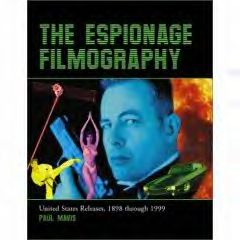
Paul Mavis is an internationally published film and television historian, a member of the Online Film Critics Society, and the author of The Espionage Filmography.

|




| Popular Reviews |
| Sponsored Links |
|
|
| Sponsored Links |
|
|
| Release List | Reviews | Forum | Blu-Ray | Advertise | |||
|
Copyright 2026 DVDTalk.com All Rights Reserved. Legal Info, Privacy Policy, Terms of Use,
Manage Preferences,
Your Privacy Choices 
| |||||||