| Release List | Reviews | Price Search | Shop | Newsletter | Forum | DVD Giveaways | Blu-Ray/ HD DVD | Advertise |

| Reviews & Columns |
|
Reviews DVD TV on DVD Blu-ray International DVDs Theatrical Reviews by Studio Video Games Features Collector Series DVDs Easter Egg Database Interviews DVD Talk TV DVD Talk Radio Feature Articles Columns Anime Talk DVD Savant HD Talk Horror DVDs Silent DVD
|
 DVD Talk Forum |
|
|
| Resources |
|
DVD Price Search Customer Service #'s RCE Info Links |
|
Columns


|
 |
The Big Combo
|
||||
Reviewed by Glenn Erickson The great director Joseph H. Lewis came to light with the rise of the Auteur theory. Other (predominantly) 50s crime directors like the wonderful Phil Karlson were more consistent, but Lewis was the one who wowed the critics, with just two standout films noir. Lewis' Gun Crazy in particular had all the ingredients to make a film critic happy: sexual obsession, violence, a nihilistic attitude toward society and a unique visual style that made low budget filmmaking look like high art. Crazy is the artistic equal of the other three 'Bonnie & Clyde' classics: Fritz Lang's You Only Live Once, Nicholas Ray's They Live by Night and Arthur Penn's Bonnie and Clyde. It was also the inspiration for many a French New Wave effort, like Godard's Pierrot le Fou. The Big Combo appeared at the waning end of the noir cycle that was quickly mutating into more standard police dramas filmed in a semi-realistic television style, like Don Siegel's The Lineup. Gun Crazy was noted for its blacklisted author, Dalton Trumbo. As it is coming to light that prolific writer/producer Philip Yordan may have fronted for blacklisted writers, I'm not certain The Big Combo is his own work. 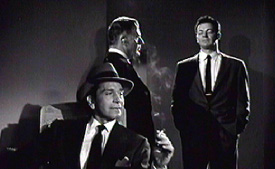
Synopsis: Detective Leonard Diamond's (Wilde) efforts to bring down mob Kingpin Mr. Brown (Conte) border on obsession. Leonard is equally driven to win the affections of Brown's girlfriend, classy blonde Susan Lowell (Wallace), who is physically attracted to the dynamic, aggressive Brown even as she suspects him of terrible crimes. After reprimands for overspending from his superiors, Diamond threatens and cajoles previous Brown associates into yielding information about Brown's first wife, who he may have murdered. But Brown's hit men Fante (Cleef) & Mingo (Holliman) remove all of these witnesses as soon as Diamond uncovers them. Caught in the middle, Susan attempts suicide. Brown retaliates by setting his executioners on the scent of Diamond himself, which puts the detective's sometime girlfriend Rita (Stanton) in jeopardy. Finally gaining Susan's aid, Diamond forces a confrontation with his underworld nemesis. There's nothing particularly stunning in this predictable plot -- The Big Combo is all style, and practically a minimalist epic. There are plenty of 'normal' scenes, but at least half of the settings are in darkened corridors and rooms where little is visible beyond the actors. The genius behind the stunning look of Combo is the legendary cameraman John Alton, whose career ranged from An American in Paris to the early crime films of Anthony Mann. Alton's lighting creates much of the drama. Val Lewton introduced the idea of suggesting monsters instead of showing them, but here Lewis and Alton suggest sets without showing them. Alton has a knack for using highly stylized pools of illumination and weird light sources while maintaining a semi-realistic frame of reference. The underworld pictured here is never The Twilight Zone, but it gets pretty strange. While fleeing sinister guardians Fante & Mingo, blonde moll Susan runs through a series of stark spotlights that emphasize her figure and bare shoulders. When they finally catch up with her in medium-shot, Alton's carefully selective lighting makes the breathless Susan look naked, held between the two hoodlums. I may be admitting a limited range of reference, but the only lighting cameraman Savant knows of who continued this "illuminate only what wants to be shown" style is the Italian horror specialist Mario Bava. Actors had to hit their marks in this picture. In the darker shots a human figure can't walk three paces without passing through three different lighting setups. 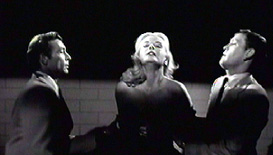
Writers on film noir love The Big Combo not only because it exemplifies the visual extremes of what is actually a style and not a genre, but because the obsessive themes override the common concerns of plot and drama. The hero Diamond is a plainly sick man, and his pursuit of the criminal villain is a pathological crusade motivated more by sheer hatred and jealousy than any notion of law and order. Bad guy Mr. Brown spouts tough dialog ("First is first and second is nobody!") and browbeats everyone in the cast, but it is clear that his love for the suicidal trophy-trollop Susan is more tender than anything Diamond has to offer. The unyielding, humorless Diamond is more callous than his nemesis in that he knowingly sets up suspects for probable murder. His so-called growing love for Susan plays like possessive harassment; he shows far less fondness for her than does her 'tormentor' Brown. Genre critics who like to point out gay elements in films also pounced on the sexuality of hit men Fante and Mingo. Here for once, their observations are entirely credible. Fante and Mingo have the only healthy relationship on view in The Big Combo. They're inseparable, they sleep in the same room, are considerate and thoughtful toward one another and faithful unto death. As characters they remain perimeter sketches, entering the action as functionaries whenever Brown needs another killing done. Savant was reminded of the harmonious relationship between similar ax-men John Travolta and Samuel L. Jackson in Pulp Fiction. The cop-robber doppelgänger motif so baldly peddled in Michael Mann's Heat is given a more sophisticated workout here. Diamond and Brown are rivals for Susan and pitted against one another on a fundamental level. Since The Law is the least of their concerns, it almost seems to be a clash of conflicting lifestyles. Diamond spouts a lot of high-handed moralizing, but everyone else accepts the fact that society is full of Brown-like corruption. Even for the police, Diamond's crusade is an unwelcome disruption of the status quo, as if moral outrage were a bothersome retro concept. Thematically, The Big Combo is still very modern, unlike the (otherwise superb) retro and slightly hollow Heat. Combo is a pared-down film done on an Allied Artists non-budget, and there doesn't appear to have been a lot of time or attention devoted to the finer points of acting -- this is no Nick Ray method showcase. The honors go to Richard Conte, whose Brown is the only multi-dimensional character on screen. Conte's big noir successes with Robert Siodmak and Jules Dassin back in the late-40s heyday more than prepared him for this outing. A couple of years later, Conte was excellent as the troubled, compromised hero of The Brothers Rico, an existential nightmare that is still Savant's favorite latter-day lowercase noir. Cornel Wilde started as a fencer and wowed fans as a more beautiful Victor Mature with an even narrower acting range. Often described as 'cheerfully inexpressive', as he turned to genre work his persona became grim and unyielding. He's actually the weakest link in The Big Combo. Diamond comes off as a sick-minded bulldog, which despite critical acclaim for 'perverse impotence' was probably not intentional. Jean Wallace and Wilde had a successful Hollywood marriage after his earlier matrimonial flops and her publicized suicide attempts. They were together until the end and worked together often, even playing Lancelot and Guinevere opppsite one another in Sword of Lancelot. She wasn't in Wilde's one masterpiece, The Naked Prey but shows up in the confused, under-funded Beach Red and the awkward, preachy No Blade of Grass. Neither is shown very often anymore. Ms. Wallace does not project a strong personality either, but her Susan is acceptably innocent and vulnerable. Objectified by Alton's camera, her greatest impact is visual, and she is undeniably one stunning blonde looker. Lee Van Cleef and a convincingly domestic Earl Holliman are perfect as the hit men; hidden in the cast is Helen Walker, previously the ice-cold vixen of Nightmare Alley, and the always-excellent Ted de Corsia, from The Naked City and The Killing. Veteran actor Brian Donlevy's character is a colorless stock baddie but he gets a memorable farewell scene involving a hearing aid. A jarring execution almost universally credited to director Lewis, it probably originated in the script. 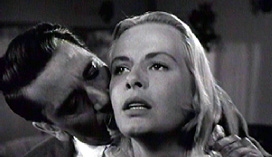
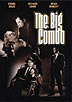
Image's disc of The Big Combo is another no-frills affair mastered imperfect materials but better than anything Savant's seen before. The old 16mm prints were so poor that the clarity of this transfer properly presents Alton's photography for the first time. The image looks okay full-frame but the compositions improve when cropped to 1:77 on Savant's widescreen television. As with any post-'55 Hollywood film, 16:9 would have been the best choice for mastering. The box art is particularly well chosen, consisting of a series of crisp black and white stills that would look good on the cover of a Raymond Chandler pocketbook. The Big Combo is a rewarding thriller with a good handle on the hardboiled crime saga circa 1955. It's especially instructive as an example of a movie with a visual surface that completely hides its low budget origin. Few films so convincingly seem to be Somewhere when they're really taking place in a non-budget Nowhere. Sex, violence, and silhouettes of alienated characters in the fog ... The Big Combo puts the graphic noir back into film noir.
On a scale of Excellent, Good, Fair, and Poor, The Big Combo rates:
Review Staff | About DVD Talk | Newsletter Subscribe | Join DVD Talk Forum |
|

| Release List | Reviews | Price Search | Shop | SUBSCRIBE | Forum | DVD Giveaways | Blu-Ray/ HD DVD | Advertise |