| Release List | Reviews | Price Search | Shop | Newsletter | Forum | DVD Giveaways | Blu-Ray/ HD DVD | Advertise |

| Reviews & Columns |
|
Reviews DVD TV on DVD Blu-ray International DVDs Theatrical Reviews by Studio Video Games Features Collector Series DVDs Easter Egg Database Interviews DVD Talk TV DVD Talk Radio Feature Articles Columns Anime Talk DVD Savant HD Talk Horror DVDs Silent DVD
|
 DVD Talk Forum |
|
|
| Resources |
|
DVD Price Search Customer Service #'s RCE Info Links |
|
Columns


|
 |
THE Awful DR. ORLOF...There's Something About Morpho ...
|
||||
EuroTrash comes to DVD American horror fans are having a banner year, with the DVD premiere of one European horror classic after another. Anchor Bay, All Day and especially Image Entertainment are bringing out title after title that had previously existed only as references in genre bibles like Phil Hardy's The Encyclopedia of Horror Movies. 1 Yes, you too can now feast your eyes upon fare as tempting as Playgirls and the Vampire, The Bloody Pit of Horror, and Don't Torture a Duckling. When genre film writing kicked into high gear in the 1970s, most of these titles got left behind simply because they were unreleased in the United States and almost impossible to see. So, sparked by the enthusiasm of cult film magazines (especially Video Watchdog), the present wave of Euro horror premieres is opening eyes on DVD shelves everywhere. Savant had despaired at the blurry gray-market vhs tape versions of these pictures; now many of them are available in quality presentations looking far better than their original theatrical releases. Some of the bonafide creepy classics of Euro horror, such as I Vampiri and L'orribile segreto del dottor Hichcock, have yet to surface. (Update July 2001: I Vampiri is now out.) But Mario Bava's films at the top rank of the subgenre, are slowly coming out in excellent DVD versions. What there are plenty of is the second wave of 70s slasher, zombie and cannibal pix commonly referred to as EuroTrash Horror. EuroTrash is a name that reflects the selfconscious feeling of enthusiasts that what they are watching is culturally damned -- and more power to it. Many of these films resemble our homegrown H.G. Lewis gorefest shock-porn genre. The residual art-film gloss that accompanies foreign production fades pretty quickly given the level of exploitation on view. At its best EuroTrash gives the politics of Taboo a vigorous workout. Horror films at their core are about trangression and even the slimiest of these films provokes, if nothing else, deep thoughts about why Horror is so attractive in the first place. In mainstream film critcism, EuroTrash is practically equated with pornography. If it is acknowledged at all in the straight film press it's usually in the context of film inspiring real-world violence. Unless one is among its fans it doesn't really exist. Savant was surprised at a kiddie birthday party a few weeks back when one happy housewife began talking excitedly about Fulci and Argento films, with nobody else having a clue as to what she was talking about. When I fessed up to knowing about them and helped her remember some titles, I got the impression that other toddler-toters at the table thought I was a Guru of Evil. There are plenty of websites that tout these films enthusiastically. Kowing that there are readers who act on Savant recommendations, let me just say that if you're an average viewer and you rush out and buy something like Zombie, you might be in for an unpleasant surprise. Savant knows of a hapless film fan who accidentally took his parents to see Pasolini's Salo ... get my drift?
|
||||
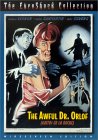
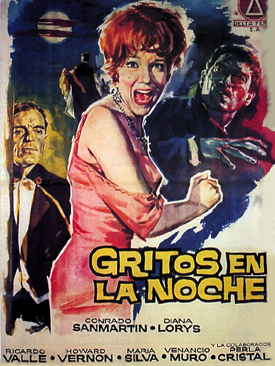
The Awful Dr. Orloff may just be the first true EuroTrash movie. As Gritos en la Noche it was made and released under Franco's iron rule in 1961, with the first wave of classic Eurohorror but before the advent of giallos and slashers and horror/sex films. Savant has never heard a good explanation for how the Spanish horror films of the 60s and 70s could have so much nudity, gore and especially blasphemy, when they were produced in such a repressive situation. (True, they usually had no direct political content per se.) Director Jesus Franco simply threw ideas together from current European horror hits, especially Eyes Without a Face, and made a sexy and gory gothic that didn't pretend it had a reason to exist beyond its own exploitable content.
In the era of horse-drawn carriages and gaslights (and fingerprinting, a glaring anachronism) the mad doctor Orlof (Howard Vernon) kidnaps sexy young women with the aid of a frightening assistant, the scarred, bug-eyed & blind Morpho (Riccardo Valle). Orloff's daughter (Diana Lorys) has a mutilated face that Orlof hopes to restore with the fine complexions of the singers and dancers he lures to his suburban castle. Investigating the cases of the disappearing señoritas is Inspector Tanner, who would much rather spend time with his fiancée, a gorgeous ballet dancer (also Diana Lorys). Eventually she becomes the bait in a scheme to entrap Orlof. The sadistic goings-on in the classic Eyes Without a Face are a distubingly complex aesthetic experience tied to a taut narrative and fascinating characters. By contrast, The Awful Dr. Orlof simply is what it is. The narrative is slack and there's a marked inattention to character relationships or dramatic structure. Orlof's devotion to his sister is never reconciled with his egomania, so clear motives for his activity never emerge. There is not the slightest explanation for the cooperation of his female assistant. The blind Morpho makes a particularly illogical choice as a mad doctor's assistant. His greatest talent seems to be an ability to tote unconscious females through the castle interior without overturning furniture or bashing their heads against the decor. 2 Large sections of the plot are devoted to the lead-brained Inspector Tanner's urgent but aimless investigation. With his girlfriend in Orlof's clutches, Tanner somehow can't be bothered to read the contents of a note frantically written in lipstick. Trying to engage with Orlof on the level of a thriller yields little of merit.
What Franco's film does have going for it is obsessive zeal and a clear desire to tresspass beyond what was acceptable in a 1961 shocker. Many good horror films including the Universal classics had previously skirted impure ideas and fetishistic obsessions. Franco brings the queasy content right out in the open. With Orloff remaining a remote figure and the vapid romantic leads there's really no one to identify with here except the blind Morpho, who functions as an onanistic audience surrogate. There are a lot of fleshy, attractive and buxom Spanish beauties on display, and when Morpho chains them in the mad lab, he gropes and paws them with complete abandon. Morpho also bites their shoulders and necks, not as a vampire but like an infantile pervert with an oral fixation. The victims on view simply function as pert and saucy bodies onto which the desires of Morpho (and our own) can be projected. Phil Hardy, in his Horror Encyclopedia makes an intriguing intellectual case for these sleazy shenanigans as being central to the real artistic function of Horror Films. He constrasts conservative film fantasies with progressive ones by making a distinction between two kinds of Horror. Those that engage with the voyeuristic-sadistic elements acknowledge audience complicity in the horrid acts onscreeen, and explore and extend the genre. They make clear the fact that their onscreen horrors are true human qualities, dormant in all of us. The 'sick' behavior onscreen is identified as our own, not just that of some monster. By contrast, Hardy's conservative category criticizes movies that are politically retro, that take pains to make the source of terror an identifiable 'other', that deliver up cheap thrills and let the audience off the hook by reassuring them that they personally aren't a part of that 'sick' behavior on the screen. Conservative films disassociate what we wish to see from what we are. C.B. DeMille's biblical epics, where religous themes are a slick front to serve up sex and sadism, are an obvious example. The arguments start when it comes time to decide which films belong in which category. Herschel Gordon Lewis has been described as an aberrant side-effect of puritan repression. Does that make his movies conservative freak shows? Or is their taboo-breaking tastelessness liberating, honest? Does merely being dreamlike and illogical make a film not conservative? Can a film be politically conservative (The Exorcist) and still be progressive? How come obvious, pandering exploitation films can be considered progressive? Hardy, et al, make good arguments for their opinions but they tend to hew close to an established liberal point-of-view. Savant likes what they say about misogynist, racist and status-quo-affirming elements in the films they label conservative, but recognizes that agreeing with their politics makes that all too easy to do. If The Awful Dr. Orlof has value it is because its obsessions show the truth that horror films could previously only tiptoe around. Universal horror films of the 30s were often restrained from more than suggesting their own central subject matter. A couple of scenes in Murders in the Rue Morgue are all that is left of the film's real plot (which is far sicker than that of Orlof). Edgar Ulmer's The Black Cat was rewritten to neutralize several necrophiliac elements that nonetheless persist in fragmentary form. The Bride of Frankenstein brilliantly sneaks a new obscene horror concept past the censors every five minutes! 30s and 40s monsters often carry the heroine off into the night, Cesare-style, but we rarely find out what the heck they are going to do with them. The cliche eventually became such a 'given' that in The Creature from the Black Lagoon, for instance, any romantic plans the enraptured Gill-Man has for Julia Adams remain almost irrelevant. Marilyn Monroe in The Seven Year Itch communcates more sexual terror at the thought of the Creature getting his fishy fins on her, than anything in the Jack Arnold film. The Black Lagoon of the title might as well refer to the genre's unacknowledged subtext. In the very late 50s Horror films began to grow up when they started answering these questions and showing what the monsters really wanted to do with the hapless heroines. Dr. Orlof may be the birth of Horror Sleaze but there is something honest (progressive, Hardy would say) about depicting Morpho's degenerate behavior. Orloff holds up a mirror to horror fans. What we see is Morpho, a blind sex pervert. We watch him molest gorgeous women he can't himself see. Through him, we molest gorgeous women we can't touch. That ironic poetry fits right into the Hardy Theory. 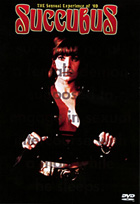
A Horror movie at the crossroads. Along with its indifferent pace and perfunctory plotting, The Awful Dr. Orlof also has some good qualities. Its anachronistic jazz-percussion-electronic soundtrack is a real plus, perhaps the most progressive thing about the whole film. Excellent photography (appreciable for the first time, for most us) and a strong central presence in the haunted-looking Howard Vernon provide an atmosphere that evokes a gloomier, lonelier 30s Universal Horror film. Orlof is nothing like Franco's later grindhouse triple-Z trash output, which has developed its own obsessive following. The production values are medium-range: nice sets, good locations, credible costumes, mostly competent actors. The brief bits of nudity are 'shocking' only given the age and origin of the movie -- one of them involves the leading lady and looks suspiciously like a body-double cutaway. Perhaps it is the Original Sleaze Insert shot. Home Video and especially DVD have allowed thousands of Horror fans to catch up with notorious, unseeable titles. In some cases there's disappointment - Succubus, considered a top Franco title, plays like a soft-core parody of a bad art film. The blind Knights Templar of Ossorio's Tombs of the Blind Dead were nowhere near as interesting as Savant hoped. The Awful Dr. Orlof is nothing to jump up and rave about but it does fare marginally better than those others. From inside the modest trangressions of Orlof, thirty years of sexual repression in the horror genre are trying to burst free. Image's DVD of The Awful Dr. Orlof can boast a fine B&W image with few if any flaws. The mono tracks in English and French are clear in both dialogue and musical passages. Sadly, there's no original Spanish track, although some of the songs sung by the cabaret entertainers / victims are en Español. Tim Lucas gives the package a welcome perspective with his liner notes, as there are no supplements on view, not even a trailer. Is The Awful Dr. Orlof the first EuroTrash movie? If Franco is an artist and not just a commercial panderer then his Gritos en la Noche is a turning point in Horror and not an aberration. Horror addicts already consider this a mandatory title. Others will find it an odd curiosity. Savant thinks it's no classic, but a very interesting show. This crazy Morpho (sigh) kinda paws his way into a reviewer's heart.
On a scale of Excellent, Good, Fair, and Poor, The Awful Dr. Orlof rates:
Footnotes:
1. Hardy, Phil (editor) The Encyclopedia of Horror Movies New York, Harper and Row, 1986. Mr Hardy's (or one of his main contributors, Tom Milne and Paul Willemen) ideas on conservative and liberal fantasies are spread throughout the book under various entries. The monographs on Peeping Tom, Horrors of the Black Museum, and
Circus of Horrors outline them pretty well.
I've mostly elaborated my own interpretation of them, and apologize if they've been overly distorted or misrepresented.
2. Morpho is truly a strange creation. His ridiculous but weirdly effective face looks as though someone's features have been crudely grafted over his own. The quality of the makeup job is debatable but there's no denying that the result is a nightmare visage. Morpho looks like a distilled 'mental defective' -- think of the comedian Marty Ingalls, shot between the eyes and staring dumbly. That's Morpho, all right.
Review Staff | About DVD Talk | Newsletter Subscribe | Join DVD Talk Forum |
|

| Release List | Reviews | Price Search | Shop | SUBSCRIBE | Forum | DVD Giveaways | Blu-Ray/ HD DVD | Advertise |