| Release List | Reviews | Price Search | Shop | Newsletter | Forum | DVD Giveaways | Blu-Ray/ HD DVD | Advertise |

| Reviews & Columns |
|
Reviews DVD TV on DVD Blu-ray International DVDs Theatrical Reviews by Studio Video Games Features Collector Series DVDs Easter Egg Database Interviews DVD Talk TV DVD Talk Radio Feature Articles Columns Anime Talk DVD Savant HD Talk Horror DVDs Silent DVD
|
 DVD Talk Forum |
|
|
| Resources |
|
DVD Price Search Customer Service #'s RCE Info Links |
|
Columns

  

|
 |
PARALLAX VIEW: The Incredible Montage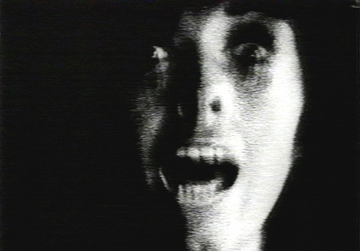 A DVD debut of a stunning piece of cinema. Don't miss DVD Savant's The Parallax View DVD Review. Much to the surprise of Hollywood, Alan J. Pakula's The Parallax View was a box office success in 1974. Twelve years earlier audiences had shied away from the 'serious' thriller The Manchurian Candidate even as critics celebrated it. The James Bond years were just beginning. Spies, assassins, and incredible conspiracies exited political reality to become the realm of fantasy and light adventure, even comedy. Parallax concerned itself seriously with its paranoid theme and didn't even develop a romance for its star Warren Beatty. Uncharacteristically intelligent, it built upon the foundation of The Manchurian Candidate to create a new subgenre: the Post-Watergate conspiracy thriller. What made Parallax different was its approach. Its outlandish tale of a nefarious corporation manipulating American politics was treated not as a fantasy, not as merely possible, but as something probable. The legacy of Watergate was just forming and Parallax expressed it loud and clear: Americans no longer trusted their government, their media news, their own history. The Pentagon Papers had documented that Congress had been railroaded into Vietnam with intentional lies and hoaxes. The JFK assassination theories were stronger than ever. The killings of Martin Luther King and Robert Kennedy had been speedily 'resolved' as the work of independent rogues. The public suspected that at best, the whole truth wasn't being told, and at worst, the real killers had been covered up. One very disturbing theory explained Sirhan Sirhan, the killer of R.F.K., as a programmed assassin-patsy. It argued that the 'fantasy' premise of The Manchurian Candidate was an actuality! Even if the mildest assassination theory were true, Hollywood provided a cultural smokescreen that made all such ideas seem like nonsense. Superspy fantasies like Our Man Flint and The Silencers reduced cloak-and-dagger subject matter to the level of absurdity. In this climate, The Manchurian Candidate's follow-up feature Seven Days in May seemed by comparison to be taking itself far too seriously. When the U.S.S. Pueblo was seized in North Korean waters as a spy vessel, it was generally assumed by Americans that Korea's claim was ridiculous, no matter what the evidence. Most of America was politically complacent and trusting of authority. The Government had its problems, of course. But allegations of illegal plots by any combination of the government, the military, or corporate America were discounted as the ravings of left wing, anti-American crackpots and subversives. The chaos that was Hollywood in the early '70's spawned a strong streak of liberal filmmaking: Medium Cool, The Candidate, Hearts and Minds. Producer / star Warren Beatty, who previously had imparted a French New Wave flavor to Bonnie and Clyde, gave Parallax a remote, Antonioni-like sense of alienation. Characters fail to relate and then disturbingly disappear. In an extension of earlier Film Noir effects the Panavision image is splintered into an endless succession of fragmented spaces. Long lenses and shallow focus isolate protagonist reporter Beatty in corners of the frame, wedged between unrecognizable blocks of foreground architecture. And for the film's centerpiece, Beatty commissioned a freestanding film-within-a-film, one of the most remarkable montages ever cut for a Hollywood feature. In The Parallax View reporter Beatty penetrates the mysterious Parallax Corporation, and when he enters their recruiting process finds himself being shown (subjected to?) a 'special' short film in a theater wired to measure his emotional reactions. He's already taken a multiple-choice psychological test (right out of Psych 101) designed to identify violent, volatile applicants. Now he is the sole occupant of a huge auditorium, and the house lights dim while a voice calmly instructs him to keep his hands on the wired armrests. We see no close-ups of Beatty. The instructions might as well be directed at us, because we too are sitting in a darkening theater, with no idea what we are about to be shown. It's a bizarre moment that is remindful of a number of 'interactive' precedents. The rigged chairs for the 'Percepto' effect of William Castle's The Tingler come to mind. Also, on Sunset Boulevard in Hollywood was a theater called The Preview House where each seat had buttons in the armrests to measure viewer responses to movies and commercials. Beatty's Guinea Pig situation might also remind us of the mindbending torture endured by agent Harry Palmer in The Ipcress File,, or the involuntary reprogramming undergone by Droog Alex in A Clockwork Orange. The insidious crimes Parallax has already committed give the viewer an ominous feeling. Will Beatty be tortured by some unknown kind of Ipcress or Ludovico process? What horrible things is this movie going to contain? Like Peeping Tom, the line between voyeur / participant is blurred when we realize we are to experience the film exactly as Beatty experiences it. There is an unspoken cinematic tension, an element of danger. Remember those Red Asphalt - style gore movies we were shown (subjected to?) for our own good in High School? Remember the dread / thrill of anticipating what we might see? What we experience in Parallax is a short film constructed of still images and printed text titles, cut to music in a montage style not unlike experimental films of the 1960s. Together with the fads of split-screen and shallow-focus lyricism, by 1970 the form had worked its way into TV commercials. Indeed, no film-school screening was without its 'message' montage cut to rock music and, depending on the artiste, compelling or insulting in its use of images. Not exactly Eisenstein kinema-dialectics, not exactly Godard agit-prop, a typical example is Wipe Out, where the surf guitar song becomes sinister when accompanied by rapid-fire images of everything presumed bad in American life, from consumer greed to Levittown housing. At first, Parallax's montage seems like one of these. Soothing music is heard behind harmonious iconographic images familiar from Life Magazine - style photo layouts. Pictures of sweet old ladies and hardworking farmers accompany the titles 'MOM' and 'DAD.' Similiar stereotypical images follow title cards for 'GOD', 'LOVE', 'HAPPINESS', and so forth. The music starts to become more upbeat and dynamic, and the visual pace quickens as the same categories are revisited with new visuals and repeats of the old ones. This is going somewhere, we can tell . . . odd cuts slip in that don't seem to fit the categories, either because they are too fast to 'read' or contain disturbing content - lynchings, children in peril, the blurred, frightful face of a terrorized woman. Soon the images are coming too fast for easy categorization. Each image has its own emotional reaction, some of which raise the hair on one's neck - Nazis, for instance, next to the Pope. Confusion sets in as images are repeated in contexts which change their meanings. Photos of people having sex, and stacks of coins are pleasing against the title 'HAPPINESS' but become unsettling when juxtaposed with images of what seem to be torture victims and political oppression. Also, identical pictures appear to change 'without changing.' The impression made by a sweet rural mother shifts radically when placed before shots of filthy, impoverished children. When placed in a context of persecution, her very expression seems to change too. A sensitive viewer knows his reactions are being manipulated, sculpted by the cutting. A portrait of George Washington is distastefully inter-cut with Nazi iconography. The image seems artificially crude until the portrait is revealed as being displayed on a wall side-by-side with a Swastika (of a Klan member?). 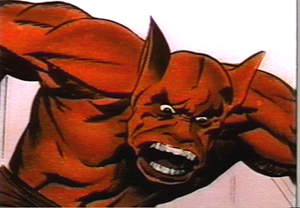 Just when chaos seems total, the montage maker brings a unifying theme to the forefront. Each wave of buzzword concepts has ended with the title 'ME.' 'ME' has been evolving from a happy baby. to an abused boy, to the imprisoned victims of tyrants and racists. Increasingly disturbing groupings equate the American flag, Hitler, MacArthur, the Pope, and a comic-book demon. Images of poverty, sex, and racial murder tumble forward. Repeated flags and patriotic icons drive home the message that "America is in trouble, the family is in trouble." Only when 'ME' becomes a hammer-swinging Nordic avenger (the comic-book character Thor) does the ANSWER arrive to end the ideological trauma. The Parallax Audition film is presented as a psychological litmus test for potential assassins. What it really is, is an extremely well-made propaganda film that functions the same way as the most infamous examples, like Riefenstahl's Triumph of the Will. Through emotional intimidation, the receptive viewer moves through confusion and a desire to a position of conformity, to accept the premise of the film. George Orwell understood this completely in the 'Five Minute Hate' propaganda rallies in his 1984. Modern ad marketers understand it too. Consider our reactions to today's political television campaigns. Sensitive people are alarmed by the appalling attack ads with their ugly false charges and provocative, 'loaded' imagery. Confusion, hostility, and apathy are engendered. One's own viewpoint seems worthless in the suspicion that 'less sophisticated' votes are being warped wholesale by the lies in these ads. The Parallax film is frightening because we sense that in our violence-worshipping society, this audition film certainly could inspire killer - volunteers for a 'righteous' cause. Our reaction to the film-within-a-film in Parallax is powerlessness - if the evil Parallax Corporation is this advanced technologically, the forces of good haven't a prayer. And the political attack ads resemble a 'conspiracy' as well: to convince us that the power of their campaign is too big and too well organized to be effectively opposed. It's like a Polanski movie, where the forces of Evil are so potent, Good just quietly gives up. The aggregate effect of modern political advertising is to make us so sick of the electoral process that we stop participating, leaving the field to the ruthless and cynical opposition. So this is the power and meaning of the bizarre montage in The Parallax View. Back in the 1970s occasional mainstream movies were unafraid to tackle difficult, even dangerous issues. Network's vision of a society dehumanized by television can arguably be said to have come almost 100% true. Parallax's unseen conspiracies also have come to pass, depending on one's point of view. We now believe that those who control access to 'reality' can create any 'truth' they desire. Since the lines between news and editorial content and pure fiction are now completely blurred, who can tell? The Parallax Corporation controls the minds of men through the persuasion of cinema propaganda. Are we really affected by the barrage of images in our daily lives? Perhaps the lesson of the 'Audition Film' of Parallax should be that EVERY SHOW and every image we see has the potential to affect us, and that none of us is immune. 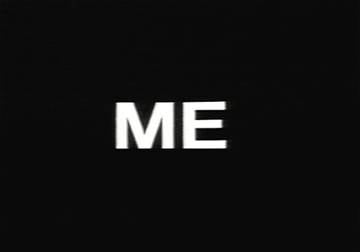 Note: Savant's reference copy of Parallax is a Pan 'n Scan from AMC. I hope my interpretations of the images are accurate: this montage should be a knockout in 2:35 Panavision! Note #2, on Savant's request for the Montage Credit on Parallax: from Steve Tannehill: "There is no specific credit for montage, but there is a full screen of credits as follows: Consultant Designer: DON RECORD, Research: DE FOREST RESEARCH Contributors to Parallax Test -- two full screens of photographic credits, 60+ people. The demon cartoon figure is, I believe, Super Beast, as a Marvel Comics credit is given for Thor and Super Beast. Viva and Penthouse magazines are given credit, as is Bob Jackson of the Dallas Times Herald, who is the Pulitzer Prize winner for his photo of Jack Ruby shooting Lee Harvey Oswald." -- Steve Text Copyright 1999 Glenn Erickson
DVD Savant Text © Copyright 1997-2002 Glenn Erickson
Review Staff | About DVD Talk | Newsletter Subscribe | Join DVD Talk Forum |
|

| Release List | Reviews | Price Search | Shop | SUBSCRIBE | Forum | DVD Giveaways | Blu-Ray/ HD DVD | Advertise |