| Release List | Reviews | Price Search | Shop | Newsletter | Forum | DVD Giveaways | Blu-Ray/ HD DVD | Advertise |

| Reviews & Columns |
|
Reviews DVD TV on DVD Blu-ray International DVDs Theatrical Reviews by Studio Video Games Features Collector Series DVDs Easter Egg Database Interviews DVD Talk TV DVD Talk Radio Feature Articles Columns Anime Talk DVD Savant HD Talk Horror DVDs Silent DVD
|
 DVD Talk Forum |
|
|
| Resources |
|
DVD Price Search Customer Service #'s RCE Info Links |
|
Columns

  

|
 |
Apocalypse Now
|
||||
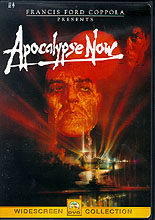
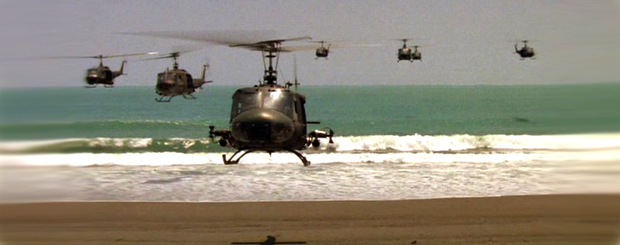
Francis Coppola's Apocalypse Now is still considered the masterpiece film about the Vietnam War. Begun in a spirit of adventure, the filming went on for years of rising and falling fortunes, near-nervous breakdowns, manic rewrites, and an ending that had to be dragged out of an uncooperative Marlon Brando. I remember my children asking how come Harrison Ford has such a small part, considering that the film came out two years after Star Wars. Esquire magazine took a nasty potshot at Coppola's alleged megalomania in a 1978 article that filched some memos from the beleaguered filmmaker/generalissimo. In the correspondence Coppola comes off as vain, imperious and paranoid. A rather manic paragraph explained why he was dropping the 'Ford' from his name. But I talked with a number of crewmen who worked with on Apocalypse and all were ready to go right back and do it all again. Special effects ace A.D. Flowers loved the guy; assistant director Jerry Zeismer couldn't praise Coppola enough. 4 For the real story of the filming (or partisan versions thereof) there's always the interesting book by Coppola's wife, and the absorbing documentary film Hearts of Darkness: A Filmmaker's Apocalypse by George Hickenlooper and Fax Bahr. Nothing illuminates the myriad myths and legends that have grown up around Apocalypse Now better than seeing the six-hour bootleg of a rough assembly made somewhere along the film's erratic creative process. I direct you to the old Savant article The Legendary Rough Cut for more on that. If Apocalypse hasn't dated in twenty years it's because Coppola handled the material in classic terms, instead of filming the letter of John Milius' psychedelic phantasmagoria of a script, or trying to be strictly realistic. In his celebrated script for Patton Coppola took what could have become a prosaic biography (like dullsville MacArthur) and expressed the contradictions of a complex man without explaining him. Whether by intent or happenstance, Coppola started filming with Milius' crazy exaggerated characters (Colonel Kharnage) and bizarre episodic upriver detours into Alice in Wonderland-like rabbit holes. After a convoluted process of recasting, reshooting, rethinking, rewriting, and wholesale jettisoning, Apocalypse Now became the remarkable film it did largely through some brilliant restructuring decisions. There was a French plantation interlude, part of an artsy thematic thread. If kept, it would have made the upriver journey also a trip into Vietnam's past, and weighed the film down terribly. Out it went. Out went redundant scripted scenes where the stranded Playboy bunnies trade sex for helicopter fuel. The rough cut suggests Coppola never seriously intended to use these scenes, that they were only filmed after a typhoon wiped out the sets he wanted to film on. Also out went an action sequence in which Dennis Hopper's gonzo photojournalist intercedes in a mutual shootout between army assassin Martin Sheen and his predecessor / defector to Colonel Kurtz, Scott Glenn. Initially intended as a shadowy allusion, the Conrad novel Heart of Darkness became much more important, especially when Coppola found no way out of the creative corner into which he'd painted / filmed himself. It may be heretical to say it, but with all the brilliant material in Apocalypse Now there are some real clunker moments here and there. The scene with General G. D. Spradlin giving Willard his mission is badly acted. Its pace is so slow, with every single word given such a ponderous emphasis, that it plays like it belongs in a grade Z movie. The same almost but not quite goes for the visually much more interesting ending, because the only tool Coppola has to give Brando's Kurtz his needed ponderous weight is the molasses-paced direction, with Brando's voice mumbling and rambling on ever so slowly. Forget that what Brando is saying IS germane and profound; it isn't in the least cinematic. The movie stops being a movie and becomes a poetry reading. 1 Big anti-war films always have flashy battle scenes that undermine their avowed pacifism. The war movie fan base is almost exclusively male, a group that nods impatiently through the anti-war diatribe of movies like Platoon to get to the good stuff. Apocalypse's main set piece, a helicopter attack on a Vietcong village, can't help but play the same game. The attack exalts the glory and thrill of zooming into battle, guns blazing. But it also shows the Viet Cong to be valiant defenders trying to resist despite being grossly outgunned. With their overwhelming firepower, the massed rows of helicopters seem like alien invaders from the future. Death from Above! 2 The drama quickly separates viewers into hawks and doves; Savant was in the half that cheered every time a helicopter was hit and thought the best soldier on the battlefield was the VC woman with the grenade hidden in her hat. Undoubtedly many viewers respond more to the bravado of Robert Duvall and the spectacle of bombs blasting the village to bits. In subsequent viewings the Wild Bunch Audience Syndrome kicked in. There was always a hearty cheer of bloodthirsty woman-hating approval when 'that VC bitch' gets singled out for machine-gunning from the air. Coppola knew he couldn't lick the anti-war / war glamour problem, and instead placed the issue in the starkest relief possible. This is a brilliantly edited film. Coppola's deft control of imagery pulls Apocalypse back from the brink of disaster. Vittorio Storaro's stylized lighting and Walter Murch's dreamlike superimpositions create a Vietnam Landscape of the Mind that ignores strict realism. Take the Do Long Bridge sequence: "I just dropped acid, man." The bridge is lit up like a Christmas tree and the troops huddle leaderless in a warren of trenches like stoned rabbits. The scene encapsulates the psychedelic aspects of the Vietnam experience. Equally exaggerated is the USO scene, a circus right out of Fellini. One reason that these fantasies don't cripple Apocalypse is because the war was a radically different experience for every soldier who served. Rumors of what happened 'at the next fire base' were indeed as outrageous as the fiction Milius and Coppola dreamed up. Veterans can sense that these fantastic, poetic excursions are meant to express a conceptual, abstract truth. |
Review Staff | About DVD Talk | Newsletter Subscribe | Join DVD Talk Forum
Copyright © MH Sub I, LLC dba Internet Brands. | Privacy Policy | Terms of Use
|

| Release List | Reviews | Price Search | Shop | SUBSCRIBE | Forum | DVD Giveaways | Blu-Ray/ HD DVD | Advertise |