
| Reviews & Columns |
|
Reviews DVD TV on DVD Blu-ray 4K UHD International DVDs In Theaters Reviews by Studio Video Games Features Collector Series DVDs Easter Egg Database Interviews DVD Talk Radio Feature Articles Columns Anime Talk DVD Savant Horror DVDs The M.O.D. Squad Art House HD Talk Silent DVD
|
 DVD Talk Forum |
|
|
| Resources |
|
DVD Price Search Customer Service #'s RCE Info Links |
|
Columns
  



 
|
|
|
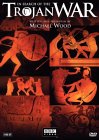
In Search of the Trojan War
In the best documentaries, you feel like you're immersed in a constant stream of information: just enough to always have something new being revealed, without being overwhelming. In contrast, watching In Search of the Trojan War is like drinking a glass of water using an eyedropper: it takes forever to get just a few unsatisfying drops. In a program that runs nearly six hours (six 56-minute episodes), that adds up to a lot of restlessness as we wait for some sort of informative payoff.
The key phrase in the title is the "In Search of": the documentary is less about the Trojan war than it is about the history of attempts by archaeologists to determine whether or not Troy was a real city, and if it was real, where it could be found. It's not a bad approach, but it's the kind of thing that works best in moderation; it's simply not as interesting to hear about the personality of Heinrich Schliemann and other archaeologists as it is to learn about the historical origins of Achilles, Agamemnon, or Helen. In Search of the Trojan War does work in some information about the real Troy, but surprisingly little, and in a rather disorganized manner.
The documentary program is made up of six episodes. "The Age of the Heroes" focuses on German amateur archaeologist Heinrich Schliemann and his obsessive search for Troy; "The Legend Under Siege" (misspelled as "seige" in the menu, I might add) reviews the post-Schliemann investigations; "The Singer of Tales" addresses the historicity of Homer's Iliad; "The Women of Troy" looks at whether Helen of Troy existed; "Empire of the Hittites" discusses Troy's relations with its neighboring empire; and "The Fall of Troy" covers what was known about the fall of the city. There's certainly potential in these topics, but the sad fact is that the actual content is so thin on the ground that it all could be condensed easily into a single episode.
The annoying thing about In Search of the Trojan War is not so much its slow pace (which is, in fact, glacial) but the fact that the slowness is blatantly unnecessary. It's not that we're taking our time to explore difficult-to-grasp topics, or that a lot of supporting detail is being provided for everything; those would be acceptable causes of a slow pace. No, In Search of the Trojan War is slow because it puffs everything out. We see conversations with archaeologists and museum curators... including idle chit-chat between them and the narrator. We get lingering shots of completely irrelevant scenes, like modern traffic or anonymous ruins, liberally thrown in between scenes in which we actually do get information.
Added to this maddeningly slow pace and skimpy amount of information is the annoyingly pretentious narrative style. The narrator, Michael Wood, is given to pseudo-poetic ramblings about Troy and the search for it, and even ordinary information is given a flowery presentation that just comes out as cheesy rather than stylish.
The DVD
Video
The image quality of In Search of the Trojan War reveals the program's 1980s vintage. The picture tends to be grainy and rather faded, with a washed-out, grayish look much of the time. A few flaws crop up here and there, but they don't stand out much; what's more noticeable is the general soft and fuzzy appearance of the picture. It's watchable, but you won't mistake it for anything modern. The program is presented in its original 1.33:1 aspect ratio.
Audio
The soundtrack is underwhelming, even for a documentary that doesn't put much strain on the audio system. The overall sound is flat and rather lifeless, and quite muffled-sounding. The volume varies considerably as well; scenes in which the narrator is speaking in front of the camera, as opposed to giving a voiceover, are often quite muted.
Extras
On the first disc, we get a 25-minute interview with Michael Wood, the narrator, who discusses his experiences with the program. While a date isn't given, it's clear that the interview takes place a number of years after In Search of the Trojan War. It's clear that he's still enthused by the "journey of discovery" approach that the documentary takes, although to his credit, it probably was a lot more fun to participate in it than to watch it.
The second disc has a few odds and ends of special features. A photo gallery presents images of artifacts and sites related to the Trojan War, with informative captions; it's more interesting than the typical photo gallery (although that's not saying much). Trailers for other BBC documentaries are also included.
Final thoughts
In Search of the Trojan War takes an interesting topic and waters it down to the point that it's not worth watching. While the program offers some material of interest, I simply can't say that it's worth sitting through six hours of fluffed-out, pretentious episodes to get the few nuggets of worthwhile material. Viewers who are interested in ancient Greek civilization will do better to check out the excellent documentary The Spartans instead, even though it covers a later historical period than the Trojan War. In Search of the Trojan War could have been worthwhile, but sadly all it gets is a "skip it."
|



| Popular Reviews |
| Sponsored Links |
|
|
| Sponsored Links |
|
|
| Release List | Reviews | Shop | Newsletter | Forum | DVD Giveaways | Blu-Ray | Advertise |
|
Copyright 2024 DVDTalk.com All Rights Reserved. Legal Info, Privacy Policy, Terms of Use,
Manage Preferences,
Your Privacy Choices 
| |||||||