
| Reviews & Columns |
|
Reviews DVD TV on DVD Blu-ray 4K UHD International DVDs In Theaters Reviews by Studio Video Games Features Collector Series DVDs Easter Egg Database Interviews DVD Talk Radio Feature Articles Columns Anime Talk DVD Savant Horror DVDs The M.O.D. Squad Art House HD Talk Silent DVD
|
 DVD Talk Forum |
|
|
| Resources |
|
DVD Price Search Customer Service #'s RCE Info Links |
|
Columns

 
|
|
|
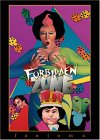
Forbidden Zone
Describing the indescribable is what Tiggers ... uh, Savant does best, so here goes. In 1977 or '78 Richard Elfman and Matthew Bright wanted to make a movie as an outgrowth of their Mystic Knights of the Oingo Boingo stage show, which I had the privilege of seeing at the Fox Venice theater early in the 1970s. The MK of the OB's aim was to create chaotic harmony on stage, and unlike many similar troupes they had the talent to do so. The musical nonsense wavered between operetta and Frank Zappa-like anarchy yet never worried about present-day musical taste. They were so musically inspired, at the time I thought the songs must have been parodies of operettas or old variety routines.
With the MK's about to simplify themselves into simply Oingo Boingo, Forbidden Zone was Richard Elfman's way of creating something with them that would last. It premiered at Filmex in 1980 along with a crowd of hopped up, sign-carrying boosters who were probably the MK troupe having a last lark.
It's one of those films that's impossible to be prepared for. It's in B&W (I can be sure of that much at least). Its music is jammed with Danny Elfman's original compositions and crazy parodies of depression-era songs presented in the form of a Betty Boop cartoon, i.e., a sub-taboo hallucination. There's quite a lot of very clever animation that resembles Fleischer's surreal realm, and the live-action characters live in cardboard sets with a design that could be described as expressionist - The Cabinet of Dr. Caligari meets Cab Calloway.
If the movie weren't so charged with talent and creativity it would surely be scatalogical drivel. On the surface it's as profane and base as your average Robert Crumb Zap comic, so it can't be recommended for anyone offended by nudity or crude humor. Frankly, there's a lot here that offends me. Think of Tim Burton on LSD (or stronger LSD) and regressed to adolescent toilet humor.
Ed Wood would have given his best angora to be the auteur behind Forbidden Zone, which purposely uses Z-movie staging and amateur-night theatrics to its benefit. The normal characters are grotesques and the grotesques even grotesqe-er, to coin a phrase. Pa Hercules (Ugh-Fudge Bwana) works creating smog at Pico and Sepulveda, where an industrial explosion puts him into orbit, but only briefly. Two of his sons are barely-functioning homosexual neurotics who go to school in their underwear. Gramps wears a beanie and behaves like one of the Three Stooges.
The Forbidden Zone is a perverse Wonderland. Fausto's guards are naked female demons who prance around like nasty gazelles. His main servant is Bust Rod, a humorless human toad. The Kipper Kids are a pair of obscenely stuttering bald boxers. The whole place could be the wet dream of a retarded adolescent. Tasteless jokes abound about Jews - The Yiddishe Charleston is probably a real vintage song - blacks, gays, rape, sodomy, incest and anything else one can come up with from the guilty subconscious.
Two powerhouse assets hold the show together. Now a production designer, John Muto provides superb animation, putting the Zap Comic ethic into motion with Escher-like cascades of rolling dice and bizarre settings inspired by early B&W cartoons (which is why Who Framed Roger Rabbit?'s "Toontown" is equally sinister). His main problem is to segue between the minimalist painted-plywood settings of designer Marie-Pascale Elfman, which he does beautifully, sometimes using pixilated human figures to bridge the gap. I'm assuming that he also provided the clever mattes that achieve grandiose effects such as the march of Satan in the Minnie the Moocher - derived ending. In general, Muto's achievement is every bit as original as anything in heralded efforts like Yellow Submarine.
Most of the entertainment value is in the music. Danny Elfman proves himself a creative dynamo in his twisted main Rock theme and in his band's mutations of old 30s and 40s standards. Miguelito Valdez's Bim Bam Boom was a Desi Arnaz-style Cuban hit in the late 40s that found its way into the film noir Suspense; here it's sampled and combined with new orchestrations by Elfman. A pair of lips are sloppily matted into a face of a perverse-looking boy to sing the frantic lyrics, while the Kipper Kids provide backup with ugh-s and raspberries. Bust Rod and a nude princess rumba to several bars of the song, which reaches the heights of surrealism.
Within the general description of demented, there is some variety to the music: Frenchy Hercules (Marie-Pascale Elfman) warbles a singsongy French tune (Pleure), and Queen Doris has her powerhouse number, Witch's Egg. It's partially animated to excellent effect. Danny Elfman's Satan act from the original Mystic Knights show is a well-judged show-stopper.
Now one of the better working film composers, Danny Elfman's Rocky Horror- slanted interpretation of Satan is one of the more memorable devils in screen history. Hervé Villechaize is fun as the mischievous imp of a king; director Elfman gives him a Citizen Kane-like breakfast scene where he simply walks down the length of the table to bridge the gulf between him and his Queen. Susan Tyrell is easily the star of the show. Although all the other roles are filled with gusto, she transcends the wailing, whiney Queen Doris to create a terrific female monster. A manic depressive type, Doris descends into depths of ham-acted misery before roaring back like an enraged cross between the Bride of Frankenstein and Joan Crawford. She's genuinely sympathetic.
Adding to the horrorshow periphery are Viva as a foul-mouthed dungeon prisoner, and Joe Spinell as a rowdy sailor in poor Squeezit Henderson's humiliating flashback: "Chicken Boy! Chicken Boy!"
Fantoma's DVD of Forbidden Zone will be a must-see for existing fans and the curious alike. The transfer is a great improvement on the 35mm prints I saw when new; after all the trouble taken to achieve the right technical look for the picture, the 1980 optical tracks were murky and distorted, making a lot of dialogue hard to hear, but that's all fixed now. Fantoma also gives us every nasty dialogue line in optional subtitles. The B&W looks good, and is contrasty only when contrast is a desired effect. Framing looks great at 1:78.
The film is remixed in 5.1 and is clear and bright. Danny Elfman's music is also isolated in 5.1 as an extra frill (although I prefer the main title arrangement on the old Varèse Sarabande CD). There's an audio commentary with Richard Elfman and Matthew Bright, and a hefty docu with those two joined by John Muto, Susan Tyrell and Marie-Pascale Elfman. It contains several minutes of Mystic Knights stage antics recorded on old videotapes. There are also scenes from an incomplete Elfman attempt called The Hercules Family, deleted scenes and outtakes, a trailer, a song lyric booklet (sing along!) etc.
Susan Tyrell offers some nice reminisces about Hervé Villechaize. With all the rumors about her poor health (?) it's good to see her in such feisty form. For her other movie acting highlight, see John Huston's Fat City sometime. It's easy to recoil from Richard Elman's overpowering presence - he tends to be a little extreme with his eyes and teeth but perhaps he's just reverts to his Oingo persona when faced by Boingo cameras. He's no one-shot as a director; the disc also contains his very well done music video for Oingo Boingo, Private Life. 1
On a scale of Excellent, Good, Fair, and Poor, Forbidden Zone rates:
Movie: Excellent but ya gotta know what'cher getting yourself into
Video: Excellent
Sound: Excellent
Supplements: Commentaries, docus, discrete score, outtakes, deleted scenes, samples of other Richard Elfman work, booklet with lyrics.
Packaging: Keep case
Reviewed: August 28, 2004
Footnote:
1. This personal story is more of an "I was there" statement than an "I was important" statement, so I'll include it. In 1977 Richard Elfman and two associates visited Doug Trumbull's Future General headquarters (a converted egg factory) in Venice to ask if he'd help them find a good special effects person to help put Forbidden Zone together. He wasted their time by fobbing them off on me, essentially an effects fetch-it guy who made student movies but always with a good cameraman. I read their script, thought it was an obscene mess and politely begged off, truthfully saying I didn't have the needed experience. I remember the day because Elfman and co. were polite fellows doing due diligence trying to find some technical brains to make their movie go. Trumbull had underpaid and underused camera geniuses like Peter Anderson basically doing support work, but just brushed Elfman off. It's surely better that they went the Cal-Arts direction and found the brilliant John Muto.
Return
| |
|



| Popular Reviews |
| Sponsored Links |
|
|
| Sponsored Links |
|
|
| Release List | Reviews | Shop | Newsletter | Forum | DVD Giveaways | Blu-Ray | Advertise |
|
Copyright 2024 DVDTalk.com All Rights Reserved. Legal Info, Privacy Policy, Terms of Use,
Manage Preferences,
Your Privacy Choices 
| |||||||