
| Reviews & Columns |
|
Reviews DVD TV on DVD Blu-ray 4K UHD International DVDs In Theaters Reviews by Studio Video Games Features Collector Series DVDs Easter Egg Database Interviews DVD Talk Radio Feature Articles Columns Anime Talk DVD Savant Horror DVDs The M.O.D. Squad Art House HD Talk Silent DVD
|
 DVD Talk Forum |
|
|
| Resources |
|
DVD Price Search Customer Service #'s RCE Info Links |
|
Columns
  


 
|
|
|
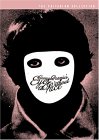
Eyes Without a Face
Once again we come to a movie that's so personally important to Savant that I must curb my enthusiasm so as to not oversell it. Eyes Without a Face is an exquisite horror film that works as a collision of aesthetic visuals and intolerably inhumane content. It stands alone from the glut of commercially-oriented Eurohorror that started a couple of years before. It's French, a country that loved horror movies but didn't make many. Despite its then-outrageous gore content, it's not presented or structured as an exploitation movie. Its serious director channels the poetic surrealism of Jean Cocteau into the contours of the horror film; even though Eyes Without a Face has the surface naturalism of a crime thriller, the immediate reference has to be Cocteu's Blood of a Poet and the fantastic Beauty and the Beast. It also harks back to the work of Feuillade, especially Fantomas and Judex, which director Georges Franju would remake with similar fantastic imagery.
Raymond Durgnat's late sixties film criticism identified the relationship between 'poetry and pulp' that presented pop entertainments like Batman and This Island Earth as work important to the culture, and he celebrated George Franju's unique Eyes Without a Face as the pinnacle of the horror film, graduated from exploitation fumblings to a clear poetic expression. As there's almost no other horror film with a similar impact, Les Yeux sans Visage is easily described.
It's slow and deliberate. The visuals present an orderly world of a doctor completely above suspicion, conducting his atrocious work secure from detection. Paris and environs are overcast and foggy. Leafless trees dominate grey skies. The police go about their business with sincere goodwill, but are ineffective.
The villains are mysterious and banal at the same time. Like the workaday monsters of the concentration camps or the butchers of Blood of the Beasts (Franju's groundbreaking docu short subject, included here as an extra), Dr. Génessier and his devoted assistant Louise don't profess mad theories or rationalize what they're doing. They kidnap, mutilate and murder innocent young girls, work that to them is deplorable but necessary. Génessier isn't a mad doctor; he's that kind of doctor so impressed with himself that he's too proud to admit an error. He loves his daughter and does show care for his patients, but his real love is his own achievement in surgical heterografts - the transplanting of organs or tissue from one person to another. In a way he's like H.G. Wells' Dr. Moreau in that he clearly considers himself and his science above morality and the law. But Genessier's wealth and respectability - he's an intimidatingly closed-off man - allow him to do what he pleases without running away to a mad lab on a remote island. Génessier sounds like Genesis and suggests the Frankenstein cliché of the doctor who aspires to usurp God's domain. Génessier is haughty, domineering and utterly convinced of the rightness of his actions.
Louise is even a bigger mystery. She's the doctor's assistant and probably his lover. As described by Durgnat, her doglike devotion is suggested by her pearl necklace which hides a scar, the only evidence that Génessier has changed her face. We don't know why Louise was given a new face, and we don't know if Louise was always Louise. What happened to Génessier's wife, who has not been dead for long? Is Louise's gratitude out of pure love for her surgeon-lover, or did he change her identity to avoid some unpleasant crime? Louise shows signs of anxiety with the doctor but puts up a flawless facade with the daughter Christiane. She's devoted to both of them, even as she has no problem trapping helpless female victims and imprisoning them in a dungeon.
Edith Scob's Christiane is the soul and the center of the film. The music seems to follow her perception of being in a velvet nightmare, a delicate accompaniment as she glides like a phantom through the brick corridors of her father's mad surgery. Christiane indeed haunts the house of Génessier; with another girl buried in her stead, it's as if she no longer exists. The mirrors have been blacked over and she spends her time visiting the caged dogs used in her father's heterograft experiments, every once and awhile sneaking a phone call to hear the voice of her fiancée Jacques.
Christiane's appearance is purposely stylized to resemble artwork by Jean Cocteau. Her 'face' is a neutral mask without eyebrows, a dead mannequin's face through which stare Scob's maddened eyes. Her hair is brushed around the mask. She walks and moves with exaggerated grace, an image augmented by her housecoat with its upturned collar and short sleeves. It's unnerving to see her walk slowly down a dark brick hallway, while Génessier's tortured dogs howl from offscreen.
Critics in 1959 were probably most offended by Eyes Without a Face because it refuses to make moral judgments. Louise and Genessier pay for their crimes but it doesn't seem enough to balance the suffering they've caused. Their utter disregard for the basic rights of others is monstrous. Génessier's paternal authority - he's the father, the respect figure, the punisher - holds the family in line. But the horror of it all turns the 'mother' into a severe denial case, and the daughter goes quietly insane. Christiane is the innocent victim, and the guilty recipient of a future bought with the blood of other, true innocents.
Eyes Without a Face has horror aplenty, but it requires patience. 1 The centerpiece is the famous surgery scene, which becomes less important with repeated viewings. We witness the destruction of beauty with the cool precision of the professional surgeon, and have to realize that the human image we most identify with, the face, can be taken apart in less time that it takes to carve a Thanksgiving turkey. The skin is an organ not really attached to most of the viscera below it, and Génessier has no problem lifting an entire mask-like graft section in one piece. 2 The idea of visualizing such a process for a film must have been anathema in 1959; Franju's story may not be literally about the producer-imposed taboos of animal vivisection or Nazi medical experiments, but the spirit is there in force.
The real horror is in the film's aesthetics. The carefully controlled settings and Christiane's phantom appearance are genuinely haunting and invest the thriller with the 'controlled anarchy' of the Feuillade serials. Génessier's house is hidden deep in a mysterious-looking wood. The secret surgery is perhaps the old facility before the modern clinic was built, a tile-and-concrete bunker laced with piping and filled with chrome tables and instruments. Rolling steel doors separate rooms. The spooky brickyard morgue in Paris lies alongside a sad railway that with a little imagination might be carrying souls from one world to the next.
Durgnat (always back to Durgnat) stresses the importance of textures in Eyes Without a Face. Genessier's sleek Citroen reflects everything like a mirror, while Louise's ugly smaller vehicle has a corrugated surface. Louise and Edna wear shiny plasticized mack raincoats. Christiane's mask is velvety and featureless, while her ravaged face (out of focus) looks like eroded and furrowed ground. Maurice Jarre's music has textures that can be felt, the jangling 'icy-black waltz' of Louise's stalking theme, and the impossibly gentle Christiane tune that seems to represent her lost identity.
Eyes Without a Face is often called a 'seminal' film because it has influenced so many following pictures. After the research of the Hardy Encyclopedia and fifteen years of Video Watchdog magazine we realize that medical horror films were being made before in Latin America, and that there are several notable precursors to the film that feature mad scientists restoring the looks of horribly mutilated wives and lovers by stealing the blood of female victims - it's a hoary cliché that surely goes back to horror pulp fiction. But the majority of the films are trashy junk like She Demons. Nothing involving mad surgery after Eyes Without a Face is as complex. Mill of the Stone Women and Gritos en la Noche appear to be directly inspired by the Franju film. Eyes Without a Face was sought out and made famous among filmmakers but was not a huge success at the time. My editor friend Steve Nielson compared Franju's inspirational film to the rock band Velvet Underground. Not very many people bought the records, but everyone who did started a band! 3
Franju's star Pierre Brasseur (Children of Paradise) is imposingly cold as the doctor. Alida Valli, no longer the to-die-for beauty of The Paradine Case and The Third Man is a wicked woman with a demise modeled somewhat after that of Vera Clouzot in Les Diaboliques, a more conventional murder-mystery horror film from the same authors. Juliette Mayniel and Béatrice Altariba are the two intended victims, one who is sacrificed and the second who ... that's an unnecessary spoiler. Coincidentally the exact same structure was used for the next year's Psycho by Alfred Hitchcock. We'd have to conclude he was at least aware of the Franju film; his Vertigo is from a book by the same French thriller writers, Bouileau-Narcejac.
Attempts to analyze this uncanny horror film have undone many a reviewer. Even Judith Crist thought Eyes Without a Face was some kind of confused statement about medical ethics. It appears to me to be a generalized statement about modern man's willingness to victimize others to benefit themselves. Charity begins at home and any family, city or country will 'allow' others to suffer if it means helping our own, our children, ourselves. He may not be aware of it, but Génessier doesn't care what price others pay so long as his pride in his profession is restored; he'll kill to restore his daughter but even that goal is secondary to his lofty self-image. 4
Criterion's new disc of Eyes Without a Face is a welcome addition to that high-end line of DVD releases. The film has been notoriously difficult to see; I first came upon it blind in Ivan Butler's The Horror Film and saw it two nights in a row at Harriet Diamond's Westwood midnight shows in 1973 or so. I saw it as The Horror Chamber of Dr. Faustus, a dubbed and trimmed version that dropped a couple of scenes including Dr. Genessier's kind examination of a boy with an unexplained neurological dysfunction. Two crude Sinister Cinema tapes and one fuzzy laserdisc later, we finally come to the Criterion version, a nigh-perfect enhanced transfer that shows Eugen Shuftan's full range of B&W grays. The sound is also far sharper, with Maurice Jarre's amazing score appearing in greater detail; the held violin notes in the title scenes now seem to cut like knives, and the echoey sound of dogs barking in Genessier's horror chamber is unnerving.
This version is intact, and includes the full original surgery scene; I think most prints added an optical zoom and early fade a second or two before Juliette Mayniel's flayed face could be revealed. The additional sharpness highlighted details I'd never seen before: You can tell something is seriously wrong with the face of the lumpen corpse in the back of Alida Valli's little car, and the final shot of Dr. Génessier clearly shows his eye to be torn free of its socket. George's Franju's clinical approach to his scattered moments of gore is intellectually complex and ultra-effective. 5
The fascinating Franju was not a widely publicized figure and I've only seen four of his films. Therese Desqueyroux and especially Judex were marvelous, and seem to spring visually from the same Feuillade-Cocteau gene pool even though their subject matter is radically different. His Judex is one of the most poetic things I've ever seen and I hope it can find its way to DVD.
Included on this disc is Franju's notorious short subject The Blood of Beasts, a sly documentary about two Paris slaughterhouses that made his reputation as a shocking filmmaker. Anyone who eats meat needs to see this; on a literal level it rubs our complacent noses in the daily carnage that supports our way of life. On the other hand, Franju's completely neutral point of view again abstains from presenting a direct message, allowing the reality presented to bring forth suppressed thoughts. As with Eyes Without a Face, the reduction of mass killing into a mundane and orderly routine conjures nightmare visions of concentration camps, if only because our mental tendency is to compartmentalize similar horrors together.
The disc has a couple of short Franju interviews that repeat some of the same stories he already gave in print. One of them is given on a demeaning 'mad lab' TV set with bubbling colored liquids and a costumed horror host. Better is a 'two authors at home' short subject called Grandfathers of Crime about the genial gallic thriller team of Boileau-Narcejac. Of special interest to horror fans are a wide selection of international ad artwork and the beautiful stills that accompanied the original release.
There's also a wonderfully abstract original French trailer (that seems to be textless?) and the impossibly exploitative Lopert trailer for The Horror Chamber of Dr. Faustus / The Manster double bill. Unlike the teasing French coming attraction that barely shows an image of Christiane, the Lopert mishmosh splashes garish text across the screen and announces that a reviewer likened the classic film to "Tennesee Williams in one of his more abnormal moods." It samples every gory scene and misidentifies Edith Scob as Juliette Mayniel. 6
The neatly designed insert features two short essays by Patrick McGrath and the esteemed David Kalat. There can't be enough written about this movie. The disc was produced by Curtis Tsui. Just as some genre fans were disappointed a few months ago to discover that the almost sedate thrills of Mill of the Stone Women didn't add up to a contemporary action-packed horror film experience, there will doubtlessly be many curious fans who will check out Eyes Without a Face and ask what the big deal is. The deliberately paced film concerns itself with contemplating horror more than dishing it out by the bucketful. But viewers tired of cookie-cutter horror films, who respond to magical masterpieces like Beauty and the Beast will be amply rewarded here. Part of the appeal for Savant of Eyes Without a Face was the inability to see it in a decent version for so many years, but it's far, far too good to be just a cult film.
On a scale of Excellent, Good, Fair, and Poor, Eyes Without a Face rates:
Movie: Excellent
Video: Excellent
Sound: Excellent
Supplements: Franju short film The Blood of Beasts, tv interviews, artwork and stills, Trailers, essays.
Packaging: Keep case
Reviewed: October 3, 2004
Footnotes:
1. At a Filmex 1980 screening where the majority of the packed Fairfax theater seemed to have no foreknowledge of the film, the audience was irritated and surly until Edna was chloroformed. Genessier throws the cloth into the fireplace and it bursts into flame, and the whole house went nuts with approval. From then on Franju had them in his pocket.
Return

2. The bizarre fact is that although the surgery scene no longer holds up to modern standards of gore, today's doctors are contemplating doing the exact kind of procedure. With no mention of Franju's movie, two illustrated articles in last November's LA TIMES outlined an identical heterograft procedure. Are they going to enlist face donors the way they do organ donors? Will third world families sell their daughters' faces the way they already do kidneys? Will we see a movie called Dirty Pretty Faces?
I had a dream of an idea once, that I later read was a reality. A person needs a piece of skin to cover some terrible burn. Instead of finding a suitable heterograft and struggling with tissue rejection, the doctors create a 'homograft' from the person's own body. An expanding plastic disc is inserted into one's hip, perhaps. Like an orthodontist stresses braces on one's teeth, the doctor makes the disc larger by literally inserting a screwdriver and adjusting it. Every time one's skin grows to accomodate the larger disc, the disc is adjusted even larger. Finally, one has a big flap of skin and flesh that can be cut free and used elsewhere on the body. It's one's own skin, so there's no rejection. The patient goes through some weeks of discomfort, but the process is no different than the extra skin area that has to grow when one gains weight. It all seems to be possible.
Return
3. The Liz Taylor film Ash Wednesday has two sequences showing real cosmetic surgery in Technicolor closeup ... the scenes overpower the soap-opera story in between. Plastic surgeons who take on the challenge of facelifts for famous stars and millionaires are a coddled and incredibly well-rewarded select group; I once saw a 60 Minutes interview with a French specialist who learned his craft patching together war wounded. He was impossibly puffed-up and self-important and regaled the interviewer with stories of his unique talents and techniques. When it comes to a surgeon, we want someone so skilled that our particular problems are his routine miracles ... but this guy looked like a Génessier in the making.
Return
4. Without elaborating, I'll say that my take on the film is essentially political. Genessier is like Harry Lime, a self-appointed elitist with the opportunity to 'spend' the lives of others to suit his purposes.
Return
5. Mainly because (a) Franju is not selling the gore as his main entertainment, and (2) he has the courage of his convictions. Savant edited two low-budget horror pictures and one was a sleazy film about a devil worshipper with a secret torture chamber. The director approved the exploitative script and hired a willing actress to be trussed up in explicit bondage paraphernalia, tortured and slaughtered. The movie had little going for it and was going to get a punitive rating anyway, so I tried for weeks to get him to keep the sequence as rough as we could make it. I finally found out that the director hadn't thought about the movie enough to realize how sleazy it was. He'd keep taking VHS copies home to his wife, who hit the ceiling each time. No matter what reasoning I used, he talked himself into thinking he was making a 'nice' movie and had me cut most of the nastiness out. So the movie turned out to be a hypocritical mess.
Return
6. I'm proud to be listed in the 'thanks' list for this disc; I remembered that film collector Mike Heenan in Phoenix had the rare Faustus/Manster trailer and got him in touch with the people at Criterion. Put me down as an ordinary movie fan, plain and simple.
Return
| |
|



| Popular Reviews |
| Sponsored Links |
|
|
| Sponsored Links |
|
|
| Release List | Reviews | Shop | Newsletter | Forum | DVD Giveaways | Blu-Ray | Advertise |
|
Copyright 2024 DVDTalk.com All Rights Reserved. Legal Info, Privacy Policy, Terms of Use,
Manage Preferences,
Your Privacy Choices 
| |||||||