
| Reviews & Columns |
|
Reviews DVD TV on DVD Blu-ray 4K UHD International DVDs In Theaters Reviews by Studio Video Games Features Collector Series DVDs Easter Egg Database Interviews DVD Talk Radio Feature Articles Columns Anime Talk DVD Savant Horror DVDs The M.O.D. Squad Art House HD Talk Silent DVD
|
 DVD Talk Forum |
|
|
| Resources |
|
DVD Price Search Customer Service #'s RCE Info Links |
|
Columns



 
|
|
|
Valentin
Every year more and more cute little films are released that portray a young kid as being wiser than the grown-ups in his life and helping them to put their business in order better than they can themselves. It's through the haze of countless previous films like that that the viewer is forced to see Valentin, a handsomely produced 2002 film from writer/director Alejandro Agresti that portrays the Buenos Aires of his youth through the eyes of the eight-year old title character.
While not aiming to create any new narrative, Valentin does a nice job of creating a little cast of flawed, real people and letting their lives develop. Young Rodrigo Noya bears the brunt of the responsibility of making this film overcome its clichéd story and he's mostly very effective. Like an Argentinean Haley Joel Osment, he has the ability to project adult seriousness while still seeming very much a child. The reason for his grown-up perspective is that he doesn't know his mother and his father, an executive who works abroad, is never around. Valentin lives with his paternal grandmother and seems to lead a somewhat joyless existence. His escape is in building rockets and space suits which, given the film's late-60's setting, makes perfect sense as a point of inspiration for this inventive kid.
The three adults who make the biggest impact on the film are Valentin's grandmother (played by Carmen Maura), who complains constantly and talks to herself, his neighbor Rufo (Mex Urtizberea), who entertains Valentin with his goofy charm and teaches him to play the piano, and his father's latest girlfriend Leticia (Julieta Cardinali), a beautiful young woman to whom Valentin feels drawn.
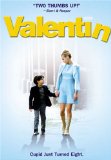
The film (which runs under 90 minutes) features Valentin in a few situations with each of these characters (as well as his father, who doesn't show much interest in raising his kid) but never really adds them together. A nice sequence finds Leticia, who wants to get to know her boyfriend's son better, taking Valentin out for a day on the town. Cardinali and Noya have a cute chemistry and Valentin's eagerness to make strong connections helps the scene gain resonance. Similarly, his friendship with Rufo is genuinely affecting as the two lonely souls entertain each other. But the plot points are not that interesting and they're telegraphed a mile off: Will the grandmother fall ill? Will Valentin play cupid for his friends? (That last one is pretty much answered on the box art anyway.) Even when these "big" story moments occur, they're jammed in at the end of the film. Since so much of the movie is taken up with Valentin's constant voice-over explaining everything to us, there's little left for the audience to discover on its own. With interesting details like Valentin's rocket-designing dreams consigned to the outskirts of the film never to really add more than character quirk (and eventually dumped entirely), there's not enough here to justify a full film.
VIDEO:
The anamorphic transfer is a little grainy at time but overall looks very nice. The production is colorful and vibrant but with a slightly earthy period wash to it. The transfer is reasonably sharp and clean. A very nice presentation.
AUDIO:
The Spanish Dolby Digital 5.1 sound is subtle but effective. Voices are always clear and the atmosphere of Buenos Aires is simple but nice. The traditional score also sounds particularly good. There are also English subtitles as well as an English subtitle track specifically for the hard of hearing.
EXTRAS:
A 12 minute interview with the director is a nice extra, since it gives him a chance to explain what aspects of the film are autobiographical and how the rest of the story was developed without the need for the blathering of a full commentary track. This segment is illustrated with images from the film and is nicely put together. It's non-anamorphic widescreen and looks pretty rough. There is also a non-anamorphic trailer (made for American audiences and pretty cheesy) as well as a selection of ads for other Miramax releases.
FINAL THOUGHTS:
This is the kind of movie designed to be called "charming" (a word the packaging uses twice.) Art-house cutesiness is still just cutesiness, but in another language. The actors (particularly Urtizberea and Cardinali) are compelling and could have put together more interesting characters in a more ambitious film. In the end Valentin is a nice diversion that, like its lead character, just doesn't reach for the stars.
|



| Popular Reviews |
| Sponsored Links |
|
|
| Sponsored Links |
|
|
| Release List | Reviews | Shop | Newsletter | Forum | DVD Giveaways | Blu-Ray | Advertise |
|
Copyright 2024 DVDTalk.com All Rights Reserved. Legal Info, Privacy Policy, Terms of Use,
Manage Preferences,
Your Privacy Choices 
| |||||||