
| Reviews & Columns |
|
Reviews DVD TV on DVD Blu-ray 4K UHD International DVDs In Theaters Reviews by Studio Video Games Features Collector Series DVDs Easter Egg Database Interviews DVD Talk Radio Feature Articles Columns Anime Talk DVD Savant Horror DVDs The M.O.D. Squad Art House HD Talk Silent DVD
|
 DVD Talk Forum |
|
|
| Resources |
|
DVD Price Search Customer Service #'s RCE Info Links |
|
Columns
  


 
|
|
|
Gone With the Wind: 4 Disc Collector's Edition
Reviewing Gone With The Wind is like "reviewing" Mount Rushmore. It's such a monumental piece of art that there's almost no way to step back and take it all in at once. Released in 1939, it's still the biggest motion picture ever made in many respects, combining historical content, brilliant cinematics, powerful acting, epic melodrama, comedy, action, romance and ground-breaking special effects. At four hours it's one of the longest mainstream narrative films ever made. It's so full of iconic moments of plotting and dialog that a feature film could be edited just out of the most quotable moments.
And like many films from Hollywood's first half-century, it was the brainchild of its producer. Based on the enormously successful book by Margaret Mitchell, Gone With The Wind was the definitive production of David O. Selznick, the legendary producer also responsible for King Kong, A Star is Born, Alfred Hitchcock's Rebecca, among many other classics. In fact, Selznick was such a powerful figure at his studio that the director was practically an after-thought. (George Cukor started Gone With The Wind, only to leave after clashing with Selznick. After a series of replacements, the final credit went to The Wizard of Oz's Victor Fleming.)
But Hollywood was a different place back then. Just one look at the overstuffed list of ten (!) nominees for Best Picture in 1939 shows how that year (considered by many to be the best ever year in movies) offered such an embarrassment of riches: In addition to Gone With The Wind (which won the Oscar) and The Wizard of Oz, the category included Mr. Smith Goes to Washington, Of Mice and Men, Stagecoach, Wuthering Heights, Dark Victory, and Goodbye, Mr. Chips among others. Yet even in that rarified company Gone With The Wind stands out.
Gone With The Wind is also one of the most controversial films Hollywood has ever turned out and some of the content today needs to be watched with some qualifications. Gone With The Wind, like the previous world-changing American film, 1915's Birth of a Nation, is set in the South during and immediately after the American Civil War. That war left deep scars in American society that have never fully healed (so many domestic conflicts everyday seem to have their origins in the war between the states) and it's telling that two films that most invented (arguably) the modern motion picture take the Civil War as their setting.
But D.W. Griffith's Birth of a Nation, which compiled dozens of film techniques now taken for granted into one epic production, was viciously racist and cannot be watched today without acknowledging how its high cinematic aspirations are at odds with the debased subject matter. Gone With The Wind, however, is nowhere near as openly resentful as Birth of a Nation. It has its own set of qualifications regarding race and early American society, but while this aspect is very important to the film, it doesn't threaten to overshadow the rest of the celluloid achievements the way Birth of a Nation shames itself.
But more on that later. The thing with Gone With The Wind is that there is so much to talk about, so many deliriously engaging stories and characters, that it's tough to know where to start. I guess the best place to begin is with the film's ultimate starring character, the premier Hollywood heroine, Scarlett O'Hara, as played to haughty perfection by Vivien Leigh. There has never been a character like Scarlett, and there likely never will be. Scarlett is a tempestuous woman with many contradictions who goes through enormous changes over the course of the film. At the start she's a saucy and egotistical teenager, in love with Ashley Wilkes (Leslie Howard) at least partly because he's already taken. She toys with the emotions of any other man who crosses her path, partly to make Ashley jealous and partly to pump up her own self-esteem. She pushes her lip out and sulks when she doesn't get what she wants. This spoiled girl act sets up one of film history's most complex and dramatic character arcs. She goes from petty and vindictive to a long rollercoaster ride of emotional highs and lows, growing as a person, becoming bitter, hitting extreme lows and finally striking out on her own in one of the greatest endings ever committed to film.
And all of this turmoil is made absolutely brilliantly vivid by Vivien Leigh. Calling her performance a powerhouse would be an absurd understatement. From her first moment on screen, bracketed by redheaded twins, grinning like the Cheshire cat and sing-songing "fiddle-dee-dee," to her final bold moments, this is the stuff of legend. Leigh hadn't really blown audiences away before Gone With The Wind (her earlier films include Dark Journey and A Yank At Oxford) and her casting as Scarlett was the result of a legendary talent search, but the result couldn't have been better. Leigh's performance is lively and funny but also powerfully rich in dramatic tension. When Scarlett hits rock bottom Leigh goes into an emotional haze, eyes distant, face slack. When she's happy, the actress' distinctive features dance with mischievous glee. When she's angry her top lip curls and her eyes burn with fury. The yo-yo that is Scarlett's emotional development forms the basis for as complete a performance as a film actor has ever given. This is pre-Method acting, with influences of the theater and even a little bit of silent film showiness, but no one could have combined classic film acting with ahead-of-her-time emotional depth the way Leigh does here.
And she's no standard movie heroine either. She can be supremely selfish and cruel. Plus her character changes aren't always tidy: There is plenty of emotional backsliding. But surrounded by characters who always mean well, Scarlett (as her name implies) is the fiery center of the film and, no matter how despicable she acts, she's a character that the audience can love. Her behavior is something flawed humans can identify with, except that she has the courage and audacity to speak what's on her mind, even when she hasn't thought things through.
Of course, Gone With The Wind is much more than a one-actor film. Even though Scarlett dominates, the story is so far-reaching it boggles the mind. Beginning right at the start of the Civil War - reference is made to the initial conflict at Fort Sumter - Gone With The Wind tracks the changes in the South, specifically Georgia, during and in the years following the war. Scarlett and her family start out on Tara, their lush plantation, where she and her sisters spend their time thinking about what boy to marry. The first major scene in the film finds the O'Haras attending a bar-b-q and ball (a kick-off that probably influenced The Godfather's opening wedding sequence) and it's there that the audience meets many of the film's most important characters, including Ashley Wilkes, who is already promised to earnest Melanie (Olivia de Havilland), and Rhett Butler (Clark Gable), an opportunistic profiteer who doesn't have an opinion on the looming war other than that it's all beneath him. Scarlett throws herself on Ashley in an unsuccessful bid to convince him to leave Melanie for her but in the process she manages to make quite an impression on the bemused Butler, who sees some of his own selfish nature in the young woman.
Once the war breaks out, Scarlett holds onto her self-involved values while her world begins to crumble around her. She marries Charles (who had been intended for Ashley's sister) just before he heads off to fight. When she finds herself a widow - after only getting married out of spite - she can barely bring herself to act mournful. (Her one-upmanship includes many hysterical moments, like offering up her emotionally worthless wedding band to the Confederate cause only after Melanie donates her own beloved band.)
As the war drags on, however, Scarlett (who now lives in Atlanta with her Aunt Pittypat) begins to experience some true horrors. At the urging of Melanie she volunteers to help treat wounded Confederate soldiers. One harrowing moment - a soldier having his leg amputated without any medication - is told through the horrified look on Scarlett's face. (This kind of moment, coming after her idyllic early scenes, finds Leigh quickly delivering a truly deep performance.) One of the film's most memorable moments (and easily one of the greatest images ever filmed) occurs when Scarlett, finding herself taking charge, has to go to the train depot-cum-makeshift hospital/morgue to summon the doctor to the pregnant Melanie's side. Scarlett, who has been wrapped up in her own little private melodrama of having to care for the woman married to the man she loves, suddenly finds herself standing amidst literally thousands of wounded and dead soldiers. The camera cranes higher and higher until... the shot is too incredible to describe fully. But it finds this masterful film at the height of its cinematic powers.
Eventually, as Atlanta burns, Butler returns (he haunts Scarlett's entire stay in Atlanta) and helps her return to Tara. On the way he expresses the first signs that he might be wavering in his self-motivated ways: Scarlett says of his refusing to fight "You can be proud now that you're smarter than all of them." Rhett, disgusted with himself, quietly states "I'm not so proud." It's an emotional moment surrounded by unimaginable chaos.
They fight to return to Tara only to find it virtually destroyed. The tragedy that she discovers at home reaches into every corner of what she holds dear. The way of life the O'Hara family valued is clearly a thing of the past at this point, with the slaves almost entirely gone and the livestock and farm assets all plundered by the Northern army. Scarlett finds her family decimated, too, both physically and psychologically. The film takes a dark turn here at the end of the first half.
The second half of the film (which follows an intermission and disc change) largely concerns the aftermath of the war, with Scarlett starting out picking her own cotton (the film's idea of hitting rock-bottom) and trying to build Tara back up. The film hits perfect emotional notes by bringing back lines of dialog from hours earlier at just the right moment, reflecting Scarlett's attempts to cling on to her sanity and any shred of the past. She eventually does manage to return to wealth after yet another emotional double-cross, and fights to keep Ashley in her life. Back in Atlanta, Scarlett crosses paths with Butler again and again until she finally gives in to his advances.
The last hour of the film is like a parade of tragedy with one terrible thing happening after another. By the time Scarlett comes to a major emotional awakening, however, it's too late and the film ends with some of the most famous lines in movie history. Also, despite the fact that Gone With The Wind is the ultimate example of Hollywood on full-throttle, the final moments do not reflect a pat, tidy happy ending. It's ambiguous, open and bold.
As I said, Leigh's performance rules this enormous film, but she's surrounded by countless other actors, most all turning in excellent work. Gable is the quintessential leading man here, winkingly delivering his sarcastic lines but also quite capable of exploding in rage. His Rhett Butler in any other film would easily be the stand-out character (but no one can steal the screen away from the on-fire Leigh in this show) and he exudes macho confidence and swagger. That he also manages to let vulnerability creep in, especially in the homestretch when Scarlett drives him nearly mad with her mind-games, shows how skilled an actor Gable was in addition to being the perfect movie star. He doesn't brood or rely on any tricks to make his performance seem deeper. Rather, he earns his place in film history by taking the swash-buckling icon role and twisting around until it becomes something much better.
De Havilland is supremely sympathetic as the too-nice-to-be-real Melanie, who eventually shows real character and grit that exceeds the expectations Scarlett has for her. Her key moment, late in the film, finds Melanie in a position to finally cast Scarlett out of her family's life. After rumor gets around that Scarlett and Ashley have been having an affair Melanie is expected to finally send her friend packing. But what Melanie does - and what de Havilland does with the moment - is so much more moving that it recontextualizes her performance throughout the entire film.
Howard has a tough role as the indecisive Wilkes who allows his reluctance to prevent him from definitively cutting Scarlett off for years. Ashley is a bit milquetoast for our raging Scarlett and it's clear from early on that her love for him comes from an irrational place. Still, Howard takes the square-jawed character and puts him through the ringer, starting off firm (he initially offers the only voice of concern over getting into a doomed war with the North) and eventually crumbling from the pressure of such a topsy-turvy life.
There is another set of supporting actors whose performances can't really be reviewed alongside their costars. That's because of the other side of Gone With The Wind that some audiences might find tough to take. Gone With The Wind tells its story entirely from the perspective of the plantation-dwelling, slave-owning characters. But the slave experience as portrayed in the film is a mix of Hollywood hooey and minstrel-show mugging with some fine performances and character details mixed in. In fact, Hattie McDaniel, who plays Scarlett's lifelong Mammy, actually (and mindbogglingly) won an Oscar for her performance. In some ways she transcends the material with her funny, saucy performance, but really this is an aspect of the film that just reinforces stereotypes that have long since been abandoned.
Granted, the film is an artifact of the time in which it was made, but there is a glee the filmmakers take in throwing around the word "darky" or in pointing out how well the O'Haras treated their slaves and how loyal they were even after the war ended that is just unsettling. Life is never as simple as any one point of view offers (I remember a former-slave interviewed in Unchained Memories saying that being freed was the worst thing to ever happen to her), and Selznick did excise some material from the book (the film makes no mention of the KKK and all uses of the "N" word were removed) but there's no denying that the film will be offensive to a significant percentage of the audience and pretending otherwise would be to do the film and its viewers a disservice.
Like the much more offensive Birth of a Nation, it is foolish to suggest you can "look past" the racist elements of the film. Gone With The Wind is soaked in a view of the South that was archaic even in the 1930's. From Max Steiner's score, which borrows from traditional Southern music to boost Dixieland spirit, to the caricatured performances of many of the film's black actors, including Everett Brown as faithful Big Sam to Oscar Polk as "Pork" to, perhaps most famously, Butterfly McQueen as the histrionic, squealing Prissy, there is no escaping the legacy of slavery throughout the film. Scarlett's scene scolding the child-like Prissy over Melanie's sickbed is both an example of blatantly racial stereotyping and one of the film's most important and memorable scenes.
There is no separating out the racial content from the rest of Gone With The Wind. It's a question of going in with an open mind and trying to take it all in. Audiences surely have had the chance to come to their own conclusions during the film's sixty-five years and will continue to do so. But claiming that there's nothing to think about in the film's uncritical treatment of its slave characters (and its portrayal of freed slaves and Northerners as vicious carpet-baggers) is as simpleminded as stubbornly claiming that a Confederate flag hanging on a state capital is an innocent gesture of cultural continuity.
To truly love Gone With The Wind, however, is to embrace it in all its complexities and contradictions. Many a culturally insensitive hackjob has fallen into the celluloid dustbin of time. But Gone With The Wind endures because it is so much more than any one set of adjectives. Like Scarlett O'Hara, there is not just one side to the film. It is many things to many people: A women's soap opera, an historical epic, an action-filled blockbuster, a serious drama, a showcase for great performances, and, yes, a part of America's conflicted social history. For better or worse, Gone With The Wind is one of the most American films ever made, in every respect, from the sense of bigness to the need to invent and improve to the complex and confounding cultural messages. The fabric of American filmmaking contains many threads from this seminal work of art and today's audiences should experience it just as audiences have for the last sixty-five years.
VIDEO:
The full-screen (original aspect ratio) video of Gone With The Wind is absolutely beautiful. Granted, it doesn't always have the razor-sharp focus of a modern film but this transfer is miraculous considering the age of the film. That's because the folks at Warner Brothers, who put together the excellent restorations of Singing in the Rain, Meet Me in St. Louis and other classics, put all their mojo on this release as well.
Gone With The Wind was shot using three-strip Technicolor, a camera technology that used three different film strips to capture the red, blue and green portion of the spectrum separately. When the images from the three negatives were combined the resulting image had a hyper-realistic, vibrant, highly saturated look. But if the registration was off (if the three strips were not perfectly aligned) the image took on a blurry, indistinct quality. One of the many innovations that went into this restoration work (as I learned on a documentary on the third disc) was the creation of a computer program that aligned each frame perfectly to create what is probably the sharpest version of Gone With The Wind ever seen, including during its initial release.
Add to that the use of a variety of original film elements to get the best source footage for each scene, the careful color correction that each shot underwent, and the removal of countless instances of damage and dirt (often by hand presumably to avoid a problem similar to the one where the computer restoration program deleted actual raindrops in Citizen Kane) and you get a painstaking, stunningly beautiful image that is as true to the original film as possible.
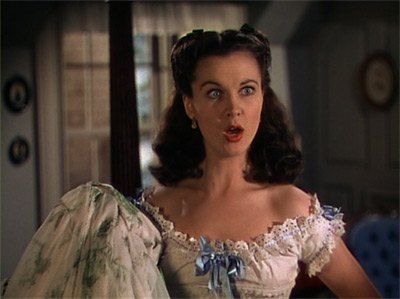
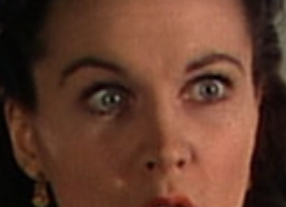
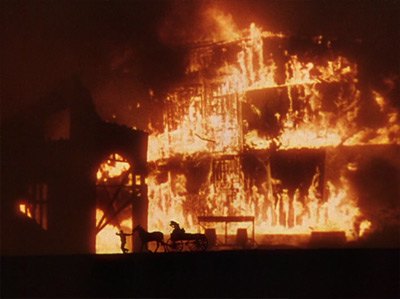
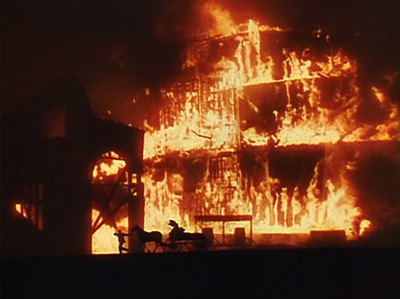
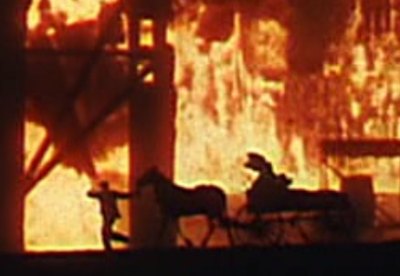
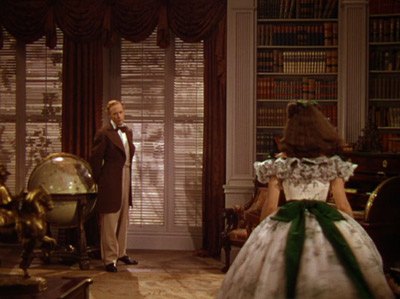
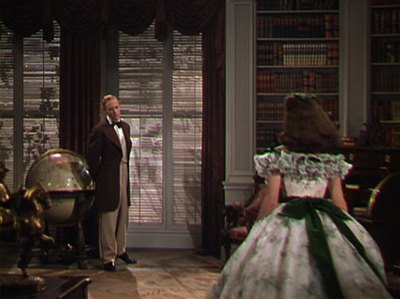
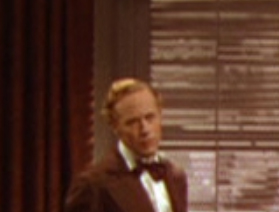
As the following screen captures show, the previous DVD release (which looked wonderful when it was released back in 1998) had higher contrast and added sharpening, giving it a fake sense of detail. It also had more noticeable compression. The new version has a silkier texture, with the flesh-tones and fabrics really taking on a tactile sense. The earlier version was by no means a bad transfer but the new one offers at times almost imperceptible improvements. It has the dreamy quality at which the Technicolor process excelled, whereas the 1998 transfer seems a bit harsh by comparison. Obviously there are elements that are a little rough thanks to the age of the film, but it's incredibly beautiful.
During the film's four hour running time I only noticed one glitch: A strange flicker during an early scene that was either a compression problem or a problem individual to my disc. I was able to see it several times in the same place, but then I was unable to replicate it on another player, so perhaps it was just a hiccup.
In the following examples, the first image is from the new transfer and the second is from the 1998 transfer (no retouching was done by the reviewer, but some JPEG compression was necessary in creating the web-versions of the images): 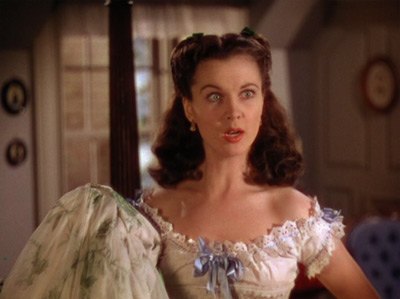
2004 Transfer
1998 Transfer
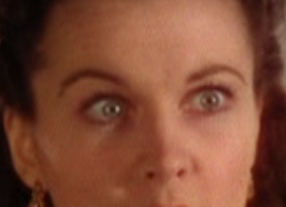
Enlarged detail from 2004 Transfer
Enlarged detail from 1998 Transfer
2004 Transfer
1998 Transfer
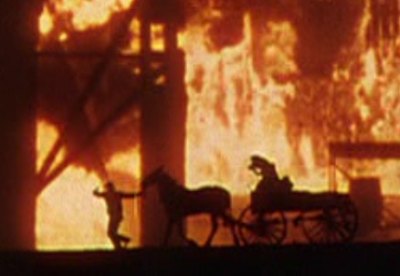
Enlarged detail from 2004 Transfer
Enlarged detail from 1998 Transfer
2004 Transfer
1998 Transfer
Enlarged detail from 2004 Transfer
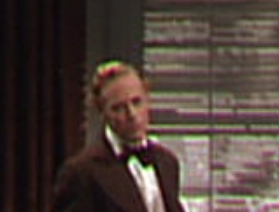
Enlarged detail from 1998 Transfer
Note the ringing on the blinds in this detail compared
with the more natural blinds in the 2004 detail.
AUDIO:
There are a few audio options. In addition to the original Mono soundtrack there's a Dolby Digital 5.1 track that's done very much with the spirit of the original film. The remix artists haven't added any distracting new sound effects. Instead they've created a simple, effective mix that uses the soundstage to enhanced effect during the bigger action scenes but that steps back and allows dialog scenes to play simply and without flourish. The original mono track is also very powerful, with a forceful, unified feeling on the louder scenes and distinct audio for the dialog. Microphones are far more sophisticated today than they were in the 30s, so voices on both tracks are slightly murky by modern standards, but never less than clear and completely understandable.
There is also a French Dolby Digital 5.1 track as well as English, French and Spanish subtitles.
EXTRAS:
The film is spread across two discs, with the breaking point at the intermission. The first two discs feature commentary from film historian Rudy Behlmer. While full of interesting tidbits, this is an overly scripted commentary lacking in any real passion. He recites lots of uninteresting bits (like specific dates when scenes were shot) and does so in a less-than-exciting tone. It's a shame that a more lively and critical discussion couldn't have been included, say by modern filmmakers or social critics.
The third disc features a wealth of documentaries, most of which are not original to this set but that are still worth watching. "The Making of a Legend: Gone With The Wind" is a feature length documentary created by Selznick's sons. It is a really outstanding documentary, looking at every aspect of the production with a patient eye. It spends lots of time frankly discussing problems with the production and noting the social issues in the film. It is also a treasure trove of footage from screen tests and rehearsals, including numerous shots of other actresses reading the part of Scarlett, including Katherine Hepburn (all wrong), Tallulah Bankhead, Lana Turner and many more. The best part is seeing Leigh assume the role in her black-and-white screen test, which is so perfect that it blows all the other actress' performances out of the water.
"Restoring a Legend" looks at the restoration process in a way that should illuminate what's been achieved for everyone from film professionals to folks who don't know a sprocket from a Steenbeck. A lot of work was done visually and to the audio and getting a peek at the complicated process is a treat. What's really interesting is the credo that Warner Brothers has in these restorations, which is to not alter the film in any way, but rather to just bring it back to the glory of its initial release.
"Dixie Hails Gone With The Wind" is a four-minute Hearst newsreel on the film's Atlanta premiere. Seeing the stars arriving and the tickertape parade kicking off the film is pretty cool. There is also a short called "The Old South" that ran in theaters before Gone With The Wind was released to introduce audiences to the history behind the film, specifically how the cotton industry created the need for slaves. The short was directed by High Noon director Fred Zinnemann (who brings a cinematic flare to what could have been simply promotional) and is a really interesting addition to the set.
There is also footage from the 1961 Civil War centennial in Atlanta, which featured a gala screening of the film. This silent footage is of somewhat limited interest. Some of the stars are there but their words aren't featured. Also, in one short segment Vivien Leigh sports about the craziest hairstyle I've ever seen.
A selection of key scenes dubbed into French, Italian, and German gives a sense of the global reach of the film but it also points out how much of its effectiveness is lost when dubbing over the unique performances of actors like Leigh, Gable and McDaniel.
A selection of theatrical trailers from various releases of the film is also included, including the original 1939 run as well as 1961 (Civil War centennial), 1967 (70mm reissue), 1968, and 1989 (50th anniversary). The 1939 trailer is the very definition of a teaser, offering no footage from the film at all, just a storybook touting the film as "the most eagerly awaited motion picture in the history of modern entertainment." The 1989 trailer heralded a restored version of the film and the trailer includes a comparison between previous releases and the then-new transfer.
The disc also contains the international prologue which was added to the film to explain the Civil War to audiences around the world. There is also a text screen listing the film's many awards.The fourth disc features some pieces on the cast. A forty-minute documentary called "Melanie Remembers: Olivia de Havilland Recalls Gone With The Wind" is the sole new major production in this last batch, but it's nice to see the actress get a chance to discuss her memories in detail. She talks about reading for the film for the first time opposite a Scarlett played by a passionate Selznick himself.
"Clark Gable: A King Remembered" is a rough-looking hour-long remembrance of Gable as a life-loving action hero. Clips from his early films look rather damaged, but the piece does get at the fact that the actor brought a sense of humor and fun to his performances.
"Vivien Leigh: Scarlett and Beyond" (45 minutes) is a nice look at the actress, although it's marred by an annoying hosting performance by Jessica Lange. There are a lot of clips, however, of Leigh in films that most audience member have never heard of as well as candid shots of Leigh in her private life with Laurence Olivier.
There is also a selection of mini-biographies on some of the supporting castmembers. Clips on the black actors do get into the controversies over the roles. The sixteen clips, some under one minute in length, are a bit rushed, but they do give the audience a chance to get to know this huge cast a little better. (Although McDaniel, Howard, and McQueen are cheated a bit by being included in this group, since their performances are so important to the film.) Overall, it's a pretty outstanding selection of supplementary features.
FINAL THOUGHTS:
There are no other films like Gone With The Wind. It occupies a unique position in film history: Larger than just about any other film before or since, combining all the things that make Hollywood great with independent thinking and innovative spirit, possessing many classic performances and featuring possibly the finest leading female performance in film, it is the very definition of a classic. That it also reflects outdated and ugly sides of our cultural past doesn't diminish the film. In fact, in a way it enriches it, giving us more to talk about, more to think about, more to discover. Gone With The Wind, perhaps even more than Citizen Kane, is the film that invented the modern age of filmed storytelling, mixing genres and styles flawlessly and encompassing huge swatches of history and fiction. This new edition features what might the definitive visual edition of the film as well as many worthwhile extras. For audience members seeing the film for the hundredth time or for the first time, it's a must. For lots of DVD fans the Star Wars and Return of the King releases are the sets of the year but Gone With The Wind is very much their equal. Frankly, those blockbuster epics owe much of their success to Gone With The Wind (as does Titanic) and modern audiences might gain a better appreciation for their favorite films if they take the time to watch it.
|



| Popular Reviews |
| Sponsored Links |
|
|
| Sponsored Links |
|
|
| Release List | Reviews | Shop | Newsletter | Forum | DVD Giveaways | Blu-Ray | Advertise |
|
Copyright 2024 DVDTalk.com All Rights Reserved. Legal Info, Privacy Policy, Terms of Use,
Manage Preferences,
Your Privacy Choices 
| |||||||