
| Reviews & Columns |
|
Reviews DVD TV on DVD Blu-ray 4K UHD International DVDs In Theaters Reviews by Studio Video Games Features Collector Series DVDs Easter Egg Database Interviews DVD Talk Radio Feature Articles Columns Anime Talk DVD Savant Horror DVDs The M.O.D. Squad Art House HD Talk Silent DVD
|
 DVD Talk Forum |
|
|
| Resources |
|
DVD Price Search Customer Service #'s RCE Info Links |
|
Columns
  



 
|
|
|
Errol Morris DVD Collection, The
Were it not for the critical success of Errol Morris, and his evolution as a filmmaker over the past few decades, we might never have seen the resurgence and unprecedented popularity of documentary films over the past few years. To put it bluntly, without an Errol Morris there would probably not be a Michael Moore today. Whether or not you think the idea of a world without Michael Moore is a good thing, it would be hard to argue with the fact that Morris has made an indelible mark not only on the world of documentary filmmaking, but also on the world of American Cinema as a whole.
 With the release of Gates of Heaven, in 1978, Morris took a genre that was longing for a fresh approach and injected with a sense of peculiar interest in his subjects as people. In all his films, but especially in his earliest work, he doesn't simply find an interesting topic and examine it as a linear, plotted idea, but instead he finds interesting people and allows them to craft stories of their own.
 Sure, Gates of Heaven is ultimately about pet cemeteries, but Morris makes it much more than just that. In the hands of any other filmmaker, the film would be a straight documentary about a community trying to find a place to bury their deceased pets. It would probably be a pretty boring film to watch. Morris, however, makes Gates of Heaven less about the pet cemeteries and more about the people who surround the story. Morris, in turn, does something that few (if any) documentary filmmakers of the time chose to do; he completely flips the genre and makes the people in his films the story of his films. He allows his subjects - which are, obviously, the most interesting part of his films - to become his story. And it becomes clear in the first few minutes that these people are the real attraction here. Soon, you even forget what the "story" of the film is actually about and you simply melt into the world of his subjects. This very approach is what makes Errol Morris such a special filmmaker.
While his approach may have evolved and changed slightly throughout the past few decades, Morris is still a master craftsman today. His latest documentary, The Fog of War, finally earned him the precious Oscar® that he's deserved for so long, and his films are engaging as they've ever been. By employing many of the same techniques from early in his career, Morris still makes his subjects the backbone of his stories.
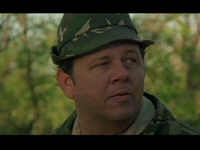 I've often thought of Morris as a very calculating filmmaker who knows exactly what he wants out of these subjects, but never seems to exploit them in any way. He simply allows them the freedom to speak their mind (often dead-center on the screen) and create their own stories. His camera, more often than not, looks at these people with the utmost interest and is rarely, if ever, condescending. As a viewer, however, you still get the feeling that Morris is somewhere off camera winking at his audience. He doesn't need to give us title cards to tell us who each person is, and he doesn't need to narrate his way into a persuasive argument. He, instead, allows his subjects to do this for him by simply telling their stories. Morris doesn't have to goad his audience into thinking these people are a little off-center by using sneaky camera and editing tricks. These people do this for him. What makes him so special is that he allows his subjects to be exactly who they are. Morris has an immense amount of confidence in his subjects to get his point across and in his ability to choose incredibly interesting people and, for that, he should be applauded.
Gates of Heaven: 4 stars out of 5
Gates of Heaven started it all for Errol Morris and it's a film that Roger Ebert has been raving about for years. He repeatedly calls it "one of the top ten films of all time" and this would only be so much hyperbole if it weren't, in fact, pretty close to the truth. A little documentary film about pet cemeteries quickly turns into a heartfelt character study about people that don't quite know how to let their pets go when they pass.
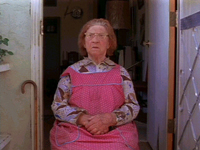
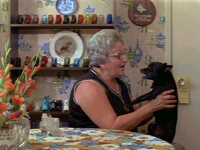 Morris gives us the basic strokes about building the pet cemetery and some of the struggles to get it off the ground, but what he truly finds at the heart of his story are the people he interviews. Every single one of them is something to behold. From the wheelchair-bound animal lovers to the man in charge of disposing of deceased animals in one of the more wretched ways, these people each have a story to tell and Morris lets them tell it to the hilt. The lack of title cards telling us exactly who these people are only makes them more part of the community of the film, each one contributing a little piece of what makes the film, as a whole, so very engaging.
I have the feeling that Morris may have stumbled upon what would become his trademark technique of "the people are the story" when he finished shooting all the interviews for Gates of Heaven. I can see him in the editing room going through the interviews and having that moment when he realizes the stories his subjects tell are actually much more interesting than the idea at hand. Whatever the method, Morris embraced something that few, if any, documentary filmmakers had ever imagined embracing, and he started a career that would continue to use this technique over and over again.
Vernon, Florida: 4.5 stars out of 5
How do you follow a film like Gates of Heaven that was so rich in interesting subjects with so many great stories to tell? You go down to a backwater town in Florida and talk to some even more interesting people until you have a ton of footage. Then, you go back to your editing room and try to splice it all together into something cohesive. The resulting film is one that I think is actually better than Gates of Heaven.
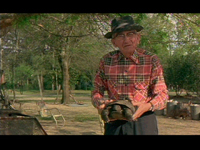 The inhabitants of Vernon, Florida are more varied, more richly observed, and just downright funnier than those in Morris's debut. These are people that you won't find anywhere in America except in this little tiny nook of southern Florida, and Morris not only finds them, but gets them to display every one of their little oddball eccentricities for the camera.
This time around, Morris has even less "story" than he had to work with in Gates of Heaven. In that film, he at least had the whole idea of pet cemeteries to fall back on. In Vernon, Florida, Morris really has nothing but the intriguing people of the town to support his film. The result, however, is a film that turns out to be even more heartfelt and funnier than his first film. Errol Morris was a damn fine filmmaker when he made Gates of Heaven. With the release of Vernon, Florida he was beginning to show that he was a master craftsman.
The Thin Blue Line: 5 stars out of 5
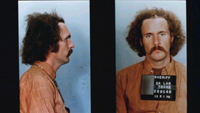
With two critically adored films under his belt, Errol Morris set out to make his most complicated film yet by dramatically reenacting the 1976 murder of a Dallas police officer. This wasn't just going to be a film where Morris could sit back, put the camera on a tripod, and allow his subjects to chat away their life stories. The Thin Blue Line was going to involve investigation, reenactments, and dramatic tension to tell the story of David Harris and Randall Dale Adams. Morris, however, was clearly up to the task as the resulting film is so absolutely convincing by its conclusion that it helped free an innocent man from prison.
 Morris uses some of his usual techniques here, but he adds quite a few new elements to The Thin Blue Line. He examines the incident through several reenactments, each varying slightly from the previous ones, and employs some very dramatic shots of seemingly unrelated items - a spilled shake, for instance, becomes incredibly telling. He also uses music very effectively here as he employs Philip Glass to create a hauntingly suspicious score for the film. What, on the surface, appears to be your typical police-procedural documentary quickly shows its hand as a unique Errol Morris film complete with some oddball characters who simply love to talk. Probably too much, if you ask David Harris.
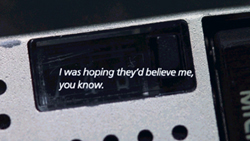
 But what really cemented The Thin Blue Line in my mind and has allowed it to remain in my top ten films of all time is the way that Morris handles the last few moments of the film. As Morris allows David Harris to chat his way into a confession, Morris focuses in on his little tape recorder and subtitles the dialogue for the audience to see. These last few minutes, I think, are some of the most memorable concluding moments of any film I've seen. As Harris continues to talk and Morris gets closer and closer to the truth, his camera gets closer and closer to the recorder, inching all the way up until the only thing we can see are the tape spools and the words of Harris's confession. We are pushed to the very limit and trapped in a way that David Harris has used his own words to trap himself. We can go no further because we have reached the truth, and all it took was for Morris to simply let his subjects talk…and talk…and talk. This is what he's done all along and what he continues to do to this day, and I'll be damned if the world of documentary filmmaking isn't a whole lot better for it.
The DVD
Video:


Gates of Heaven: 3.5 stars out of 5
Gates of Heaven is presented in a 1.33:1 full frame transfer that makes the film look better than it ever has before. Granted, we are looking at a 25-year-old low-budget documentary here so there are some inherent issues with the source material, but the image is, overall, quite pleasing. There is a large amount of grain at times and some colors aren't nearly as vibrant as they could be, but this is about as good as Gates of Heaven is ever going to look.
Vernon, Florida: 3 stars out of 5
Vernon, Florida is presented in a letterboxed 1.66:1 transfer that, aside from being non-anamorphic, actually holds up just about as well as Gates of Heaven. There's a bit more grain to be found in this film, and the print appears slightly more worn, but the overall image is, again, a definite improvement over previous incarnations. If you don't expect too much from the visual presentation, you'll be pleasantly surprised at how good these films look.
The Thin Blue Line: 4 stars out of 5
The Thin Blue Line is presented in an anamorphic 1.85:1 widescreen transfer that mostly lives up to my high expectations. Being the most recent film of the bunch - and, arguably, the most sought-after - I expected The Thin Blue Line to fare much better in the audio-visual department. And while there are a few issues, this transfer makes the film look absolutely great. Detail is sharp and black levels are quite good, while most colors are vibrant and rich. The reds and blues, especially, in the reenactment are beautifully bright. Shadows and lighting are well delineated, and flesh tones are accurate. There is, however, a fair amount of grain throughout the film, but this is clearly a fault of the source material. The same goes for a few instances of dirt and debris on the print. This visual presentation, nevertheless, is probably the best the film has ever looked and is easily the best looking of the three films in this set.
Sound:
The audio for Gates of Heaven (2.5 stars out of 5) and Vernon, Florida (2 stars out of 5) are presented in Dolby 2.0 mono formats, which work just fine to deliver the dialogue in these films. There's no score to speak of so the only thing these tracks have to do is provide clear, crisp dialogue. Both tracks handle that duty well, although the track for Vernon, Florida is presented at a very low volume compared to its predecessor. With the volume cranked up pretty high, the track sounds just fine, but it would have been nice to have some audio level consistency between releases.
The audio for The Thin Blue Line (4 stars out of 5) is presented in a Dolby 2.0 stereo format that has a lot more to contend with than the tracks for Gates of Heaven and Vernon, Florida. In addition to providing clear, crisp, and distinct dialogue, this track also must handle the subtle variations in the wonderful Philip Glass score. Despite the lack of a surround re-mix on this track, this is easily the best The Thin Blue Line has ever sounded. The dialogue in the interviews, the narration, and the score are all well balanced and intricate. Spatial separation across the stereo channels is excellent, and the audio levels are very consistent throughout. This may not be the most dynamic soundtrack to hit the shelves this year, but it certainly does justice to the film.
Extras:
 Aside from the same assortment of trailers on each disc, the only extra feature in this set that actually pertains to Errol Morris is the "Mr. Personality" episode from his television show Errol Morris' First Person. Presented in a letterboxed 1.85:1 format, and just under 30 minutes, this episode is a nice introduction to the television show, as it follows the same basic formula as most of his documentaries. Morris interviews "Mr. Personality" Forensic Psychiatrist Michael Stone ("expert on evil") who simply discusses some of the more interesting cases of evil people that he's researched. He goes on to explain his very own take on Dante's "Circles of Hell," and discusses some of his more interesting techniques in classifying evil people. Morris is his usual suspicious self here as his camera captures Stone in some very intriguing angles. The interview leaves you with the same feeling as many of his documentaries, and you wonder if Morris is really poking fun at "Mr. Personality," or is actually interested. As with his feature films, I think it's probably a mixture of both, but you can't help but feel that Morris is snickering in the background somewhere.
While the inclusion of an episode of First Person is a great addition to this set, it's really disappointing that MGM didn't go all out and provide some really meaty extras for the Morris fans that have been waiting so long to finally see his films make it to DVD. No commentaries, no retrospective documentaries on Morris, and no updates on the participants in the films make me a disappointed fan.
Final Thoughts:
 It's about time Gates of Heaven, Vernon, Florida, and The Thin Blue Line made their way onto the DVD format. Fans of Errol Morris have been clamoring for the release of these three films since the early days of DVD. While it took many years and many films for Morris to finally win his Academy Award® with The Fog of War, these early films are really the ones that he cut his teeth on. These are the films that established Morris as one of the most influential and important documentary filmmakers of all time. By turning his subjects into his stories, Errol Morris gave a whole new face to the documentary film and led the way for the startling critical success and popularity of documentaries today. I said it before, and I'll say it again. If it weren't for Errol Morris, there would be no Michael Moore today. And while some people might think that, at times, the world would be a better place without Michael Moore's films, I know that the world of American Cinema would have a much bleaker landscape without the films of Errol Morris.
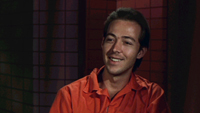 MGM has done a nice job of finally bringing these films to DVD in The Errol Morris DVD Collection. The audio-visual presentations are about as good as they could possibly be. The films have never looked better and probably never will. And although the lack of extra material is disappointing, the inclusion of one episode of Errol Morris' First Person is certainly a welcome addition. Sure, it would have been great to have some commentary tracks and more information on Morris's influence on documentary filmmaking, but just the fact that we finally have these three great films on DVD is enough to warrant a highly recommended rating for this set.
|




| Popular Reviews |
| Sponsored Links |
|
|
| Sponsored Links |
|
|
| Release List | Reviews | Shop | Newsletter | Forum | DVD Giveaways | Blu-Ray | Advertise |
|
Copyright 2024 DVDTalk.com All Rights Reserved. Legal Info, Privacy Policy, Terms of Use,
Manage Preferences,
Your Privacy Choices 
| |||||||