
| Reviews & Columns |
|
Reviews DVD TV on DVD Blu-ray 4K UHD International DVDs In Theaters Reviews by Studio Video Games Features Collector Series DVDs Easter Egg Database Interviews DVD Talk Radio Feature Articles Columns Anime Talk DVD Savant Horror DVDs The M.O.D. Squad Art House HD Talk Silent DVD
|
 DVD Talk Forum |
|
|
| Resources |
|
DVD Price Search Customer Service #'s RCE Info Links |
|
Columns
  


 
|
|
|
Seinfeld - Season 5 & Season 6 Giftset
Seinfeld. One name, one long-running show, one high bar for all television comedy to live up to. It's not the only show to be about "nothing," in the sense that it simply follows the daily (mis)adventures of a group of ordinary people (fairly dysfunctional people, but then, who's not?). But what makes Seinfeld brilliant is more than the concept, it's the execution. Where else have we seen scripts that are consistently so insanely... well, brilliant? Even a wildly successful show like Friends (clearly a Seinfeld imitator) doesn't come even close. Where else is the casting so spot-on? It's impossible to imagine anyone else playing Kramer, George, or Elaine... or, for that matter, Newman, or the Costanzas, or half-a-dozen other secondary characters who seem to be played by actors who were born for the role. What other comedy manages to be so memorable in so many episodes?
So, you've noticed I'm a big Seinfeld fan? You know, you're right! (And that's a sentence worthy of an exclamation point.)
After a very solid start in Seasons 1 and 2, Seasons 3 and 4 pushed Seinfeld into classic territory. The question in Seasons 5 and 6 is then whether the show could keep up the energy and creativity that had made it shine so far. The short answer is "Yes"; the long answer is the rest of this review.
Let's take a look at the ingredients that make for two classic seasons, starting with Season 5. Right away, in "The Puffy Shirt," we get a generous helping of classic Seinfeld elements. George is still broke and looking for a job, and ends up becoming a hand model. Kramer has a "low-talking" girlfriend... and Jerry inadvertently agrees to wear a puffy pirate shirt in his Today Show appearance. Hm. If you've never seen Seinfeld, that might sound like a rather prosaic episode summary, but in fact, this is Seinfeld, and it works like a charm, with George's insecure personality on display (always with hilarious results) and much of the plot of the episode taken up with the absurdities resulting from social miscommunication. We can also see that Seinfeld kept pushing the envelope of what was allowed on television (remember the lesbian wedding in Season 3's "The Subway"?) with great results: here, a major element of "The Mango" is nothing less than female orgasm (and the faking thereof). The show could have played it conservatively with the opening episode of a new season, but instead they stepped right out into whatever comic territory seemed right for the show, and never mind any prudes in the audience.
One of the great things about Seinfeld is the story structure, which by now is in its fully developed form, so that each episode interweaves three or four different threads into the same story. I think this is really the core reason why Seinfeld is so funny: Jerry Seinfeld and Larry David have the confidence of a seemingly boundless imagination, so they have the confidence that there are plenty more great ideas in the pipeline. With that in mind, they're generous with using fantastic storylines for only one-third or maybe one-fifth of a half-hour episode, when a less creative show would try to milk just that one storyline for a full episode. The saying "less is more" ends up being very applicable here: the small amount of on-screen time devoted to each storyline means that each one is concentrated to the funniest parts, with no fluff and no padding. Consider "The Pie": not only is it a classic episode (Jerry's girlfriend mysteriously refuses to have a bite of his pie, which of course drives him crazy) but it has enough story material in it to feel like at least two episodes, not even counting the side story with George.
The final result is that each full episode is fast-paced and crammed to the gills with real comedy, and even the "side" storylines are extremely memorable. Look, for instance, at "The Sniffing Accountant" (a solid episode whose title refers to Jerry's dilemma: is his accountant a drug user?) One of the most memorable bits is Elaine's fight with her boyfriend over the proper way to convey important news in a jotted-down phone message. Short and sweet, it plays on the unspoken "rules" of social communication, or rather miscommunication.
Season 5 continues to make great use of the backstories of the characters and references to past episodes. Jerry continues to have problems with girlfriends... as always... while Kramer sails along in his peculiar way, having all sorts of adventures that could only happen to Kramer. George's problems in finding a job provide a rich vein to mine (as in "The Barber"), but we also continue to see his obsession with the perfect parking space. The two-part episode "The Raincoats" moves in to take full advantage of the characters, as we get Jerry's parents trying to avoid George's parents, along with Kramer's plan to sell Morty's raincoats, and (of course) a handful of other plot threads.
As Seinfeld really hits its stride, the multiple episode threads become increasingly related to each other, as well. For instance, "The Cigar Store Indian" ties together several incidents with the use of a TV Guide and a coffee table connection. "The Marine Biologist" has to go down as one of the classic Seinfelds of all time, with George masquerading as a marine biologist, and then having that plot point eventually tie into Kramer's attempt to improve his golf swing. "The Hamptons" (again, one of the all-time classics) has the whole group on a vacation to the Hamptons, where everyone seems to have problems, most notably George with "shrinkage" after swimming, and Elaine with the issue of how to describe a very ugly baby. And let's not forget "The Opposite," in which George decides to do the opposite of everything that he would normally do, Kramer promotes his coffee-table book, and Elaine has serious misadventures with Jujyfruits.
Seinfeld fans will be interested to know that the Season 5 episode "The Non-Fat Yogurt" appears here in both its original version (with references to New York's mayor, Giulani, in the plot thread devoted to the mayoral race) and the alternate, slightly longer version used in syndication (with references to Mayor Dinkins instead). The default is the original, but the alternate can be selected from the episode menu.
Season 6 has all the good qualities of Season 5, with a batch of fresh stories. OK, we do get saddled with two clip-show episodes in "Highlights of a Hundred" 1 and 2, which are much less interesting when the viewer has just recently watched all the previous episodes, but that's the only blip in a season that otherwise is in classic territory. George has his job with the Yankees now, with various job-related plot twists coming up in episodes like "The Chaperone" and "The Secretary." "The Race" is another memorable multi-thread episode, as Jerry is challenged to a race rematch against an old rival, and Elaine gets blacklisted from a Chinese restaurant, and George gets into more trouble at work. "The Label Maker" is likewise difficult to summarize but is packed to the brim with great material, from regifting issues, to "The Drake," to Kramer and Newman's game of Risk. The season warms up even more in the second half, with Elaine trying to convert a gay man in "The Beard," the invention of the "Bro" (or is it the "Manssiere"?) in "The Doorman," the appearance of the eponymous "Fusilli Jerry," and the introduction of Mr. Peterman in "The Understudy. "
But of course, as any Seinfeld fan knows, just pointing out a few particularly memorable threads in a bare handful of episodes is just scratching the surface. It's not just the stories or the jokes, it's the way everything is woven together, constantly using references from previous episodes. You don't have to catch any of those references or running back-story jokes to find the episodes hilarious, but once you've followed the episodes closely enough that you do catch them, there's a whole other level of humor in the show. I think that's what makes Seinfeld a show that gets better with time. It's not just funny, it's clever; it's not just well written, it's intelligent. Who knows how many times I've seen these episodes? They just get better and better with additional viewing, and that's far from something that holds true for just any series, even a really good one.
The following are the episode lists for each season. Episodes with commentary tracks are listed in bold. All the episodes are the original full-length network versions, not the truncated syndicated ones. The episodes are arranged in production order, not air date order.
Season 5 (1993-1994)
The Mango (Michael Richards, Julia Louis-Dreyfus, Jason Alexander)
The Glasses (writers Tom Gammill and Max Pross)
The Puffy Shirt
The Sniffing Accountant
The Bris
The Lip Reader (writers Peter Mehlman and Carol Leifer)
The Non-Fat Yogurt
The Barber
The Masseuse
The Cigar Store Indian (writers Tom Gammill and Max Pross)
The Conversion
The Stall
The Dinner Party
The Marine Biologist (director/producer Tom Cherones and production designer Tom Azzari)
The Pie (writers Tom Gammill and Max Pross)
The Stand-In
The Wife
The Raincoats (parts 1 and 2)
The Fire
The Hamptons (writers Peter Mehlman and Carol Leifer)
The Opposite (Jerry Seinfeld and Larry David)
Season 6 (1994-1995)
The Chaperone
The Big Salad
The Pledge Drive
The Chinese Woman
The Couch
The Gymnast (Jerry Seinfeld, director Andy Ackerman, and writers Alec Berg and Jeff Schaffer)
The Mom & Pop Store (writers Tom Gammill and Max Pross)
The Soup
The Secretary
The Switch
The Race (Jerry Seinfeld and director Andy Ackerman)
The Label Maker (writers Alec Berg and Jeff Schaffer)
The Scofflaw
Highlights of 100 (parts 1 and 2)
The Beard (Jason Alexander and Julia Louis-Dreyfus)
The Kiss Hello
The Doorman (writers Tom Gammill and Max Pross)
The Jimmy
The Doodle
The Fusilli Jerry (Jason Alexander and Julia Louis-Dreyfus)
The Diplomat's Club (writers Tom Gammill and Max Pross)
The Face Painter
The Understudy
The DVD
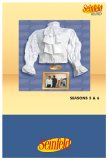
The Seinfeld Season 5 & 6 Giftset contains the two separately packaged season sets, exactly as they're sold separately, plus the extra script and "Puffy Shirt" collectible. Once the shrink wrap is taken off, all the pieces are separate, with no overall slipcase, so cosmetically there's no difference between the Giftset and the season sets bought separately.
Video
Seinfeld Season 5 and Season 6 continue the trend of the earlier seasons in terms of transfer quality. The image has a touch of grain and looks a bit soft in longer-distance shots, but otherwise it looks bright, clean, and crisp. Close-up shots in particular look excellent, and colors are rich and vibrant across the board. Seeing some clips of the episodes in non-remastered form in the special features drives home the point that this is the best we've seen Seinfeld: the transfers have obviously been cleaned up very well for their release on DVD. All the episodes appear in their original television aspect ratio of 1.33:1.
Audio
Like the video transfer, the soundtrack provides a solid, high-quality experience. The dialogue is always clean, clear, and distinct, which is an absolute necessity for a show like this. The overall sound balance of the Dolby 2.0 track is handled well, and though I'm never a big fan of laugh tracks, the one for Seinfeld is kept in appropriate balance to the rest of the track. A dubbed French soundtrack is also provided, along with English closed captions and French, Portuguese, and Spanish subtitles.
Extras
I have to give credit to the producers of the DVD sets: the quality of the special features continues to be high, with a generous quantity of extra material that (more importantly) provides an interesting look deeper into the show. To begin with, there are a number of commentary tracks for each season, which I've noted in the episode lists above. Each episode also has the "Notes About Nothing" feature, which pops up text information about the episode as it plays.
For the rest of the features, let's take a look at the sets disc by disc.
Season 5 Disc 1: Here we start off with a 25-minute featurette called "Jason + Larry = George," filling in the details on the creation of the character of George. Next up are "Inside Look" featurettes for "The Puffy Shirt," "The Mango," "The Glasses," and "The Sniffing Accountant," running 19 minutes in all. About five minutes of deleted scenes are included for "The Glasses," "The Mango," and "The Puffy Shirt," along with a set of promotional television spots for the show.
Season 5 Disc 2: Eight minutes of unshown stand-up comedy material from Jerry Seinfeld appears here, along with "Inside Looks" (totaling nine minutes) for "The Lip Reader," "The Non-Fat Yogurt," and "The Barber." A deleted scene for "The Non-Fat Yogurt" also appears.
Season 5 Disc 3: 21 minutes of "Inside Look" material appears here, for "The Conversion," "The Stall," "The Marine Biologist," "The Pie," and "The Stand-in." We also get eight minutes of deleted scenes for "The Conversion," "The Stall," "The Marine Biologist," and "The Pie."
Season 5 Disc 4: A set of bloopers (quite funny) runs 13 minutes, and is followed up by "Inside Looks" for "The Fire," "The Raincoats," "The Hamptons," and "The Opposite" (17 minutes in total) and six minutes of deleted scenes for "The Fire," "The Raincoats," and "The Opposite."
Season 6 Disc 1: A substantial, 33-minute featurette appears here: "Running with the Egg: Making a Seinfeld" provides an interesting look at the creation of a Seinfeld episode from start to finish. After that, we move on to "Inside Looks" for "The Chaperone," "The Big Salad," "The Pledge Drive," and "The Couch" (running a total of 13 minutes). There's also a ten-minute set of deleted scenes for "The Chaperone," "The Big Salad," "The Chinese Woman," "The Couch," and "The Gymnast."
Season 6 Disc 2: Another quite funny set of bloopers is included here, running 22 minutes. There's also a 12-minute set of "Inside Looks" for "The Mom & Pop Store," "The Soup," "The Switch," "The Race," and "The Label Maker," and an 11-minute set of deleted scenes for the same episodes. A short animated version of part of a Seinfeld episode is also included, called "Sein-imation: The Big Race."
Season 6 Disc 3: Another of those odd "Sein-imations" appears here, this time called "Seinfeld Noir. " Apart from that short clip, we have six minutes of additional stand-up material from Seinfeld, "Inside Looks" for "The Kiss Hello" and "The Doorman" (six minutes), and three minutes of deleted scenes from "The Scofflaw," "The Beard," and "The Doorman." There's also a short introduction by Jerry Seinfeld to the "Highlights of 100" episode.
Season 6 Disc 4: One more peculiar "Sein-imation" appears here ("Kramer vs. the Monkey"), and then we get to the "Inside Looks" for "The Jimmy," "The Fusilli Jerry," "The Diplomat's Club," "The Face Painter," and "The Understudy" (23 minutes in total). Seven minutes of deleted scenes are also included for "The Jimmy," "The Doodle," "The Diplomat's Club," "The Face Painter," and "The Understudy."
Extra bonus material for the gift set: If you buy the Season 5 & 6 Giftset instead of buying the sets separately, you get two other special items: a replica of a handwritten rough draft of an episode script, and a miniature puffy shirt in a plastic display case. Neither of these two items really adds much value to the package; the puffy shirt just seems like a silly wanna-be collectible item with no particular aesthetic value, and the script isn't nearly as interesting as the video special features. Unless you are a die-hard Seinfeld geek, there's nothing in the gift set that makes it better than buying the season sets separately.
Final Thoughts
There's no getting around it: Seinfeld is the king of comedy shows, even (perhaps especially) more than ten years later. As fresh, creative, and funny as always, Seasons 5 and 6 showcase Seinfeld at its best. With a nice transfer and a solid package of special features, there's absolutely no reason to hesitate on picking up these sets. The extra items (script and miniature puffy shirt) that are packaged with the "gift set" are nothing special, so I would say that you have your choice of whether to buy the sets separately or together. In any case, it's very easy to review the two seasons at the same time, because they are both equally outstanding and both would get the "DVDTalk Collector Series" rating, whether considered individually or together.
|



| Popular Reviews |
| Sponsored Links |
|
|
| Sponsored Links |
|
|
| Release List | Reviews | Shop | Newsletter | Forum | DVD Giveaways | Blu-Ray | Advertise |
|
Copyright 2024 DVDTalk.com All Rights Reserved. Legal Info, Privacy Policy, Terms of Use,
Manage Preferences,
Your Privacy Choices 
| |||||||