
| Reviews & Columns |
|
Reviews DVD TV on DVD Blu-ray 4K UHD International DVDs In Theaters Reviews by Studio Video Games Features Collector Series DVDs Easter Egg Database Interviews DVD Talk Radio Feature Articles Columns Anime Talk DVD Savant Horror DVDs The M.O.D. Squad Art House HD Talk Silent DVD
|
 DVD Talk Forum |
|
|
| Resources |
|
DVD Price Search Customer Service #'s RCE Info Links |
|
Columns
  


 
|
|
|
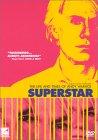
Superstar - The Life and Times of Andy Warhol
The trick of Andy Warhol's art is that it can look so plain to the casual viewer that it doesn't even seem to pretend to be art. Warhol himself claimed that there was no deeper meaning to his paintings and films and that the surface was all there was. Chuck Workman's documentary Superstar: The Life and Times of Andy Warhol (1990) attempts to put Warhol's creations in a better context by weaving together bits of his art with interviews and archival footage so it's not just a bunch of Campbell's Soup cans and Marlon Brando portraits.
That's what Warhol's work is generally remembered as: colorful reproductions of marketable commodities. What Superstar does really well is help look at some of Warhol's creations as products of an ideology. Following images of pop stars and products with images of social strife reveals that some of Warhol's work really was about something. Possibly the most American of artists Warhol showed us ourselves from all sides.
Another aspect of Warhol's art was the scene that grew up around it and Superstar does a good job of introducing Warhol's crew. They gathered at Warhol's workspace, The Factory, to be a part of the culture but, as one interviewee points out, only Warhol was doing any real work. He was constantly working on new ideas while everyone else was taking drugs and wasting time.
That is ultimately what sets Warhol apart from those that he surrounded himself with. They were as much a part of his art as were his films or his paintings. Making someone like Edie Sedgewick famous was like a project unto itself. Workman's film helps expose the process, from childhood sketches to advertising art, from celebrity portraits to creating Interview magazine, that was Warhol's life's work.
VIDEO:
The video quality varies from source to source. It is full frame and sometimes looks pretty bad (on his commentary track Workman reveals moments where he actually scratched film elements to make them look worse than they should). Much of the archival footage is heavily scratched and damaged. Many of the interviews are taken from old TV shows and look like cheap video transfers.
Video quality, however, is not what this film is about. It is a collage of many different sources, some of which are probably pretty rare.
AUDIO:
The audio is also pretty rough. There are a few moments where it is a little difficult to understand what is being said. Still, it suffices. There are no subtitles.
EXTRAS:
A commentary track from director Workman is the only notable extra. On it Workman discusses both the making of the film and the art scene that Warhol was a part of. This is an interesting and informative commentary track.
FINAL THOUGHTS:
While not a stellar documentary, Superstar does a good job of introducing Warhol to a generation that only remembers him as the same kind of vague pop symbol as many of his subjects. By briefly looking at his entire life it is easy to see that he was much more than that.
|



| Popular Reviews |
| Sponsored Links |
|
|
| Sponsored Links |
|
|
| Release List | Reviews | Shop | Newsletter | Forum | DVD Giveaways | Blu-Ray | Advertise |
|
Copyright 2024 DVDTalk.com All Rights Reserved. Legal Info, Privacy Policy, Terms of Use,
Manage Preferences,
Your Privacy Choices 
| |||||||