
| Reviews & Columns |
|
Reviews DVD TV on DVD Blu-ray 4K UHD International DVDs In Theaters Reviews by Studio Video Games Features Collector Series DVDs Easter Egg Database Interviews DVD Talk Radio Feature Articles Columns Anime Talk DVD Savant Horror DVDs The M.O.D. Squad Art House HD Talk Silent DVD
|
 DVD Talk Forum |
|
|
| Resources |
|
DVD Price Search Customer Service #'s RCE Info Links |
|
Columns
  


 
|
|
|
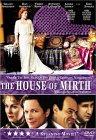
House of Mirth, The
In the rush to proclaim the latest anti-drug manifesto or sword-swinging epic the best film of last year, a truly remarkable film got lost along the way. Terence Davies' The House of Mirth is an astonishingly realized piece made all the more effective by a surprisingly masterful lead performance by Gillian Anderson. Everything about this film is perfect, from the tiniest period detail to the grandly sweeping emotional arc. Based pretty faithfully on Edith Wharton's first novel, The House of Mirth concerns a few short years in the life of Lily Bart, one of literature's enduring society women. Lily lives in a world where a woman is defined by whom she marries and the process of getting married almost resembles a hunt, but not a joyful one. Rather, there is a desperate sense that the woman must find a suitable husband before she gets too old. Still, this desperation stays hidden behind seductive smiles and fluttered lashes.
Lily is different. She sees through this charade and want nothing more than to escape her destiny. Knowledge, however, does not exempt her from her life and, as the film progresses and her situation worsens, one really gets to take in the full measure of her degradation. Lily is constantly surrounded by sharks, from the treacherous Bertha Dorset (Laura Linney in a great performance) to the chauvinistic and deceitful Gus Trenor (Dan Akroyd). A crass Jewish stereotype in the book, Sim Rosedale (Anthony La Paglia) retains the embarrassing whiff of new money (a no-no in this turn of the Century social circle) but without the anti-Semitic overtones of the book (to be fair, writing about the thoughts of anti-Semitic characters and anti-Semitic writing are not the same thing). Few people are truly honest with Lily. Even Laurence Seldon (Eric Stolz), her most sympathetic ally, never reveals the depth of his feelings for her. In fact, this is the most devastating relationship in the story since there are so many instances where Seldon could have saved Lily from her fate. This same unrequited love story also appears in last year's other great film achievement, Crouching Tiger, Hidden Dragon, but in that film there is a bitter-sweet element to the sadness of repression. There is a sense that future generations will learn how to love. The House of Mirth, however, offers no escape whatsoever. Society's cruelty towards Lily is totally without regret or compassion. The ending is just about the most mournful, achingly sad ending in memory. In fact, the audience in the theater where I first saw The House of Mirth was audibly weeping for the last few minutes. There is no way to be unmoved by Lily's plight.
While the source material may be great, Davies' skillful adaptation is what really needs to be credited. It can't be easy to tell a story that was originally written largely through inner monologue. Davies boldly removed the voiceover entirely (something even Martin Scorsese didn't have the guts to try with his Wharton adaptation, The Age of Innocence) and tells the story visually. His gamble pays off: While some details may get lost without the voiceover, the film ends up being much more effective. We understand Lily because we're there with her, not because some disembodied voice tells us what to think. This is just one of the many bold stylistic decisions Davies made in crafting this masterpiece. His approach to set design, for instance, is unique. While the sumptuous sets seem authentic, they are also just minimalist enough to suggest that there is more detail in the shadows.
From scene to scene the actors, including Terry Kinney, Jodhi May, and Serena Gordon, embody their literary characters with the perfect amounts of reserve and personality. Some of the performances come from unlikely sources (There was no reason to expect Akroyd to be as good as he is here) but all are equally effective.
VIDEO:
The video transfer here, while not flawless, is really beautiful. Remi Adefarasin's cinematography is achingly lyrical. Many scenes, the final moments in particular, are lit and staged like classic paintings, with bodies, costumes, set dressing, and spatial effects like smoke and light composed perfectly. And yet, the film is never stagy. It is an astonishingly cinematic feat.
A few specks of dirt have found their way onto the print, but the rendering of the images, the textures and colors, is true to the original.
AUDIO:
The sound production of The House of Mirth is deceptively simple. While the film mostly consists of dialog, the audio is used to help create atmosphere. The cast keep their voices at an even middle range throughout so that whenever someone really does
EXTRAS:
Director Terence Davies' commentary track is a strange affair. He's clearly a very intelligent, passionate, and articulate guy, but the commentary is sorely lacking. There are long gaps in between observations and what he does say is often uninteresting. He could have spent more time discussing his interpretation of Wharton's work and his own decision making process. It would have been too much to hope for for him to discuss his reportedly volatile working relationship with Anderson. Vague references in the press made it seem like they didn't get along. My understanding is that Davies' demanding work ethic and Anderson's need for encouragement didn't mix. There is no way to know, however, what actually happened. In fact, Davies barely mentions Anderson on the commentary at all, which is especially strange considering that she is constantly on screen.
Much more interesting is a sequence of alternate versions of the first several scenes. Running around 15 minutes, this segment shows that the kind of cuts made were simply for time constraints and mostly amounts to a few lines here and there. Some of the material cut would have worked nicely while other moments are good but might have disrupted the flow of the finished film. Davies' commentary is available for the deleted scenes and helps explain how the changes affected the film.
A trailer for The House of Mirth is available as well as trailers for other period films like The Age of Innocence, Little Women, The Remains of the Day, and Sense and Sensibility.
The extras are not as thrilling as the movie, which is fine. One thing I wish could have been included is part or all of the 1918 film version of Wharton's novel. Made during her lifetime, it would have been interesting to contrast the treatment of the story, characters, and surroundings in the early silent version with Davies' version. (A TV version was made in 1981 as well)
FINAL THOUGHTS:
A stunning visual and emotional achievement, The House of Mirth may have been too subtle and restrained for the box-office, but with the availability of the movie on DVD and the intimacy that home viewing allows, more people should get to see it. Between Terence Davies' masterful direction and Gillian Anderson's perfect performance there is plenty here to touch anyone.
|



| Popular Reviews |
| Sponsored Links |
|
|
| Sponsored Links |
|
|
| Release List | Reviews | Shop | Newsletter | Forum | DVD Giveaways | Blu-Ray | Advertise |
|
Copyright 2024 DVDTalk.com All Rights Reserved. Legal Info, Privacy Policy, Terms of Use,
Manage Preferences,
Your Privacy Choices 
| |||||||