
| Reviews & Columns |
|
Reviews DVD TV on DVD Blu-ray 4K UHD International DVDs In Theaters Reviews by Studio Video Games Features Collector Series DVDs Easter Egg Database Interviews DVD Talk Radio Feature Articles Columns Anime Talk DVD Savant Horror DVDs The M.O.D. Squad Art House HD Talk Silent DVD
|
 DVD Talk Forum |
|
|
| Resources |
|
DVD Price Search Customer Service #'s RCE Info Links |
|
Columns
  



 
|
|
|
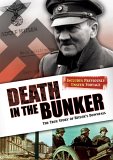
Death in the Bunker: The True Story of Hitler's Downfall
Koch Vision // Unrated // August 8, 2006
List Price: $19.98 [Buy now and save at Amazon]
Adolf Hitler spent the last ten days of his life in a bunker deep beneath the Chancellery building of the Third Reich during the chaotic period of April 1945. Unwilling to face the consequences of defeat, he took his own life on April 30, 1945. Long the subject of any number of books and at least three films- last years' excellent telling of the story, Downfall, with a chilling performance by Bruno Ganz as Der Fuhrer; as well as an HBO film several years ago, The Bunker with Anthony Hopkins playing Hitler, and the movie Hitler- The Last Ten Days with Alec Guiness in the title role. Here we are given a slant on the story via archival footage as well as extensive interviews with Traudl Junge, Hitler's secretary to whom he dictated his will prior to his suicide; Rochus Misch, Hitler's bodyguard and courier; Armin D. Lehmann, Hitler's courier responsible for carrying orders from the Führerbunker as well as author of Hitler's Last Courier; Bernd Freytag von Loringhoven, tank commander and adjutant to two of Hitler's generals and author of In Hitler's Bunker; and Rolf-Dieter Mueller, military historian. The two chief interviewees seem to be Lehmann and Mueller, with both giving compelling anecdotes throughout the documentary.
Most anyone who has an interest in history is familiar with at least a smattering of the events that took place during the period. These were the last days of WWII, the Allies having taken Europe away from the Nazi regime piece by piece to get to this point; Soviet troops were coming hard at the city, intent on its downfall and hoping to capture the chief participants who had caused such massive death and suffering around the globe. German troops were at this point depleted, demoralized and ever more defenseless against the Allied forces; at first trying to run the war in the Chancellery building, in April, 1945 Hitler moved his entourage into the bunker beneath it. The complex was protected by approximately three meters of concrete, consisting of about 30 small rooms distributed over two levels with exits into the main buildings and an emergency exit into the gardens. The complex was built as part of an extensive program of subterranean construction in Berlin begun in 1940, the accommodations for Hitler were in the newer, lower section and by February 1945 had been outfitted with high quality furniture taken from the chancellery building along with several framed oil paintings. The bunker was supplied with large quantities of food and other necessities and by all accounts successfully protected its occupants from the relentless shelling that went on overhead. Here is where the end days of Nazi Germany were spent for Hitler and a few of his highest ranking officials.
Written and directed by Michael Kloft with extensive narration by Nick F. Bolton, Martin Heckmann and Corinna Sadlo, this is a 79 minute documentary with no reenactment sequences; the story is chiefly conveyed to the viewer in two ways; through interviews with those who were present I have mentioned above, as well as incredible archival footage, some of which has been seen throughout the decades but also a fair bit of rare and previously unseen footage as well. Considering both the age and the equipment with which it was shot, the viewer can expect varying degrees of quality here, but even the worst footage gives one the story in a manner both terrible and fascinating. Some of the footage is amazingly good given its age. Much of the film shown here depicts the movement and the bombing of Berlin by the Russian Army, a siege of the city relentless and remorseless in its execution. Howitzers and cannons seemingly stayed loaded day and night with shells rocketing through the sky at what looks like hundreds of rounds per minute, intent on as complete an annihilation of the Reich capitol as could be accomplished. There is closeup film here of German soldiers both dead and captured, as well as the taking of Berlin via house to house fighting, a grisly, bloody way in which to gain territory for both the besieged and those annexing the ground. Any number of buildings are shown aflame, with masses of German civilians scurrying out of the city towards the West carrying whatever they can both in their body or manned carts. Throngs of people stand in lines and pillage stores trying to find food, and wait in huddles as hand pumps fill buckets of water. Dead bodies are strewn about the streets as well as whole families in homes that have taken their own lives rather than be captured by the Allies.
There is also much film here of Hitler himself, shown in conference with his generals, outside meeting and giving praise to members of the Hitler Youth movement, and informal gatherings with his circle of associates as well as his lover and finally wife Eva Braun. While a good degree of this footage has shown up before, a portion of it was new to this viewer; closeups of Hitler's face show a man old and tired, quite the opposite of the charismatic figure who was able to draw an entire nation under his spell. As stated by those close to him, his eyes were dull and lifeless, his left hand constantly trembling and his left leg was carried in a dragging motion as he walked.
There are also the eyewitness accounts given by a group fairly qualified to do so; Traudl Junge has been the subject of several books and documentaries, having spent years in Hitler's service as one of his favorite secretaries. Coming to his staff in her youth, she fell under the spell of the dictator much the same as the masses had, and was dogmatic in trusting anything the dictator said to be gospel. The other accounts are more informative as to what was actually going on between Hitler, his generals and adjutants; while on paper it appeared that there was still a 10 million man force under German command, this was highly deceptive. Those troops were in many cases either children or old men, and in others men who had seen all the war they cared to; the troops that were fit to fight were disjointed, as Hitler's officers took much in the way of making military decisions on their own in order to merely survive, never mind achieving any sort of victory.
When Hitler admitted to his closest staff members that the war was lost, it was his first public recognition of the fact; as speculated here, he likely had known this fact for years, but had never conceded that admission until now. Having done so changed the complexion of both the 'war' and the plans of the personnel underground. As stated here, suddenly all but Hitler himself were no longer obligated to stay at the fuhrer's side; hasty plans were made for many to leave, either by plane or secretly feeling on roads filled with German civilians feeling the city. Those around Hitler begged and pleaded for him to leave as well, somehow escape to safety and carry on the war effort from Bavaria. The dictator would have none of it, nor would he risk being captured alive by the Allies, particularly the Russian Army. When Mussolini was taken out of power his and his mistress' body were hung in public view. Had Hitler been captured by the Soviets, it is somewhat unlikely he would have lived to be tried, and the manner in which he would be executed could easily have been just as ghastly and perverse.
From all descriptions, the end days were exceptionally chaotic; as is common to human nature, hope was vainly brought forth again and again in the bunker, in most cases because of the 12th Army not far from Berlin; Hitler called upon the unit to come forth, break through the Russian line and find some way to defend Berlin- "Berlin has to remain German," was his battle cry to the 12th. While they did indeed engage the Russian army from the rear, what was being asked of them was impossible at this late stage. During those very last days cloak and dagger treachery was afoot in the highest Reich offices; Goering made an attempt to usurp Hitler, demanding that he make contact with the high command outside the bunker or else he would take over as Fuhrer. Livid, Hitler ordered his immediate dismissal from command and arrest. Certain to be executed, Goering surrendered to the Americans, was taken as prisoner, tried in Nuremberg and sentenced to death by hanging; only by committing suicide did he escape the noose. Himmler also quietly tried to angle leadership by taking it upon himself to attempt to fashion some sort of peace agreement with the West. Appalled that 'his Heinrich' would betray him, Hitler ordered his arrest as well. Albert Speer was given orders he refused to carry out, but for some unknown reason managed to escape a similar fate.
Realizing the end was imminent, Hitler dictated a last will and testament to Traudl Junge, stating nothing of consequence that he had not said to the German people in the past. He also married Eva Braun on April 29th in the bunker; before he had always been of the opinion that he must stay single as he was 'married' to the Reich, but at this stage there was no Reich to call his bride. On April 30th Hitler and Eva said their goodbyes to the remaining bunker staff, retired to their private room and took their lives, Eva via poisoning and Hitler with a gunshot to the head. As per Hitler's will, their bodies were brought to the surface, drenched with gasoline and burned.
Video-
Aspect ratio is 1.33:1 fullscreen. As this is a mixture of recently shot interview footage as well as film dating back over 60 years, expect the quality to vary. For documentary purposes the producers have done a fine job.
Audio-
Audio track is Dolby Digital stereo, and is clear and easy to understand. The interview footage is German spoken with English voice overs.
Extras-
No extras.
Final Thoughts-
While there are no real revelations to be found here for the history buff, this is a solid, compelling documentary filled with plenty of great period footage as well as detailed commentary by the few people who would know best what took place in those final days, those who were in the bunker with Hitler himself. Recommended.
Most anyone who has an interest in history is familiar with at least a smattering of the events that took place during the period. These were the last days of WWII, the Allies having taken Europe away from the Nazi regime piece by piece to get to this point; Soviet troops were coming hard at the city, intent on its downfall and hoping to capture the chief participants who had caused such massive death and suffering around the globe. German troops were at this point depleted, demoralized and ever more defenseless against the Allied forces; at first trying to run the war in the Chancellery building, in April, 1945 Hitler moved his entourage into the bunker beneath it. The complex was protected by approximately three meters of concrete, consisting of about 30 small rooms distributed over two levels with exits into the main buildings and an emergency exit into the gardens. The complex was built as part of an extensive program of subterranean construction in Berlin begun in 1940, the accommodations for Hitler were in the newer, lower section and by February 1945 had been outfitted with high quality furniture taken from the chancellery building along with several framed oil paintings. The bunker was supplied with large quantities of food and other necessities and by all accounts successfully protected its occupants from the relentless shelling that went on overhead. Here is where the end days of Nazi Germany were spent for Hitler and a few of his highest ranking officials.
Written and directed by Michael Kloft with extensive narration by Nick F. Bolton, Martin Heckmann and Corinna Sadlo, this is a 79 minute documentary with no reenactment sequences; the story is chiefly conveyed to the viewer in two ways; through interviews with those who were present I have mentioned above, as well as incredible archival footage, some of which has been seen throughout the decades but also a fair bit of rare and previously unseen footage as well. Considering both the age and the equipment with which it was shot, the viewer can expect varying degrees of quality here, but even the worst footage gives one the story in a manner both terrible and fascinating. Some of the footage is amazingly good given its age. Much of the film shown here depicts the movement and the bombing of Berlin by the Russian Army, a siege of the city relentless and remorseless in its execution. Howitzers and cannons seemingly stayed loaded day and night with shells rocketing through the sky at what looks like hundreds of rounds per minute, intent on as complete an annihilation of the Reich capitol as could be accomplished. There is closeup film here of German soldiers both dead and captured, as well as the taking of Berlin via house to house fighting, a grisly, bloody way in which to gain territory for both the besieged and those annexing the ground. Any number of buildings are shown aflame, with masses of German civilians scurrying out of the city towards the West carrying whatever they can both in their body or manned carts. Throngs of people stand in lines and pillage stores trying to find food, and wait in huddles as hand pumps fill buckets of water. Dead bodies are strewn about the streets as well as whole families in homes that have taken their own lives rather than be captured by the Allies.
There is also much film here of Hitler himself, shown in conference with his generals, outside meeting and giving praise to members of the Hitler Youth movement, and informal gatherings with his circle of associates as well as his lover and finally wife Eva Braun. While a good degree of this footage has shown up before, a portion of it was new to this viewer; closeups of Hitler's face show a man old and tired, quite the opposite of the charismatic figure who was able to draw an entire nation under his spell. As stated by those close to him, his eyes were dull and lifeless, his left hand constantly trembling and his left leg was carried in a dragging motion as he walked.
There are also the eyewitness accounts given by a group fairly qualified to do so; Traudl Junge has been the subject of several books and documentaries, having spent years in Hitler's service as one of his favorite secretaries. Coming to his staff in her youth, she fell under the spell of the dictator much the same as the masses had, and was dogmatic in trusting anything the dictator said to be gospel. The other accounts are more informative as to what was actually going on between Hitler, his generals and adjutants; while on paper it appeared that there was still a 10 million man force under German command, this was highly deceptive. Those troops were in many cases either children or old men, and in others men who had seen all the war they cared to; the troops that were fit to fight were disjointed, as Hitler's officers took much in the way of making military decisions on their own in order to merely survive, never mind achieving any sort of victory.
When Hitler admitted to his closest staff members that the war was lost, it was his first public recognition of the fact; as speculated here, he likely had known this fact for years, but had never conceded that admission until now. Having done so changed the complexion of both the 'war' and the plans of the personnel underground. As stated here, suddenly all but Hitler himself were no longer obligated to stay at the fuhrer's side; hasty plans were made for many to leave, either by plane or secretly feeling on roads filled with German civilians feeling the city. Those around Hitler begged and pleaded for him to leave as well, somehow escape to safety and carry on the war effort from Bavaria. The dictator would have none of it, nor would he risk being captured alive by the Allies, particularly the Russian Army. When Mussolini was taken out of power his and his mistress' body were hung in public view. Had Hitler been captured by the Soviets, it is somewhat unlikely he would have lived to be tried, and the manner in which he would be executed could easily have been just as ghastly and perverse.
From all descriptions, the end days were exceptionally chaotic; as is common to human nature, hope was vainly brought forth again and again in the bunker, in most cases because of the 12th Army not far from Berlin; Hitler called upon the unit to come forth, break through the Russian line and find some way to defend Berlin- "Berlin has to remain German," was his battle cry to the 12th. While they did indeed engage the Russian army from the rear, what was being asked of them was impossible at this late stage. During those very last days cloak and dagger treachery was afoot in the highest Reich offices; Goering made an attempt to usurp Hitler, demanding that he make contact with the high command outside the bunker or else he would take over as Fuhrer. Livid, Hitler ordered his immediate dismissal from command and arrest. Certain to be executed, Goering surrendered to the Americans, was taken as prisoner, tried in Nuremberg and sentenced to death by hanging; only by committing suicide did he escape the noose. Himmler also quietly tried to angle leadership by taking it upon himself to attempt to fashion some sort of peace agreement with the West. Appalled that 'his Heinrich' would betray him, Hitler ordered his arrest as well. Albert Speer was given orders he refused to carry out, but for some unknown reason managed to escape a similar fate.
Realizing the end was imminent, Hitler dictated a last will and testament to Traudl Junge, stating nothing of consequence that he had not said to the German people in the past. He also married Eva Braun on April 29th in the bunker; before he had always been of the opinion that he must stay single as he was 'married' to the Reich, but at this stage there was no Reich to call his bride. On April 30th Hitler and Eva said their goodbyes to the remaining bunker staff, retired to their private room and took their lives, Eva via poisoning and Hitler with a gunshot to the head. As per Hitler's will, their bodies were brought to the surface, drenched with gasoline and burned.
Video-
Aspect ratio is 1.33:1 fullscreen. As this is a mixture of recently shot interview footage as well as film dating back over 60 years, expect the quality to vary. For documentary purposes the producers have done a fine job.
Audio-
Audio track is Dolby Digital stereo, and is clear and easy to understand. The interview footage is German spoken with English voice overs.
Extras-
No extras.
Final Thoughts-
While there are no real revelations to be found here for the history buff, this is a solid, compelling documentary filled with plenty of great period footage as well as detailed commentary by the few people who would know best what took place in those final days, those who were in the bunker with Hitler himself. Recommended.
|



| Popular Reviews |
| Sponsored Links |
|
|
| Sponsored Links |
|
|
| Release List | Reviews | Shop | Newsletter | Forum | DVD Giveaways | Blu-Ray | Advertise |
|
Copyright 2024 DVDTalk.com All Rights Reserved. Legal Info, Privacy Policy, Terms of Use,
Manage Preferences,
Your Privacy Choices 
| |||||||