
| Reviews & Columns |
|
Reviews DVD TV on DVD Blu-ray 4K UHD International DVDs In Theaters Reviews by Studio Video Games Features Collector Series DVDs Easter Egg Database Interviews DVD Talk Radio Feature Articles Columns Anime Talk DVD Savant Horror DVDs The M.O.D. Squad Art House HD Talk Silent DVD
|
 DVD Talk Forum |
|
|
| Resources |
|
DVD Price Search Customer Service #'s RCE Info Links |
|
Columns
  



 
|
|
|
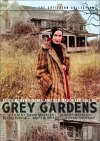
Grey Gardens: Criterion Collection
The Criterion Collection // Unrated // August 14, 2001
List Price: $39.95 [Buy now and save at Amazon]
THE STRAIGHT DOPE:
In the history of film there have been some characters so distinct and memorable that they can be remembered outside of the context of the film in which they appeared: Rhett and Scarlett, Rick and Ilsa, Norman, Vito, Travis, Tyler. Little Edie definitely belongs on that list. She's different in one important way: She is totally real. The Maysles brothers' fantastic film Grey Gardens is a look at the lives of little Edie and her mother, big Edie Beale, members of the Bouvier family and cousins of Jackie O. By the time Grey Gardens was released, however, they had fallen so far outside of the society set that their kin inhabited that they nearly slipped off the world's radar entirely. They briefly made headlines for a near eviction when their Long Island mansion had fallen into such a state of disrepair that the authorities stepped in. Only the intervention of Jackie herself saved Grey Gardens from government seizure. Still, the house that the Maysles' camera records is as decrepit as it once must have been beautiful. Much like the house, the Beales are in a slowly progressing state of decay. They have distanced themselves from the rest of the world and they are clearly going insane. Instead of living under gloomy clouds, however, they are extremely energetic, funny, and even charming. Big Edie talks of her days as a young ingenue singing light romantic tunes. She even plays some old records of her performances and sings along, convinced that her voice is still the same. Little Edie, meanwhile, is a blur, a constantly shape-shifting creature who redefines fashion, language, attitude, and emotion. It's no wonder that little Edie has left a lasting impression on many of the people that have seen the film (several significant fashion designers give video testimonials to Edie's influence on them in the disc's supplemental section). Throughout the film she remains an incredibly sympathetic character, as she fights, complains, cries, laughs, and dances around her crumbling house, a sweater wrapped around her head, dressed in her ever changing assortment of "costumes". The charm and uniqueness of Edie makes Grey Gardens an absolutely stunning achievement and required viewing. The Maysles, while never quite the invisible documentarians, know well enough to stay out of Edie's way and allow her to create the film herself. She is constantly directing our attention, to her clothes, to the house, to her mother, to the raccoons that she feeds in the attic. Her voice retains the accent of blue-blooded social grace but she's entered a scene all her own. When she laments her early retreat from the glamour of New York City her promises to return there are not quite convincing. She may hate living alone with her mother but she clearly loves to hate it. As a dissection of a mother-daughter relationship, Grey Gardens is extremely complex. They each have a laundry list of grievances and their constant exposure to each other has forced everything out into the open. Edie may tell a story one day for the humor value of it, then tell the exact same story the next day, in tears, looking for sympathy. They have begun to merge into one person through the repetitive nature of their hermit-like existence. Grey Gardens follows the Maysles masterful Gimme Shelter by five years and is no less skillful, even though the logistical scope is infinitely smaller. The attention to human detail is what links these films and makes Grey Gardens, ultimately, so devastating. VIDEO:
The documentary camera work of Grey Gardens consists of mostly grainy, hand-held takes. There is, however, a tremendous beauty to the compositions, colors, and textures. The transfer here is amazing given the age and source of the materials. Truly a stunning job. The film is appropriately full-screen. AUDIO:
The audio is a simple 2.0 mono track that is never unclear, even with the limited resources available to the filmmakers. English subtitles are also included. EXTRAS:
Criterion has included a wonderful selection of extras. One seems to be an easter egg of sorts: A very recent telephone conversation (2000 or 2001) between little Edie and Albert Maysles immediately following the film's closing credits where they discuss such issues as the Bush-Gore election, Edie's current life in Florida, and the effect the film had on each of their lives. Edie, true to form, suggests that she should have snatched Albert up in marriage when they first met. Albert also contributes to a commentary track along with co-director/editors Ellen Hovde and Muffie Meyer, and associate producer Susan Froemke. It's an interesting and informative track that discusses the unusual creation of the film. Excerpts from a 1976 audio interview with little Edie for Interview magazine should help those going through Edie withdrawal after the film ends. Interviews with fashion designers Todd Oldham and John Bartlett shed a light on the influence that Edie's singular style had on that community. Trailers and a collection of hundreds of photos round out the set. FINAL THOUGHTS:
A unique and fascinating film, Grey Gardens covers a lot of ground while staying entirely within one house. Through the complexity of its subjects and the subtlety of the filmmakers, it becomes a stunningly beautiful and original viewing experience. More films by the Maysles brothers:
Gimme Shelter
In the history of film there have been some characters so distinct and memorable that they can be remembered outside of the context of the film in which they appeared: Rhett and Scarlett, Rick and Ilsa, Norman, Vito, Travis, Tyler. Little Edie definitely belongs on that list. She's different in one important way: She is totally real. The Maysles brothers' fantastic film Grey Gardens is a look at the lives of little Edie and her mother, big Edie Beale, members of the Bouvier family and cousins of Jackie O. By the time Grey Gardens was released, however, they had fallen so far outside of the society set that their kin inhabited that they nearly slipped off the world's radar entirely. They briefly made headlines for a near eviction when their Long Island mansion had fallen into such a state of disrepair that the authorities stepped in. Only the intervention of Jackie herself saved Grey Gardens from government seizure. Still, the house that the Maysles' camera records is as decrepit as it once must have been beautiful. Much like the house, the Beales are in a slowly progressing state of decay. They have distanced themselves from the rest of the world and they are clearly going insane. Instead of living under gloomy clouds, however, they are extremely energetic, funny, and even charming. Big Edie talks of her days as a young ingenue singing light romantic tunes. She even plays some old records of her performances and sings along, convinced that her voice is still the same. Little Edie, meanwhile, is a blur, a constantly shape-shifting creature who redefines fashion, language, attitude, and emotion. It's no wonder that little Edie has left a lasting impression on many of the people that have seen the film (several significant fashion designers give video testimonials to Edie's influence on them in the disc's supplemental section). Throughout the film she remains an incredibly sympathetic character, as she fights, complains, cries, laughs, and dances around her crumbling house, a sweater wrapped around her head, dressed in her ever changing assortment of "costumes". The charm and uniqueness of Edie makes Grey Gardens an absolutely stunning achievement and required viewing. The Maysles, while never quite the invisible documentarians, know well enough to stay out of Edie's way and allow her to create the film herself. She is constantly directing our attention, to her clothes, to the house, to her mother, to the raccoons that she feeds in the attic. Her voice retains the accent of blue-blooded social grace but she's entered a scene all her own. When she laments her early retreat from the glamour of New York City her promises to return there are not quite convincing. She may hate living alone with her mother but she clearly loves to hate it. As a dissection of a mother-daughter relationship, Grey Gardens is extremely complex. They each have a laundry list of grievances and their constant exposure to each other has forced everything out into the open. Edie may tell a story one day for the humor value of it, then tell the exact same story the next day, in tears, looking for sympathy. They have begun to merge into one person through the repetitive nature of their hermit-like existence. Grey Gardens follows the Maysles masterful Gimme Shelter by five years and is no less skillful, even though the logistical scope is infinitely smaller. The attention to human detail is what links these films and makes Grey Gardens, ultimately, so devastating. VIDEO:
The documentary camera work of Grey Gardens consists of mostly grainy, hand-held takes. There is, however, a tremendous beauty to the compositions, colors, and textures. The transfer here is amazing given the age and source of the materials. Truly a stunning job. The film is appropriately full-screen. AUDIO:
The audio is a simple 2.0 mono track that is never unclear, even with the limited resources available to the filmmakers. English subtitles are also included. EXTRAS:
Criterion has included a wonderful selection of extras. One seems to be an easter egg of sorts: A very recent telephone conversation (2000 or 2001) between little Edie and Albert Maysles immediately following the film's closing credits where they discuss such issues as the Bush-Gore election, Edie's current life in Florida, and the effect the film had on each of their lives. Edie, true to form, suggests that she should have snatched Albert up in marriage when they first met. Albert also contributes to a commentary track along with co-director/editors Ellen Hovde and Muffie Meyer, and associate producer Susan Froemke. It's an interesting and informative track that discusses the unusual creation of the film. Excerpts from a 1976 audio interview with little Edie for Interview magazine should help those going through Edie withdrawal after the film ends. Interviews with fashion designers Todd Oldham and John Bartlett shed a light on the influence that Edie's singular style had on that community. Trailers and a collection of hundreds of photos round out the set. FINAL THOUGHTS:
A unique and fascinating film, Grey Gardens covers a lot of ground while staying entirely within one house. Through the complexity of its subjects and the subtlety of the filmmakers, it becomes a stunningly beautiful and original viewing experience. More films by the Maysles brothers:
Gimme Shelter
Gil Jawetz is a graphic designer, video director, and t-shirt designer. He lives in Brooklyn.
E-mail Gil at [email protected]
|



| Popular Reviews |
| Sponsored Links |
|
|
| Sponsored Links |
|
|
| Release List | Reviews | Shop | Newsletter | Forum | DVD Giveaways | Blu-Ray | Advertise |
|
Copyright 2024 DVDTalk.com All Rights Reserved. Legal Info, Privacy Policy, Terms of Use,
Manage Preferences,
Your Privacy Choices 
| |||||||