
| Reviews & Columns |
|
Reviews DVD TV on DVD Blu-ray 4K UHD International DVDs In Theaters Reviews by Studio Video Games Features Collector Series DVDs Easter Egg Database Interviews DVD Talk Radio Feature Articles Columns Anime Talk DVD Savant Horror DVDs The M.O.D. Squad Art House HD Talk Silent DVD
|
 DVD Talk Forum |
|
|
| Resources |
|
DVD Price Search Customer Service #'s RCE Info Links |
|
Columns


|
|
|
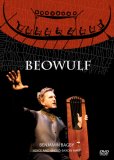
Benjamin Bagby: Beowulf
This Beowulf is the real deal - not some action-adventure adaptation (with or without CGI monsters), but a sung performance of the epic poem itself. Benjamin Bagby sings in the original Old English of the poem, accompanying himself on the Anglo-Saxon harp. The result is a mesmerizing glimpse into a long-gone world, a chance to thrill to the story of Beowulf and Grendel in something of the same way that listeners did, more than a thousand years ago.
Beowulf is available in printed copies in any bookstore, but there are two things to know about that paperback in the "classics" section. One is that it's a translation: the original poem is in Old English, which is a completely different language than Modern English. (Here's a hint of how different it is: Shakespeare's language is actually considered Modern English, albeit "Elizabethan" Modern English; Chaucer wrote in Middle English, hundreds of years after the Beowulf-poet. While some dialects of Middle English are intelligible, with effort, by the modern reader without a translation, Old English is definitely not.) The other is that originally Beowulf was a performance, not a written poem: it was sung to its audience by the poet, who kept it in memory. The manuscript transcription of it dates from approximately the eleventh century, but it was probably composed in the eighth or ninth centuries; the poem is, in a sense, suspended between the old world of pagan traditions and the new world of Christianity. The person who transcribed the poem was probably Christian, as was the 11th-century audience for the poem, but it's an interesting debate as to whether the original composer of the poem was pagan or Christian. At any rate, Beowulf certainly does give a wonderful insight into the world of sixth-century Anglo-Saxon culture, as the events and characters described in the story would have been "historical" even to the medieval audiences.
So what's so neat about Beowulf? It's one of the great warrior epics of the English literary culture, giving us the great hero Beowulf and his fight against the horrific monster Grendel. That, in itself, has inspired many and many a poem, story, novel, and monster movie. But Beowulf is not just an exciting story; it's also great poetry, which is why it's so hard to get a good translation. Old English is, as I noted, a completely different language than the Modern English that it would contribute to, so it's very hard for translations to really capture the feel of it.
That's where Benjamin Bagby's performance of the poem comes in. He brings it to life - the way it would have been brought to life in its own day. He sings the poetry in the original Old English (yes, there are subtitles), adding the music of the harp to accentuate the narrative. The performance is done without "bells and whistles": it's just Bagby and his harp, just as in the old days it would have been the bard and his harp. This simplicity of setting means that Bagby's talent as bard is brought to the fore: with intonation and inflection, with expression and gesture, he brings the lines of Beowulf to life.
The effect is amazing: Bagby is mesmerizing as a storyteller. As a scholar of English, I've read Beowulf various times (parts of it in the original Old English, too), but I've never really appreciated it as poetry and song until I saw Bagby's performance. I always appreciated the imagery and the narrative, but actually hearing it sung by a skilled performer made me realize that hey! this sounds beautiful too!
The performance runs a bit over an hour and a half, and covers the poem from line 1 to line 1062. This is approximately one-third of the total length of the poem, and gives us the first main story segment (Beowulf and Grendel). The choice to present just the first segment is a good one, I think. This first section is the most famous one of the poem (in fact, many people aren't aware that there's more to Beowulf than Beowulf vs. Grendel in the hall) and is self-contained, so it stands well by itself. The selection means that what we get is the full experience (no lines or sections have been omitted) but it's also a manageable length to sit down and watch.
And yes, there are subtitles, in modern English (optional ones) so you can follow the story as Bagby sings it.
The DVD
Video
Beowulf is presented in anamorphic widescreen, at its original aspect ratio of 1.85:1. The picture is adequate but not impressive, especially considering that it's not a very demanding image to capture. There's heavy edge enhancement, and the picture tends to be a bit blurry at times.
Audio
The Dolby stereo soundtrack is satisfactory. I'd have liked to have had a richer surround experience, but as it is, this mild-mannered stereo experience is fine. Bagby's voice is clear and clean, and his harp music sounds lovely.
Modern English subtitles are provided, in a clear and easy-to-read white lettering.
Extras
First off, the scene selections menu is nicely done, breaking the poem up into seven sections by line numbers (very helpful if you're looking for the performance of a particular section in the poem); if you choose to select one of the chapters, you get a short text summary of that section as well.
Two nice special features are included. There's a 21-minute round-table discussion with Bagby and three other Beowulf scholars, discussing one of the most interesting questions to do with the poem: how we relate to it differently when reading it as compared to hearing it. There's also a 12-minute featurette in which Bagby discusses the construction of his authentic Anglo-Saxon harp, and the reconstruction of the music. It will be particularly interesting for musicians, but worth watching for anyone.
Final thoughts
This performance of Beowulf is very compelling, though it isn't for everyone; if you're looking for a movie of it, then clearly this isn't the thing to watch. But if you've enjoyed reading the poem, then this is a can't-miss experience. (If you teach the poem, even more so.) Benjamin Bagby effectively recreates the experience of listening to an Anglo-Saxon poet reciting the great epic. It's certainly unique - but if you like Beowulf, then it's strongly recommended.
|



| Popular Reviews |
| Sponsored Links |
|
|
| Sponsored Links |
|
|
| Release List | Reviews | Shop | Newsletter | Forum | DVD Giveaways | Blu-Ray | Advertise |
|
Copyright 2024 DVDTalk.com All Rights Reserved. Legal Info, Privacy Policy, Terms of Use,
Manage Preferences,
Your Privacy Choices 
| |||||||