
| Reviews & Columns |
|
Reviews DVD TV on DVD Blu-ray 4K UHD International DVDs In Theaters Reviews by Studio Video Games Features Collector Series DVDs Easter Egg Database Interviews DVD Talk Radio Feature Articles Columns Anime Talk DVD Savant Horror DVDs The M.O.D. Squad Art House HD Talk Silent DVD
|
 DVD Talk Forum |
|
|
| Resources |
|
DVD Price Search Customer Service #'s RCE Info Links |
|
Columns
  


 
|
|
|
Glass Shield, The
Recently I took a look at the Denzel Washington police drama Training Day, a film that has considerable entertainment value but is a failure as an examination of police corruption. By foisting all the worst fears of police misconduct onto one self-serving villain the film actually went a good way towards exonerating the system at large. Charles Burnett's 1994 film The Glass Shield has the opposite problem: It thoughtfully examines many of the problems with police departments where inappropriate behavior is the norm but as a piece of entertainment the film is virtually incompetent.
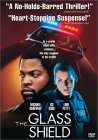
While the packaging suggests that The Glass Shield is an Ice Cube thriller, in actuality Ice Cube's role is little more than a cameo. The main focus of the film is on Michael Boatman's probationary cop J.J. and his introduction to a California sheriff's department. As the first African American member of the team, J.J. faces instant outsider status. The further he wades into the seamy dealings of the office (including racial profiling, harassment, pay-offs, and straight-up murder), the more disenchanted he grows with his dream job. Lori Petty plays Deborah Fields, the first female officer on the squad. After some initial antagonism the pair become like the Hardy boys, snooping around file cabinets with flashlights and having covert conversations in dark squad cars. The good old boys of the police force frown upon such suspicion and do everything they can to ostracize and delegitimize the two rebels.
While there are plenty of moments where the cops seem gloweringly evil, the film also portrays their treachery in a more interesting light. It's almost like they don't think there is anything wrong with what they're doing because it's just the norm. When a white woman is shot dead and her husband (played by Elliot Gould) is the only witness it makes perfect sense to them to pin the murder on a black guy (Cube) found with a gun nowhere near the crime scene. No one even shows any worry that the wrong guy might be on trial. After all, isn't this just another criminal off the street? (This situation contains strong echoes of the Susan Smith crime, where a woman drowned her kids and blamed a black man, sparking days of racist violence before she confessed. In fact, the specters of many racially divisive events are raised by the film.) Even J.J. doesn't find anything wrong with the situation, even though his lies under oath helped build the case. It's when he starts to realize what's wrong that the film gains real perspective.
The problem is that from the beginning The Glass Shield is just poorly made. Dialog is corny, acting is obvious and unconvincing, characters are inconsistent and poorly drawn. There is no real tension and the choppy editing makes the scene structure feel nearly random. Folks looking for another Training Day (which, for all its flaws has a fierce energy) will find The Glass Shield to be excruciatingly boring. Boatman, consistently funny and real on the ABC sitcom Spin City, delivers a weak, goofy performance here that doesn't create a real character. Ice Cube, a solid presence in films like Three Kings, Friday, and Boyz N The Hood, is given absolutely nothing to do here. Character actors like Michael Ironside and M. Emmet Walsh cast sinister eyes at the rookies but don't have any other dimensions. Burnett, whose earlier film To Sleep With Anger caused a good deal of controversy, seems to have no grasp of how to make a dramatic film. He's got the right pieces. He even boldly starts the film with a comic book version of J.J.'s hero-cop fantasy. But the finished film is nearly unwatchable.
VIDEO:
The anamorphic widescreen video looks fine. This is a low budget film and it shows in the simplicity of the lighting and cinematography. There is a bit of dirt on the print, but overall the film looks fine.
AUDIO:
The Dolby Digital surround soundtrack is pretty weak. It has no real energy or range and most dialog sounds slightly muddy and undistinguished.
EXTRAS:
Only some trailers for other Dimension DVDs are included, but not for The Glass Shield.
FINAL THOUGHTS:
Viewers looking to explore police corruption could watch The Glass Shield but any insight the film has is seriously diluted by the lackluster production. It's a bit puzzling that the film turned out so bad. There was no reason to expect that Burnett, usually an interesting filmmaker, would make a film that had one critic name him "the black Ed Wood." But there is no question that this is a film that doesn't work.
|



| Popular Reviews |
| Sponsored Links |
|
|
| Sponsored Links |
|
|
| Release List | Reviews | Shop | Newsletter | Forum | DVD Giveaways | Blu-Ray | Advertise |
|
Copyright 2024 DVDTalk.com All Rights Reserved. Legal Info, Privacy Policy, Terms of Use,
Manage Preferences,
Your Privacy Choices 
| |||||||