
| Reviews & Columns |
|
Reviews DVD TV on DVD Blu-ray 4K UHD International DVDs In Theaters Reviews by Studio Video Games Features Collector Series DVDs Easter Egg Database Interviews DVD Talk Radio Feature Articles Columns Anime Talk DVD Savant Horror DVDs The M.O.D. Squad Art House HD Talk Silent DVD
|
 DVD Talk Forum |
|
|
| Resources |
|
DVD Price Search Customer Service #'s RCE Info Links |
|
Columns
  



 
|
|
|
DEFA Sci-Fi Collection, The
First Run Features // Unrated // August 23, 2005
List Price: $44.95 [Buy now and save at Amazon]
The Films:
In the silent era,Germany UFA East Germany Soviet Union and the popularity of DVDs. Now First Run Features has released a trio of SF films made by the German studio: The DEFA Sci-Fi Collection. Are these rarely seen SF films from behind the Iron Curtain classics or poor quality hack jobs? Actually these films fall somewhere in the middle of the range. While none of them are the lost masterpieces I was hoping for, they are all imaginative, interesting, and well worth watching.
Eolomea (1972): This film clearly illustrates that not everyone can be Andrei Tarkovsky. Released 6 months after Solaris, this film aims high trying to be a major work of art but fails in most respects.
Several spaceships have gone missing around the space station Margot. They haven't exploded or crashed, they've just disappeared. The Space Council suspends all space travel until an answer can be found, but at the same time they receive a strange signal from deep space: the single work Eolomea. Could this be the mythical utopian society that was hypothesized years ago? And if so, how and humans get there.
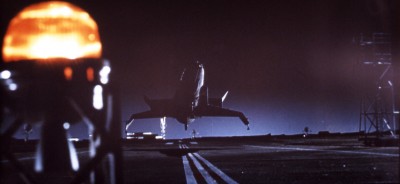
This trippy 70's SF film could have been much better if the creators had just concentrated on telling the story (which has some elements to it) instead of trying to be impressive and outdoing Solaris and 2001: A Space Odyssey. The narrative plays with time, jumping forward and back with few visual cues to let viewers know just where or when they are. Added to that are 60's rock-concert quality special effects that seem more silly than far out. The result is that these devices take away from the story rather than adding to it.
A strange result from this playing with time is also that it takes about half way through the film until the main plot is actually revealed. Usually in a film like this they start with the action and use flashbacks to fill in the missing plot points, but in this case they start before things get interesting and spend way too much time relating what has gone on earlier.
Still, even with these flaws the film does hold a certain interest. It is certainly unlike any SF made in the west at that time, and while the ultimate plot isn't anything unique it does unfold in a novel way that makes the film, if not engaging, worth viewing.
In the Dust of the Stars (1976): This is a more straight forward SF adventure, albeit one with an odd slant. The crew of the Cynro 19/4 has been dispatched from their home planet (also called Cynro) after receiving a distress call from the unexplored planet Tem-4. As they arrive the Temians send a strong signal to their ship that almost causes them to crash, but the quick action by the captain lands them safely. When the actually meet the Temians, they claim that the SOS signal was sent by accident, the result of a failed radio station test. This is followed by a welcome party where the crew of the Cynro is subjected to a type of mind ray that makes them very pliable. But just what is the secret that the Temians are hiding, and what will the crew from Cynro do about it.
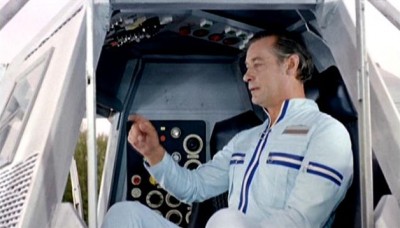
This is a very colorful and interesting movie. Thought it's steeped in 70's kitsch, with strange, nearly nude go-go dancers and snakes sharing the dinner tables, the colorful film has a certain amount of appeal. The striking sets and unusual visuals make this a lot of fun to watch, even if it's hard not to chuckle slightly at some (unintentionally) funny parts.
One of the things that sets this apart from a western SF film is that the captain of the space ship (as well as the medical officer and most of the crew) is a woman, and that fact is never mentioned. It comes across as just a natural event that's not worth commenting on. Overall this is a solid and interesting SF adventure.
Silent Star (1960): This earliest film in the set is also the most interesting and one of the few that made it over to theUS
Taking place in far off 1985, a strange rock is discovered that isn't of Earthly origin. When scientists examine it, they discover an audio message encoded in the artifact and determine that it originated from a space ship from the planet Venus. A team of scientists and explorers from a wide variety of countries is assembled and a rocketship built to take the brave crew to "Earth's sister planet."
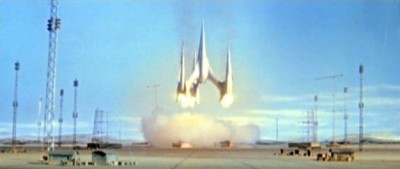
On the way to Venus more of the alien artifact is deciphered, and what is discovered isn't good. Apparently the Venusians were planning on attacking Earth and conquering it. Why this plan didn't come off is discovered when the crew gets to the neighboring planet: a nuclear accident wiped out the entire population of the planet. The only things that are left are the automatic systems which are still running. Systems that start to launch the attack on Earth when the visitors accidently activate them.
This movie, based on a story by Stanislaw Lem (who reported disliked the film) is part adventure story, part Soviet propaganda. It starts off well with the mystery of the strange object, and the ending is very good with many creative touches that put it above similar films released at that time. There is a large chunk of the middle that really drags however, that is filled with long speeches and not-so-subtle jabs at the West. Americans are only after money and violence, as where the noble Soviets are interested in advancing science and helping humanity. The scenes on the way to Venus really drag, playing chess with a robot and hypothesizing about the planet they are going to doesn't make for an exciting film.
The end makes up for it however. The last 25-30 minutes of the film are very good. The aliens are actually alien in nature, having many odd an unusual devices and instruments, and the problems that the crew faces keep the viewer's attention. The conclusion is big in scope and well worth slogging through the boring middle section.
Audio:
These films are presented in the original German in stereo with optional English subtitles. The soundtracks are all adequate, with the sound effects being clear and the music having an acceptable, though not impressive, dynamic range. The dialog is easy to hear too. The audio stays glued to the screen, but that's not unexpected.
Video:
The biggest problem I had with this set is that all three films are presented with a non-anamorphic 1.78:1 image that puts the subtitles in the black bar at the bottom of the image so that you can't zoom. The colors are brighter than I was expecting, especially in In the Dust of the Stars, though they were sometimes a bit uneven. There was some print damage evident in all three films, spots and some dirt, but nothing major. On the digital side of things, there is some aliasing in the background, but no other major defects are present.
Extras:
These three films come with an assortment of bonus material. While none of it was terribly exciting, it was nice to see First Run go to the trouble to include them. All three films come with an introductory essay, filmographies of the cast and crew, and trailers to the three films in this set. There's also an interview with the cameraman and costume designer from Eolomea, an interview with the DP on In the Dust of the Stars, a pair of newsreels concerning the filming of Silent Star, and a couple of photo galleries.
Final Thoughts:
These three films are definitely different from your typical 70's SF fare. While the plots are not anything new or unique, the productions make up for that deficiency with creative, colorful, and visually interesting sets and designs. Any SF fan looking for something a little different or apart from the norm should definitely check these out. Recommended.
In the silent era,
Eolomea (1972): This film clearly illustrates that not everyone can be Andrei Tarkovsky. Released 6 months after Solaris, this film aims high trying to be a major work of art but fails in most respects.
Several spaceships have gone missing around the space station Margot. They haven't exploded or crashed, they've just disappeared. The Space Council suspends all space travel until an answer can be found, but at the same time they receive a strange signal from deep space: the single work Eolomea. Could this be the mythical utopian society that was hypothesized years ago? And if so, how and humans get there.
This trippy 70's SF film could have been much better if the creators had just concentrated on telling the story (which has some elements to it) instead of trying to be impressive and outdoing Solaris and 2001: A Space Odyssey. The narrative plays with time, jumping forward and back with few visual cues to let viewers know just where or when they are. Added to that are 60's rock-concert quality special effects that seem more silly than far out. The result is that these devices take away from the story rather than adding to it.
A strange result from this playing with time is also that it takes about half way through the film until the main plot is actually revealed. Usually in a film like this they start with the action and use flashbacks to fill in the missing plot points, but in this case they start before things get interesting and spend way too much time relating what has gone on earlier.
Still, even with these flaws the film does hold a certain interest. It is certainly unlike any SF made in the west at that time, and while the ultimate plot isn't anything unique it does unfold in a novel way that makes the film, if not engaging, worth viewing.
In the Dust of the Stars (1976): This is a more straight forward SF adventure, albeit one with an odd slant. The crew of the Cynro 19/4 has been dispatched from their home planet (also called Cynro) after receiving a distress call from the unexplored planet Tem-4. As they arrive the Temians send a strong signal to their ship that almost causes them to crash, but the quick action by the captain lands them safely. When the actually meet the Temians, they claim that the SOS signal was sent by accident, the result of a failed radio station test. This is followed by a welcome party where the crew of the Cynro is subjected to a type of mind ray that makes them very pliable. But just what is the secret that the Temians are hiding, and what will the crew from Cynro do about it.
This is a very colorful and interesting movie. Thought it's steeped in 70's kitsch, with strange, nearly nude go-go dancers and snakes sharing the dinner tables, the colorful film has a certain amount of appeal. The striking sets and unusual visuals make this a lot of fun to watch, even if it's hard not to chuckle slightly at some (unintentionally) funny parts.
One of the things that sets this apart from a western SF film is that the captain of the space ship (as well as the medical officer and most of the crew) is a woman, and that fact is never mentioned. It comes across as just a natural event that's not worth commenting on. Overall this is a solid and interesting SF adventure.
Silent Star (1960): This earliest film in the set is also the most interesting and one of the few that made it over to the
Taking place in far off 1985, a strange rock is discovered that isn't of Earthly origin. When scientists examine it, they discover an audio message encoded in the artifact and determine that it originated from a space ship from the planet Venus. A team of scientists and explorers from a wide variety of countries is assembled and a rocketship built to take the brave crew to "Earth's sister planet."
On the way to Venus more of the alien artifact is deciphered, and what is discovered isn't good. Apparently the Venusians were planning on attacking Earth and conquering it. Why this plan didn't come off is discovered when the crew gets to the neighboring planet: a nuclear accident wiped out the entire population of the planet. The only things that are left are the automatic systems which are still running. Systems that start to launch the attack on Earth when the visitors accidently activate them.
This movie, based on a story by Stanislaw Lem (who reported disliked the film) is part adventure story, part Soviet propaganda. It starts off well with the mystery of the strange object, and the ending is very good with many creative touches that put it above similar films released at that time. There is a large chunk of the middle that really drags however, that is filled with long speeches and not-so-subtle jabs at the West. Americans are only after money and violence, as where the noble Soviets are interested in advancing science and helping humanity. The scenes on the way to Venus really drag, playing chess with a robot and hypothesizing about the planet they are going to doesn't make for an exciting film.
The end makes up for it however. The last 25-30 minutes of the film are very good. The aliens are actually alien in nature, having many odd an unusual devices and instruments, and the problems that the crew faces keep the viewer's attention. The conclusion is big in scope and well worth slogging through the boring middle section.
The DVD:
Audio:
These films are presented in the original German in stereo with optional English subtitles. The soundtracks are all adequate, with the sound effects being clear and the music having an acceptable, though not impressive, dynamic range. The dialog is easy to hear too. The audio stays glued to the screen, but that's not unexpected.
Video:
The biggest problem I had with this set is that all three films are presented with a non-anamorphic 1.78:1 image that puts the subtitles in the black bar at the bottom of the image so that you can't zoom. The colors are brighter than I was expecting, especially in In the Dust of the Stars, though they were sometimes a bit uneven. There was some print damage evident in all three films, spots and some dirt, but nothing major. On the digital side of things, there is some aliasing in the background, but no other major defects are present.
Extras:
These three films come with an assortment of bonus material. While none of it was terribly exciting, it was nice to see First Run go to the trouble to include them. All three films come with an introductory essay, filmographies of the cast and crew, and trailers to the three films in this set. There's also an interview with the cameraman and costume designer from Eolomea, an interview with the DP on In the Dust of the Stars, a pair of newsreels concerning the filming of Silent Star, and a couple of photo galleries.
Final Thoughts:
These three films are definitely different from your typical 70's SF fare. While the plots are not anything new or unique, the productions make up for that deficiency with creative, colorful, and visually interesting sets and designs. Any SF fan looking for something a little different or apart from the norm should definitely check these out. Recommended.
|




| Popular Reviews |
| Sponsored Links |
|
|
| Sponsored Links |
|
|
| Release List | Reviews | Shop | Newsletter | Forum | DVD Giveaways | Blu-Ray | Advertise |
|
Copyright 2024 DVDTalk.com All Rights Reserved. Legal Info, Privacy Policy, Terms of Use,
Manage Preferences,
Your Privacy Choices 
| |||||||