
| Reviews & Columns |
|
Reviews DVD TV on DVD Blu-ray 4K UHD International DVDs In Theaters Reviews by Studio Video Games Features Collector Series DVDs Easter Egg Database Interviews DVD Talk Radio Feature Articles Columns Anime Talk DVD Savant Horror DVDs The M.O.D. Squad Art House HD Talk Silent DVD
|
 DVD Talk Forum |
|
|
| Resources |
|
DVD Price Search Customer Service #'s RCE Info Links |
|
Columns
  


 
|
|
|
No. 1 Ladies' Detective Agency: The Complete First Season, The
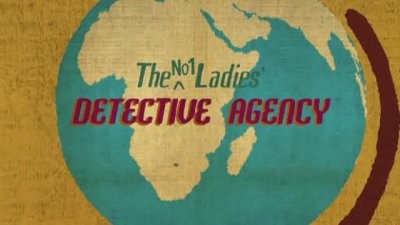
Although I am a voracious consumer of mystery novels, I never got around to Alexander McCall Smith's series The No. 1 Ladies' Detective Agency, and I suppose the main reason for that was because I smelled a concoction tailor-made for the Martha Stewart crowd. Think about it: a woman opens a detective agency in an exotic locale; many topical issues are touched upon, and her cases don't involve a lot of physical danger. Oh, and much tea is consumed. It's like Miss Marple, but without the edgy wit or, as it turns out, murder.
The books were adapted as an HBO series by no less than Oscar-winning filmmaker Anthony Minghella and the king of charming English romcoms, Richard Curtis. (They collaborated on the pilot's script, with Minghella directing; the remaining episodes were handled by others equally capable.) One would think with Minghella's involvement, the pilot would have been released as a theatrical feature; in fact, the series, while well-received, has not as of this writing been picked up for a second season.
The feature-length pilot sets up the background of the main character, Precious Ramotswe (Jill Scott). Upon her father's death, Precious sells the many cattle he has left her and moves to the city. Here, she sets up shop as the only female private detective in Botswana, motivated to help people with their problems, and by national pride. Precious hires a prissy, awkward secretary, Grace Makutsi (Anika Noni Rose), who proudly works without pay until Precious turns a profit. Her first cases involve a cheating husband, a potential impostor, and a missing finger. With the help of Mma Makutsi, and the gentlemanly mechanic Mr. Maketoni (Lucian Msamati), Precious solves all three of these cases. Along the way, she learns some lessons of detection the hard way.
The pilot glides confidently along beneath Minghella's sure hand. We are brought swiftly into a foreign land that never feels strange. The lovely photography by Seamus McGarvey and regionally-inspired score by Gabriel Yared help immeasurably. The whole, however, is carried by the lovely Jill Scott, whose charisma and emotional nuances prove a talent far greater than her Grammy-winning voice.
As far as story, substance, and energy, I felt that the pilot and especially the subsequent six episodes were lacking. Although the trappings of the production are beyond reproach, there's just not much real weight here - it's very light stuff. It may be a bit unsettling to think about, but I'm not breaking new ground by saying that gentle humor, heartfelt relationships, and a cast of humane, likable characters do not make for great drama. For that reason, I'm surprised that Minghella was drawn to the material - his brilliant films often deal with self-hating characters trying to find some kind of light within themselves.
This is not to say that there is anything objectionable about The No. 1 Ladies' Detective Agency. There's not. It's a likable series. It's just not terribly gripping.
Following the pilot, six further episodes explore new cases taken by Precious, and begin to develop some interesting character-specific story arcs.
Episode 2: "The Big Bonanza" (written by Nicholas Wright, directed by Charles Sturridge)
Episode 3: "Poison" (Wright and Sturridge)
Episode 4: "The Boy with an African Heart" (Wright and Sturridge)
Episode 5: "Problems in Moral Philosophy" (written by Robert Jones, directed by Tim Fywell)
Episode 6: "Beauty and Integrity" (Jones and Fywell)
Episode 7: "A Real Botswana Diamond" (Jones and Fywell)
In these, the mousy, brittle Mma Makutsi slowly develops from a near-caricature into a deeply-shaded character, and this transition is handled with grace by Rose. Mr. Maketoni's obvious affection for Precious maintains a healthy level of narrative suspense as to the "will they or won't they?" question. And the cases take on slightly darker tones at times, engaging with topical material including AIDS and ivory smuggling. The three primary characters really are lovable, and by the season's end you know you will miss them. Still, I can't say that I'll actively seek out a second season of the show should it come to pass in the future. It's well-made, pleasing entertainment, but is not narratively gripping or fundamentally memorable.
The DVD
The Package
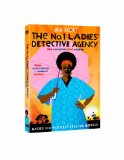
For this three-disc set, HBO has slipped a nice hardcover tri-fold book into a card slipcover. The sturdy package features some nice artwork.
The Video
All seven episodes are presented in enhanced 1.78:1 transfers. The beautiful color palette of the series really shines - earthy African tones blended with bright blues and greens. The pilot in particular positively glows with wonderfully-captured light. The photography is uniformly excellent, and is served well by a crisp, clean transfer. Black levels are wanting here and there, but it's a small point.
The Sound
The 5.1 surround track is a pleasure to listen to. While certainly not the most active or spectacular mix, the surrounds spread out the wonderful musical score and ambient effects with a gentle precision. The dialogue is recorded flawlessly, eliminating the potential for confusion over the heavily accented performances. A solid, engaging track. A secondary stereo Spanish track is available as well.
The Extras
A handful of nice features are included. Each episode is accompanied by an optional Author's Diary, a three- or four-minute video piece narrated by Alexander McCall Smith, who offers a unique perspective on each story.
The remaining features are all gathered on Disc 3. First, there is Anthony Minghella's No. 1 Film (30:02), an in-depth look at the late director's development of the pilot. Botswana: The Gem of Africa is a travelogue-like exploration of the series' setting, complemented by interviews with cast and crew. The Making of The No. 1 Ladies' Detective Agency (11:33) is just what it sounds like. The fascinating The Beat of Botswana (11:08) is a lively look at the country's varied music.
Final Thoughts
I enjoyed The No. 1 Ladies' Detective Agency, all the while reminded of the too-early loss of Anthony Minghella, a committed, intelligent, and passionate filmmaker. His influence on the feature-length pilot episode is evident in the sumptuous photography and the carefully-developed characters. In the end, though, there's no escaping the series' lack of narrative momentum, and the final effect is one of agreeable niceness. Still, with much to like and nothing to actively dislike, this well-produced set is recommended.
|



| Popular Reviews |
| Sponsored Links |
|
|
| Sponsored Links |
|
|
| Release List | Reviews | Shop | Newsletter | Forum | DVD Giveaways | Blu-Ray | Advertise |
|
Copyright 2024 DVDTalk.com All Rights Reserved. Legal Info, Privacy Policy, Terms of Use,
Manage Preferences,
Your Privacy Choices 
| |||||||