
| Reviews & Columns |
|
Reviews DVD TV on DVD Blu-ray 4K UHD International DVDs In Theaters Reviews by Studio Video Games Features Collector Series DVDs Easter Egg Database Interviews DVD Talk Radio Feature Articles Columns Anime Talk DVD Savant Horror DVDs The M.O.D. Squad Art House HD Talk Silent DVD
|
 DVD Talk Forum |
|
|
| Resources |
|
DVD Price Search Customer Service #'s RCE Info Links |
|
Columns


 
|
|
|
Adult Swim in a Box
Adult Swim, which takes over late nights from Cartoon Network, has spent the last decade carving out a very particular niche market with an insanely inspired, eclectic approach to programming. Although Adult Swim broadcasts new and classic anime on selected nights, their original programming is what makes the program block stand out. Beginning in 2001, Adult Swim officially launched with programming only a couple of nights a week - new episodes of Space Ghost Coast to Coast, Home Movies, and a lot of reruns. After a year or so, the network began to expand original programming with shows featuring the surreal humor and visual styles Adult Swim is now known for. These "early" Adult Swim shows included Sealab 2021, Harvey Birdman: Attorney at Law, Aqua Teen Hunger Force, and The Brak Show. Since then, Adult Swim has matured into its comfortable role as the provider of alternative television programming.
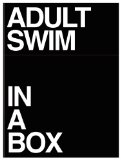
This set, released as Adult Swim in a Box, presents a sampling of the network's distinctive shows, with six previously-released DVD sets and a welcome bonus disc containing a handful of pilot episodes for less-successful (or never picked up) programs. The content itself is absolutely fine - wholly enjoyable, and fairly representative of what Adult Swim is "about." However, the logic behind the assembly of that content is highly suspect. For one thing, if this box is meant to be an "introduction" to Adult Swim, why not include the first DVD releases for each show, instead of second or third seasons? If it is meant to be a sampler, why not arrange the shows chronologically, with revised disc packaging to make structure of the set somehow distinctive? On the box itself - which barely even qualifies as cardboard - the designers have emblazoned the characteristically self-reflexive phrase "Cash grab," which basically answers the questions I just posed. Although they are transparent and self-mocking about their bottom line-oriented thinking, it's not really funny. The MSRP on this box is $69.98. Fans likely already own most of the box's contents; if Adult Swim wants to lure new viewers or those who haven't got around to making a purchase of their favorite Adult Swim shows, the slapdash assemblage of contents is illogical. I suspect that Adult Swim was simply trying to clear warehouse space, designed a box, put together a bonus disc and voila - released this set.
I criticize the choice because it muddies the waters around Adult Swim's otherwise very thorough and thoughtfully-produced individual DVD releases. They routinely feature fine transfers, creative artwork and packaging, and excellent, unusual extra features. For their overall DVD strategy, I have nothing but praise. But this set is sloppy, and only makes sense for existing fans who happen to have holes in their DVD collection. Despite the lack of logical organization here, this is a noteworthy trove of unique television shows.
Space Ghost Coast to Coast - Volume Three (1997)
Taking the contents chronologically, this set starts in the middle of Space Ghost Coast to Coast's run - the show first aired in 1994, and lasted for ten years. This third volume includes all 24 episodes that originally aired in 1997 (the last, "Joshua," actually aired on January 1, 1998).
I could never get enough of Space Ghost. The show is hilarious, baffling, unpredictable, nonsensical, inventive, absurdist, and experimental. Space Ghost, the '60s-era Hanna-Barbera hero, has been repurposed as a preening, dense, clueless talk show host - his sidekicks are his alien captives Moltar and Zorak. Guests are swept in via video feed (they are always asked if they have enough oxygen) and are forced to run a gauntlet of disconnected, schizoid questions from Space Ghost, many of which grow out of whatever current neurosis is plaguing our host that day. The guest appearances are tightly-edited exercises in the comedy of extreme discomfort; although this was largely achieved in post-production (the animation and voice-overs being matched to out-of-context interview snippets), they are expertly assembled, intermixing awkward exchanges, unexpected outbursts, and outright hostility between host and guest.
In between interview segments, Space Ghost torments (or is tormented by) his unwilling sidekicks, constantly buffeted by Zorak's insults and Moltar's control booth manipulations. Occasionally, episodes combine long stretches of animation from the Hanna-Barbera show with new voice-overs, and send Space Ghost on some bizarre adventure or another. The music of the great avant-garde guitarist Sonny Sharrock provides introductory and closing themes for the show.
With strong writing and excellent voice actors (George Lowe as Space Ghost, C. Martin Croker as Zorak and Moltar, and Andy Merrill as Brak and other occasional characters), Space Ghost Coast to Coast never bores me. Something odd always happens. The show consistently moves in new and unusual directions.
Volume Three includes 24 episodes, and is the longest of the Space Ghost DVD releases. Not only are there more episodes here than on the other sets, but many of them are extended beyond their original broadcast length. In total, the episodes run an aggregate of close to five yours. Guests on Volume Three include Fred Schneider of the B-52s, Bob Odenkirk and David Cross of Mr. Show, Beck, Judy Tenuta, Robin Leach, Mark Hamill, Jon Stewart, Peter Fonda, Buzz Aldrin, Rob Zombie, Charlton Heston, Steve Allen, and Tony Bennett. When you look at the complete guest line-up - which is far more extensive than this - it's amazing who they convinced to appear on the show. Given the unconventional format and totally random usage of interview clips, it seems that guests either knew exactly what they were getting into, or had no concept of the show at all.
Aqua Teen Hunger Force - Volume Two (2002-2003)
Next is another of Adult Swim's cornerstone programs, Aqua Teen Hunger Force, a show even more divisive than the love-it-or-hate-it Space Ghost Coast to Coast. The title of the program is borderline nonsensical. None of the words directly connect to the protagonists - the only discernable link is the word "Hunger" to the fact that our three heroes are talking foodstuffs.
Frylock, Master Shake, and Meatwad share a house somewhere in New Jersey (with the New York City skyline directly behind them, it's got to be Hoboken or Jersey City!). They generally live in filth, argue incessantly, play video games, and torment their scumbag neighbor Carl Brutananadilewski. Each episode involves some kind of confrontation with aliens, robots, or other weird creatures. Often, one or more of the group inadvertently save humanity from destruction. Frylock (voiced by Carey Means) is the brains of the bunch, an intellectual with a fatherly regard for the dimwitted Meatwad. Master Shake (Dana Snyder) is a selfish, loudmouthed, destructive fool with no interest but his own comfort and convenience. Meatwad (Dave Willis) is a childlike rolling ball of meat who is continually, if unwittingly, endangering himself and others.
Aqua Teen Hunger Force is even more abstract than Space Ghost. Each episode is like an undergraduate pot-brownie dream come to life. A stable of recurring characters, beloved among fans, include Dr. Weird and his assistant Steve, the Mooninites Ignignokt and Err, the Plutonians Oglethorpe and Emory, and MC Pee Pants. In addition, there is an ever-growing cast of one-off villains that make Spider-Man's enemies look like well-adjusted yuppies - I'm thinking of Happy Time Harry and the Cybernetic Ghost of Christmas Past, among others.
Here in Volume Two we have thirteen episodes: the last two from Season One, with the remainder from Season Two. The most memorable are probably "Cybernetic Ghost of Christmas Past" and "Universal Remonster," which I am probably more amused by than the average person - to me, a small bear-like creature made entirely of remote controls, waddling around like a lost child is simultaneously cute and hilarious in a way that I can't adequately put into words. Overall, this set represents Aqua Teen Hunger Force at its strongest; the show remains excellent through the contents of Volume Three, after which the quality and originality drops off a bit, but not a whole lot.
This freewheeling show can become a bit exhausting and occasionally tiresome in its efforts to reach for the outer limits of animated comedy; but quite often it is entirely successful as a phantasmagoric vision of what happens when fast food becomes sentient, lazy, and self-indulgent.
Sealab 2021 - Season Two (2002-2003)
Taking its cue from Space Ghost Coast to Coast, Sealab 2021 recycles and reimagines the short-lived Hanna-Barbera program Sealab 2020, which ran for sixteen episodes in late 1972. Recycled animation and new voice talent places the show in basically the same milieu as the original - an underwater laboratory populated by a multi-ethnic cast of scientists. Some - but not all - of the principal characters retain their names.
Most of the storylines for Sealab 2021 revolve around the sheer unpredictable lunacy of Captain Murphy (voiced by the estimable Harry Goz). Murphy is a moody, insane autocrat whose whims take the show in a new direction almost every episode. Murphy's antics (and Goz's considerable talent) are showcased best in the first season episode "All That Jazz," during which Murphy is trapped beneath a fallen soda machine for a very, very long period of time. Other episodes feature plotlines that spiral out of control ending with one or more (sometimes all) of the principal characters' deaths - they all return in the following episodes, of course.
Season Two is the show's best, with several classic episodes. "Bizarro" finds the crew taken captive by Bizarro-world versions of themselves. "Tinfins" is totally unusual in format, being a faux-television special about a big-budget movie version of Sealab 2021. "7211" plays it almost straight, simply redubbing an original Sealab 2020 episode. "Feast of Alvis" finds Murphy directing celebrations of Alvistide aboard the lab, amid much controversy. "Fusebox" uses a nearly-still shot of the lab's exterior for almost the entire episode - the power's out and the crew tries to solve the problem, exploding one wing of the lab at a time in the process.
Almost every episode of this set is strong - the writing is tight, and the performers are excellent, more than making up for the intentionally cheap cut-and-paste approach to animation. Sealab 2021 was sadly, prematurely sunk by Harry Goz's death in 2003; touchingly, Goz's son came onboard to portray a new character in Murphy's place, but the show just wasn't the same and limped through a fourth season.
Moral Orel - Volume One (2005-2006)
This stop-motion show from accomplished television writer Dino Stamatopoulos (Mr. Show, etc.) broke new ground and offended many. Taking the childlike animation of Davey and Goliath and combining it with a brutal edge that is franker and bolder than perhaps any other program in recent memory, Moral Orel is wickedly sharp and very funny, even when it goes too far (which it often does).
The main target of Moral Orel's considerable venom is organized religion - and born-again Christians in particular. The main character is Orel Puppington, a young and impressionable boy who lives in a very middle-of-the-road town in Middle America. Orel takes church very seriously, and believes that everyone is good at heart. Most episodes find Orel carrying out the precepts of Reverend Putty's sermons (or some other authoritative adult's counsel) to the letter - but he does so based on a grave misinterpretation of the matter at hand, and without regard for the consequences. A couple of examples from Volume One:
In "Waste," Orel begins drinking his own urine because a supposed "lost" commandment forbids waste. In "God's Chef," Orel is caught masturbating and is admonished with the warning that he'll go to Hell unless sperm is used to make babies. Taking this to heart, Orel begins breaking into homes at night to impregnate sleeping women using a pastry bag. Finally, in "The Lord's Greatest Gift," Orel understands that God's greatest gift is life; he therefore reasons that the dead are sinful because they are rejecting that gift. He then proceeds to raise the dead, wreaking zombie havoc.
As I said, Moral Orel is often very funny. It is also chock-full of shock value. However, the problem with Moral Orel isn't its offensiveness - the problem is its giddy desire to offend ad nauseam. The show exists merely to rile "red state" Christians, who Stamatopoulos sees as hypocritical, morally compromised, and even dangerous. Now some of those things may be true in a variety of instances - hypocrisy and organized religion are hardly strangers - but to create an entire television show just to piss off one group of people seems churlish and counter-productive. In my curmudgeonly view, there are hordes of people across the globe who I'd like to give a piece of my mind, but I'm not going to do it through a stop-motion television show. For one thing, stop-motion is extremely time-consuming, even in the rather crude form used for Moral Orel. If I was going to do something with stop-motion, I'd want to at least attempt to make something that would last. For another thing, Moral Orel is in no way instructive - it's just critical and divisive. The show is very much of its time - it's a forceful, angry reaction to Bush-era "compassionate Conservatism" and the amoral excesses of good Christian America. Moral Orel, while interesting in some ways, only lasted three seasons, and will not survive in our collective memory.
Robot Chicken - Season Two (2006)
I do not love or hate Robot Chicken, Seth Green's intermittently ingenious stop-motion take on channel clicking, short attention spans, and the idiocy of television. The show is made up of mini-sketches as short as a few seconds (one-liners) and no longer than a couple of minutes. Characters are made from recycled, redressed action figures or dolls of some type. Sketches flick from one to the next rapidly. The conceit is that we are viewing a television as the channels are being changed, and the sketches tend to reference real TV shows, commercials, etc.
I don't have much to say about Robot Chicken because it all feels very much the same. In an eleven-minute episode, there may be two or three good laughs and a few chuckles; the brevity of the format and the quickness of the transitions prevent any kind of narrative buildup, and there are no characters per se. It's just an endless parade of one-offs, with no arcs and no payoff. This is to be expected - the format doesn't allow any alternative. It sends up everything, and its broad range of targets ultimately gives way to monotony.
But Robot Chicken is good for a few laughs - and Season Two valiantly packs them in with almost four hours of program content and a ton of special features. As far as I'm concerned, this season is no better or worse than the others. Robot Chicken is enjoyable, but mostly disposable, entertainment.
Metalocalypse - Season One (2006)
The final and most recent DVD set in this box is also probably the best (well, maybe a tie with Space Ghost). Metalocalypse is a thoroughly-realized, beautifully-designed program about the quasi-fictitious heavy metal band Dethklok. In true "metal" fashion, Dethklok is all-powerful - the richest band in the world, living in an enormous isolated fortress, they have nation-like influence over geopolitics, economics, wars, industry, etc.
Created by Brendon Small (of Home Movies) and Tommy Blacha, Metalocalypse reflects careful preparation. The world of the show is entirely fleshed out, conceptually and visually. The five members of Dethklok, absurd though they are, are distinctive, developed individuals. (They are, for the record, Nathan Explosion, William Murderface, Skwisgaar Skwisgelf, Toki Wartooth, and Pickles.) The music is true unadulterated metal, characterized by excellent composition and instrumental precision, with humorous lyrics provided by Nathan Explosion's deathly growl (he's voiced by Small). Of all Adult Swim programs, this one is easily the most lovingly crafted.
Dethklok inhabits a world created by and for "metal." A metal-oriented lifestyle is lived by all - Dethklok's fans are not just legion, but virtually ubiquitous. Dethklok's movements are monitored by a secretive group of the rich and powerful, on the lookout for a weak spot with which to undermine the band's apparent omnipotence. The pilot episode, "The Curse of Dethklok" starts with the band flying to a remote location to perform an earth-shattering coffee jingle for Duncan Hills. After the show - the climax of which features the enormous audience being doused with scalding coffee that separates flesh from bone - their chef (the newest in a string of death-prone hires) is cut to pieces by the band's helicopter's rotors. Back home, the band have to fend for themselves, which results in Toki trying to prepare coffee with a toaster. Therefore they must reassemble their chef with Herculean effort, creating the Frankenstein-like creature that haunts subsequent episodes, serving food with lopsided smiles and drooling grunts.
This summary is just the barest taste of Metalocalypse's first season (all twenty episodes are included here) - the extreme violence, the dire consequences of Dethklok's adventures, and above all, the metal. This show is hilarious - it captures and heightens a very specific corner of our culture, amplifying metal with a religious enthusiasm. The care and attention poured into the show is on full display, and the result is a classic.
Adult Swim Pilots
As a bonus exclusive to this set, this disc contains the pilot episodes for five of Adult Swim's less-successful enterprises. None of these have been released on video before, and they make for interesting viewing.
Totally for Teens (2009): This spastic take on "after-school" live-action shows for teens is exactly like Wonder Showzen for a slightly older crowd - which should come as no surprise, as it was co-created by Vernon Chatman. It shares Wonder Showzen's slapdash, schizophrenically-edited format, but the laughs are a bit thin.
Cheyenne Cinnamon and the Fantabulous Unicorn of Sugar Town Candy Fudge (2009): From the creators of Aqua Teen Hunger Force, this 3D computer-animated show revolves around the innocently slutty pop star Cheyenne Cinnamon, who lives in a fantasyland seemingly of her own creation. The concept is bizarre, and although it does effectively skewer the "culture" around certain current pop sensations, it leaves no particular lasting impression.
Korgoth of Barbaria (2006): Unquestionably the gem of this disc, Korgoth was inexplicably not picked up for production by Adult Swim, despite the fact that this hilarious, over-the-top, ultra-violent post-apocalyptic sword-and-sorcery extravaganza is very well-crafted and animated. The pilot alone deserves its status as a "lost" minor classic, and is fortunately now preserved here on DVD.
Perfect Hair Forever (2004): The only show on this disc that had a production run beyond its pilot, Perfect Hair Forever is a kind-of-fun, but kind-of-anemic anime parody from the Aqua Teen Hunger Force gang. The pilot aired a full year before other episodes in the six-episode first season, with a second "season" following in 2007 of exactly one episode. Perfect Hair Forever seemed to have a small but enthusiastic following; its oddly-timed cancellation remains something of a mystery.
Welcome to Eltingville (2001): This pilot came from Evan Dorkin and Sarah Dyer, a married pair of comics authors whose work I admire greatly. The show, based on an occasional series from Dorkin's comic book Dork, follows the rage-filled days of four fanboy friends in Staten Island. Although its comic timing lags, this pilot could have led to a great series. The tone and milieu of the show is right, capturing the self-hatred of these boys and their comically pathetic existence.
The DVD
The Package
The seven separate disc sets come in their original format - foldout Digipak inside card sleeves, except for the disc of pilots, which comes in a keepcase. The whole is housed in a very flimsy card box, which is totally disposable. The packaging is a disappointment for an otherwise substantial set that retails for $70.
The Video and Audio
All shows are presented in excellent full-screen transfers - crisp, sharp, full of dense color. The exception is Metalocalypse, which is broadcast in widescreen but presented here in a letterboxed transfer. This is unfortunate, given the program's beautiful, meticulous design. Visually, it's by far the most impressive show here, and deserves a decent transfer. Still, all in all, these are solid transfers. Space Ghost, Sealab 2021, Moral Orel, Robot Chicken, and Metalocalypse all feature very strong stereo soundtracks; only Aqua Teen Hunger Force sports a surround track, and it's not too active. With its death metal soundtrack, Metalocalypse is the one show in this set that really deserves a surround mix, but the stereo track is well-balanced and appropriately forceful.
The Extras
Each of the show sets comes with its original bonus content intact. Because it is so exhaustive, I'm only going to summarize each show's extras briefly.
Space Ghost Coast to Coast - Volume Three: Five episodes with commentary tracks, some deleted and alternate scenes, extended interview footage, and a bonus episode.
Aqua Teen Hunger Force - Volume Two: Three episodes with commentary tracks, "Baffler Meal" (the Space Ghost episode that originally introduced the Aqua Teens), a behind-the-scenes featurette, a slideshow of art and storyboards, and a few deleted scenes.
Sealab 2021 - Season Two: Commentary tracks for each episode, a moving tribute to Harry Goz, animated "cast" interviews, a tour of 7030 Studios, a rough cut of "Der Dieb," and animated sketches for an unproduced episode.
Moral Orel - Volume One: Eight episodes with commentary tracks, a Comic Con panel discussion, a behind-the-scenes featurette, and an assortment of advertising, behind-the-scenes footage, and deleted scenes.
Robot Chicken - Season Two: Commentary tracks on all episodes, deleted scenes, promos, a behind-the-scenes featurette, a bonus episode called "Christmas Special," deleted audio, more behind-the-scenes footage, animatics, and video blogs.
Metalocalypse - Season One: All supplements are included as easter eggs on the menu screens, so you have to hunt. They include: band interviews, uncensored scenes, a Mordhaus tour, and Nathan Explosion reading from Hamlet.
Final Thoughts
This boxed set of Adult Swim shows, while randomly assembled, does fairly represent the insanely creative, off-the-wall nature of the network. Fans of Adult Swim will have already identified their favorite shows by now and probably have been collecting desired DVD releases over the years. Those people can safely skip this release; the extra disc of pilots is not worth $70 (or $50, or $40). However, for those who are new to Adult Swim, or for those who have not gotten around to purchasing Adult Swim programs on DVD, Adult Swim in a Box is recommended.
|



| Popular Reviews |
| Sponsored Links |
|
|
| Sponsored Links |
|
|
| Release List | Reviews | Shop | Newsletter | Forum | DVD Giveaways | Blu-Ray | Advertise |
|
Copyright 2024 DVDTalk.com All Rights Reserved. Legal Info, Privacy Policy, Terms of Use,
Manage Preferences,
Your Privacy Choices 
| |||||||