
| Reviews & Columns |
|
Reviews DVD TV on DVD Blu-ray 4K UHD International DVDs In Theaters Reviews by Studio Video Games Features Collector Series DVDs Easter Egg Database Interviews DVD Talk Radio Feature Articles Columns Anime Talk DVD Savant Horror DVDs The M.O.D. Squad Art House HD Talk Silent DVD
|
 DVD Talk Forum |
|
|
| Resources |
|
DVD Price Search Customer Service #'s RCE Info Links |
|
Columns
  


 
|
|
|
Downhill Racer (Criterion Collection)
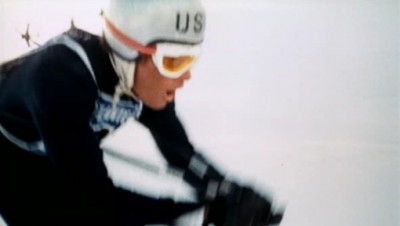
Michael Ritchie's debut feature, Downhill Racer (1969), is a quietly thrilling, beautifully-shot film about a particularly American theme. What does it mean to be a champion? Is it a worthy goal in and of itself? These questions are posed in a far more elegant fashion within the film, but what's interesting about them is the fact that they are in a "sports film" at all.
Usually the key question for characters in films about athletics is, "How do I win?" We watch, we wonder, and we wait, hoping that they figure out what it takes to persevere and triumph. In Downhill Racer, Robert Redford plays a character driven to achieve those same heights - but without knowing himself, without knowing why he wants to win; winning, for him, is messily tied up with a pretty empty vision of his own self-worth. This is the dark side of athletic competition, and the movie poses the unasked and unanswered questions behind each and every sports film that preceded it - along with many that followed.
When a member of the US Ski Team suffers an injury, coach Eugene Claire (Gene Hackman) calls in hotshot David Chappellet (Robert Redford) as his replacement. Chappellet has had some success racing in the US, but has not been tested on the international scene. He quickly proves his potential, and earns a place on the Olympic team. All the while, he faces his father's indifference, engenders a temporary romance with a Swiss ski manufacturer's assistant, and endures fractious relations with his teammates. Claire does his best to rein in Chappellet, knowing how good he is, as well as recognizing the personal perils his champion is creating for himself.
As an actor, Robert Redford is consistently underrated. Perhaps a little hampered early in his career by a focus on his pretty-boy looks, Redford's very real skills as a performer took a back seat to his status as a movie star. But this was to overlook a major talent, an actor whose subtle control of his physicality characterizes his seamless, seemingly effortless approach to acting. Rare for a leading man, he has a rather still, quiet presence. You rarely find Redford in a role where any kind of blatant emoting is required. Instead, he examines his characters' interiors, exploring their thoughts and emotions via body language. In Downhill Racer, Redford's method is in the spotlight; his character, David Chappellet, is a driven, inarticulate show-off whose only concern is being the fastest downhill skier in the world - going after the gold, and nothing else. Chappellet is not very nice, not very open, not very talkative - not terribly likable. What we "root for" is not that he wins the gold at the Winter Olympics (his ultimate goal, and one that we're pretty sure will come to pass from the start of the movie), but that he learns something - anything - about what drives him and what his life might look like post-championship.
Ritchie employs a lot of methods associated with European filmmakers whose influence in the US was at its height when Downhill Racer was made. The camerawork and editing style borrows from verite via Karel Reisz and others, while Ritchie's masterful sense of tone utilizes the calm focus on behavior that Antonioni was known for. This is not to say that Downhill Racer is simply the sum of certain stylistic effects. The film has a decidedly American point of view - and is very much about American insecurity in the face of European "ownership" of the sport of downhill skiing and the culture around it. Ritchie, Redford, and screenwriter James Salter make this very much a part of the story - and the visual style actively contrasts Redford's wholesome American appearance with the film's European settings. The racing sequences are captured thrillingly, with the dangers of the sport on full view. In one of Chappellet's races, we experience the entire event from his point of view. The filmmakers also manage to effectively convey the dangers of ice on the mountain without resorting to expository dialogue - and this is part of a larger appreciation for the nature of snow, its varied consistency and form, and how this is dealt with by the skiers.
In the end, Chappellet faces a situation much like Redford's Bill McKay in The Candidate (1972), which was also directed by Ritchie. The relative value of "winning" remains an open question, just as this film's challenge to American concepts of athletic competition is undiluted after forty years.
The DVD
The Package
Criterion's standard clear keepcase is adorned with typically-lovely double-sided artwork. The single disc is accompanied by a slim booklet featuring a new essay by Todd McCarthy.
The Video
The image is absolutely stunning. This enhanced transfer represents an incredible achievement in film preservation and/or restoration. Save a very few shots that look slightly stained or otherwise damaged, the movie looks like it was shot yesterday. The bright snowy whites contrast wonderfully with eye-popping colors on racing suits, skis, cars, and buildings. The film's rare blacks are deep and solid. This forty-year-old low-budget film (about $2 million) looks absolutely terrific.
The Audio
The mono soundtrack is good, but not great. Some of the mixing is oddly aggressive at points, and the eccentric, minimalistic score by Kenyon Hopkins is sometimes harsh on the ear. Still, the soundtrack is generally pleasing and dialogue is clear. Sounds of the schussing competitors are well-timed and help build tension during the races.
The Extras
Criterion has included a few very interesting bonus features. First and foremost is an interview piece featuring Robert Redford and James Salter, in which they discuss the film's background and production. This is a fascinating piece, although strangely, Oakley Hall's name is not mentioned once. Hall wrote a novel in the early 1960s called The Downhill Racers, which I always understood to be the film's source. But his name is nowhere on the credits, and he is not mentioned in the bonus content. It's true that the story of the film departs significantly from the novel, so maybe the formal connection between the two really is scant. In any case, Redford and Salter take full credit for the film's screenplay. Next is another interview piece with editor Richard Harris, production manager Walter Coblenz, and technical advisor (and former downhill skier) Joe Jay Jalbert. Naturally, this segment is much more technical than the first, although it's full of interesting anecdotes. Lengthy audio excerpts from a 1977 AFI seminar with director Michael Ritchie allow the late director to speak for himself, and his thoughts will be of great interest for anyone with an interest in the finer points of film production. A promotional featurette called How Fast? (12:25) is narrated by Redford and incorporates interesting behind-the-scenes footage.
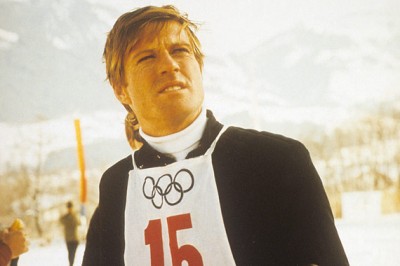
Downhill Racer is a rare film. Anchored by a character who doesn't do a whole lot of talking - and therefore dependent upon a skilled performance by Robert Redford - the movie takes us inside a highly competitive mind and reveals the empty places therein. Criterion's disc is visually stunning and is the first time this minor, underrated classic has been released on DVD. Highly recommended.
|



| Popular Reviews |
| Sponsored Links |
|
|
| Sponsored Links |
|
|
| Release List | Reviews | Shop | Newsletter | Forum | DVD Giveaways | Blu-Ray | Advertise |
|
Copyright 2024 DVDTalk.com All Rights Reserved. Legal Info, Privacy Policy, Terms of Use,
Manage Preferences,
Your Privacy Choices 
| |||||||