
| Reviews & Columns |
|
Reviews DVD TV on DVD Blu-ray 4K UHD International DVDs In Theaters Reviews by Studio Video Games Features Collector Series DVDs Easter Egg Database Interviews DVD Talk Radio Feature Articles Columns Anime Talk DVD Savant Horror DVDs The M.O.D. Squad Art House HD Talk Silent DVD
|
 DVD Talk Forum |
|
|
| Resources |
|
DVD Price Search Customer Service #'s RCE Info Links |
|
Columns
  


 
|
|
|
Tokyo Olympiad: Criterion Collection
THE STRAIGHT DOPE:
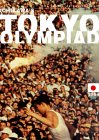
When the 1964 Olympics started in Tokyo, Japan, the stage was set for drama. It was less than two decades since the end of World War II and Japan was still trying to re-enter the international stage. Kon Ichikawa's extraordinary documentary on the games, Tokyo Olympiad, brings out the human element of the event while still communicating a sense of awe at the Herculean feats on display.
Inspired partially by Leni Riefenstahl's Olympia, which showed the 1936 Berlin Olympics as a big advertisement for Adolf Hitler, the nearly 3-hour-long film utilizes many styles, from frantic handheld during sailing events to measured slow motion during the lightning-fast 100m dash. He spends only a few short shots on some events, like horse riding and shooting, summarizing entire disciplines in a few surreal images, while creating extended sequences out of others, like the women's volleyball finals, that pulse with excitement and tension. The longest segment in the film, the marathon, feels appropriately epic as Ichikawa follows Abebe Bikala, the slender Ethiopian whose constant pace and unemotional expression lend the event an air of class that's surprising for such a grueling sport. Ichikawa doesn't just follow the winners, however. His cameras catch other runners bowing out early, being carried off on stretchers, and simply struggling to keep upright.
Ichikawa's film is delicate in its structure: each segment is built on carefully selected shots to sketch out telling details of the sport. An overhead shot of floor acrobatics allows the corners of the mat to be visible, creating a beautiful diamond within the frame. Judo emphasizes the slow, calculated nature of the art, with the participants breathing heavily and tugging on each others' outfits. The various gymnastics events blend together in a masterpiece of editing and shot composition, particularly one sideways shot of a Japanese athlete on the high bar. The boxing competition is shown in a series of intimate black-and-white shots (one of the few monochromatic sequences) that clearly had a strong influence on Martin Scorsese's Raging Bull. The 100 meter dash is shown in extreme slow motion, accentuating the incredible power of the runners. A swimming event, about to start, is shot from a standard angle, but Ichikawa cuts to a breath-taking overhead a split-second before the race beings.
More a testament to human will and achievement than to any specific Olympic games. (In fact, that's part of what made the film so controversial, as is detailed in the supplemental material on the disc.) Ichikawa gets behind what makes each event unique, from swimming to pole vault to weight lifting, and, using these observations, crafted such an outstanding film that the drama, tension, and beauty of the proceedings easily outclass most fiction films. Tokyo Olympiad, by sheer virtue of the skill of the director, this may be the first sports documentary that can actually make a viewer cry.VIDEO:
The anamorphic widescreen video is excellent. Nearly flawless, the image has a vibrancy that is stunning after all these years. A few noticeable instances of damage to the print do nothing to detract from the overall effect of the film. Ichikawa's cinematography is astonishingly beautiful and Criterion's DVD does a great job of displaying it.
AUDIO:
The Dolby Digital mono is amazingly complete. I didn't realize that what I was hearing was mono for quite a while; the sound design is dense and detailed and accomplishes a lot with simple elements. There are moments when the sound drops out completely or when the cacophony of the games create a surreal collage.
EXTRAS:
An extremely detailed commentary track from film critic / Olympics buff Peter Cowie is one of the best I've heard in a while. He fills the film's 170 minutes which history and details on the film, on sports, and on the Olympics. His knowledge seems limitless as he describes specific athletes entire careers and the outcomes of events not shown.
There is also a lengthy interview with Kon Ichikawa, shot in 1992 in the Olympic stadium. Although the subtitles are a little hard to read (they appear against a busy background), the interview is interesting.
The other major extra is the booklet. Criterion has been providing some excellent essays lately but this one takes the cake. A lengthy piece by George Plimpton is accompanied by an interesting multi-participant symposium on the film and a complete list of medalists from the '64 Olympics. A really nice addition to an already outstanding disc.
FINAL THOUGHTS:
Ichikawa's film is an astonishing achievement and is worth revisiting. The structure of the film is unique, the visuals simply breathtaking, and the drama extremely involving. The treatment Criterion has presented it with is appropriate for such a great film.
Email Gil Jawetz at [email protected]
|



| Popular Reviews |
| Sponsored Links |
|
|
| Sponsored Links |
|
|
| Release List | Reviews | Shop | Newsletter | Forum | DVD Giveaways | Blu-Ray | Advertise |
|
Copyright 2024 DVDTalk.com All Rights Reserved. Legal Info, Privacy Policy, Terms of Use,
Manage Preferences,
Your Privacy Choices 
| |||||||