
| Reviews & Columns |
|
Reviews DVD TV on DVD Blu-ray 4K UHD International DVDs In Theaters Reviews by Studio Video Games Features Collector Series DVDs Easter Egg Database Interviews DVD Talk Radio Feature Articles Columns Anime Talk DVD Savant Horror DVDs The M.O.D. Squad Art House HD Talk Silent DVD
|
 DVD Talk Forum |
|
|
| Resources |
|
DVD Price Search Customer Service #'s RCE Info Links |
|
Columns
  


 
|
|
|
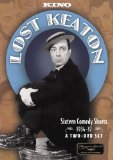
Lost Keaton: Sixteen Comedy Shorts 1934-1937
Kino // Unrated // July 6, 2010
List Price: $34.95 [Buy now and save at Amazon]
The Shorts:
At long last fans of silent comedy get an official release of the shorts Buster Keaton made at Educational. Kino has collected all 16 of these films and bundled them together in a very nice two-disc set entitled Lost Keaton. Not that these films were ever considered 'lost', it's just that none of the Keaton scholars spend much time on them. I've read a few biographies of the man, and while they all mention his time at Educational, the films never get more than that and authors generally sharpen their knives and move on to the
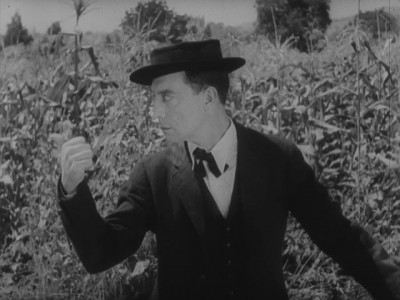
By the mid-30's Buster Keaton had fallen on hard times. One of the three great comics of the silent era (the other two were Harold Lloyd and Charlie Chaplin) Keaton had had a hard time adapting to the changing business environment in
He ended up at Educational, a poverty row company that had started out making instructional movies, as the name implies, but discovered that short comedies were more profitable. They were at the bottom of the
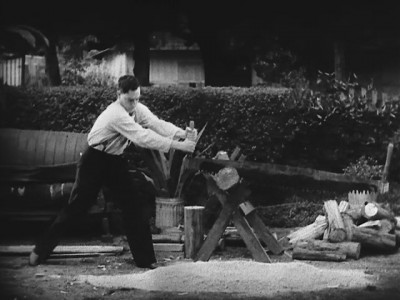
Keaton worked at Educational from 1934-37 and made 16 shorts in that time. He was paid $5000 each, which was a far cry from the $3000/week he made at MGM, but was still a good deal of money at the height of the depression. In 1937 Fox, which had been distributing Educational's shorts cancelled their contract and the company went under soon after.
Watching these films today they're surprisingly entertaining. Keaton, though he was drinking heavily at the time, is still energetic during most of them. Yeah, there are a couple of places where he looks like he's just phoning it in, but even that doesn't detract too much from the comedy.
One of the reasons that these shorts work so well is because a lot of the gags were recycled from Keaton's earlier work. There are familiar prat falls and shticks in most of the films, and Love Nest on Wheels is basically a remake of Bell Boy. These also borrow some gags from other comedians, including some Laurel and Hardy bits. That's not necessarily a bad thing. The jokes are still funny and make for a fun film.
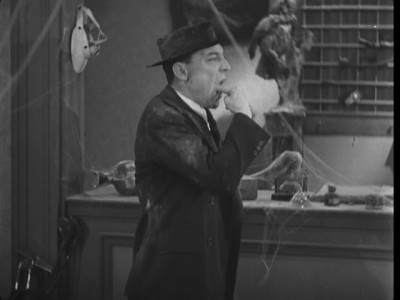
One of the great things about these shorts is that they are predominately silent. When sound arrived the slapstick routines that had entertained audiences since film began were discarded overnight and verbal humor was inserted. That's one of the problems Keaton had at MGM. Educational had the common sense to let Keaton do what he did best: physical and prop comedy. In One Run Elmer for example, the first half of the film shows two gas stations that are across the street from each other competing with very little dialog. When the new station is erected advertises a price one penny less than Elmer's (Buster Keaton), a price wart starts which ends when Elmer cuts his price in half. When a car pulls up the driver looks at both signs he waves Elmer off and says "No, I don't want any of that cheap gas, give me ten gallons of the good gas." This causes Elmer to raise his prices back above his competitor's. The end of the film is a baseball game where Keaton trots out some of the gags he used to perform at the celebrity charity baseball games he used play in. It was great to see some of the routins preserved on film.
It was also nice to see some of the people in Keaton's life appearing in these movies. In The Palooka from Paducah and Love Nest on Wheels Keaton's siblings and parents (who were vaudeville performers) get a roll and it's great to see them all playing off each other. Dorothy Sebastian, Keaton's lead in Spite Marriage, appears in Allez Oop and Vernon Dent, most famous for his roles in the Three Stooges shorts, has a role in Tars and Stripes.
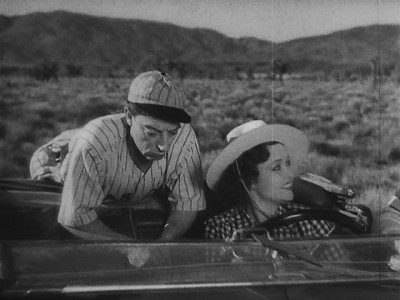
The best part of these shorts however, is that there are glimpses of the old Buster Keaton from the silent days. In several shorts he'll perform a gag or take a perfectly timed neck-breaking fall that will recall his old classics. There's a wonderful bit of comedy at the end of The Gold Ghost where Keaton is in a fight with a bunch of thugs. One of them pulls a gun on him and he stomps on the end of a see-saw, causing the gun to fly up in the air and land right in his hand. Terrific. The film that has the most of the old Keaton is easily Grand Slam Opera. A hilarious short by any measure, it features Elmer (Keaton) travelling to the Big Apple to get a shot on a variety radio show. The lead up where Elmer is practicing is great but the actual performance is hilarious. This was the only Educational short where Keaton was given a writing credit and it's also the best.
The DVD:
This two disc set includes all 16 Educational shorts. The discs come in a single width double keepcase.
Audio:
The two channel mono sound is alright, especially given the age of these shorts and their poverty row origins. There is some hiss in the background and the dialog can be muddled at times but it's never horrible. The range is very limited, this is especially notable during the song at the beginning of Grand Slam Opera, but overall the disc sounds fine.
Video:
These films were all transferred from 35mm negatives and fine grain masters and they look pretty good. The full frame image is fairly sharp in general though there are some spots and scratches that appear along with a few missing frames. Even with these flaws they look much, much better than I was expecting. Theses films have been neglected for years and getting a clear picture with nice contrast and a decent level of detail is nearly miraculous.
Extras:
There are some nice notes on each film from historian David Macleod, a still gallery, and a reel of Keaton taking falls entitled "Why They Call Him Buster."
Final Thoughts:
Buster Keaton didn't like these films, but they're actually pretty funny and rank up there with the best early talkie shorts. There are a couple of good laughs in each one and the best are hilarious. This set comes Highly Recommended to Keaton fans and aficionados of early short subjects.
|



| Popular Reviews |
| Sponsored Links |
|
|
| Sponsored Links |
|
|
| Release List | Reviews | Shop | Newsletter | Forum | DVD Giveaways | Blu-Ray | Advertise |
|
Copyright 2024 DVDTalk.com All Rights Reserved. Legal Info, Privacy Policy, Terms of Use,
Manage Preferences,
Your Privacy Choices 
| |||||||