
| Reviews & Columns |
|
Reviews DVD TV on DVD Blu-ray 4K UHD International DVDs In Theaters Reviews by Studio Video Games Features Collector Series DVDs Easter Egg Database Interviews DVD Talk Radio Feature Articles Columns Anime Talk DVD Savant Horror DVDs The M.O.D. Squad Art House HD Talk Silent DVD
|
 DVD Talk Forum |
|
|
| Resources |
|
DVD Price Search Customer Service #'s RCE Info Links |
|
Columns
  


 
|
|
|
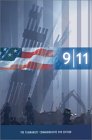
9/11

THE STRAIGHT DOPE:
9/11 is an astonishing piece of documentary filmmaking for a number of reasons. First and foremost, it was begun by brothers Jules and Gedeon Naudet along with firefighter friend James Hanlon early in the summer of 2001 as a documentary about the process of going from fire academy to full firefighter. In June the filmmakers began documenting the training at the academy and auditioned a number of the hopefuls looking for a good subject to take them through the process.
They settled on Tony Benetakos, who was subsequently assigned as a probationary officer to Hanlon's firehouse in lower Manhattan, which houses both Ladder 1 and Engine 7. By following Tony around the filmmakers got a sense of what it's like to be a probie in the FDNY; the chores, the jokes, the pranks. They wanted to watch a boy turn into a man. As several firefighters in the house recall, however, Tony was like a white cloud. Whenever he was on duty there were no calls to fires. The most serious fire put out by the company during Tony's shifts was a car fire. Itching for action Tony repeatedly tempts fate by hoping for a fire.
As Tony slowly grows into his new life, the filmmakers also become part of the community of the firefighters. 9/11 shows them to be constant fixtures at the firehouse. They document everything from intense blazes to the most mundane tasks. They were seemingly there every second of every day. In one funny sequence they prepare a real French meal for the entire house but neglect to take into account the number of guys they were cooking for and the hearty appetites. As the men ridicule them for the meager portions the Naudet brothers start to feel like they are part of the family. As they point out, that dinner took place on September 10th.
The next morning one of the filmmakers went out on a routine gas leak call on a downtown street. What happens next is both familiar to all and yet completely and utterly shocking. A jet engine roars, a firefighter looks up, then down. The camera pans over to the World Trade Center, visible from almost every intersection in the neighborhood, and a plane slams directly into one of the towers. This is the only known footage of the first crash and it was truly caught on tape by accident. The structure of 9/11 from then on mirrors the way the events unfolded. One brother accompanied the unit into the lobby of the first tower while the other, stuck back at the firehouse with Tony, is forced to observe from afar. The footage from inside the tower is extraordinarily engrossing and upsetting.
This is visceral documentary filmmaking at its most urgent and, while it gives tremendous insight into the events, it is disturbing beyond comprehension. 9/11 is an important document but not one to be watched lightly. One of the most referenced parts of the film is the sound of people hitting the ground after jumping from windows on the highest floors of the towers. While the Naudet brothers do not show the impact, the sounds are cataclysmic in their volume and in the terrible truth they reveal. That something could be so hellish that someone could choose to jump out of an eighty, ninety, hundred story window, is beyond understanding. The way the firemen shudder and stop what they're doing momentarily whenever one of these thunder claps sounds speaks for itself.
The looks of determination and fear on the faces of the hundreds of firefighters gathered in the lobby are real. Many of these men shown will inevitably die. Battalion Chief Pfeifer, one of the main subjects of the film, exchanges a brief nod with his brother, the last time he sees him alive. Father Mychal Judge, the FDNY chaplain and one of the most high-profile casualties, is shown praying quietly to himself minutes before his death. This is disturbing, but important material that needs to be preserved. The Naudet brothers never intended to make this film and their treatment of the subject matter is respectful and solemn. But the necessity of allowing the public to feel this experience demands that this be shown. There is a long period even when each of the Naudet brothers , separated for much of the day, has to grip with the very real possibility that the other is dead. Even documentary filmmaking is rarely this personal.
The film on the disc is longer than the broadcast version. Some grisly burn victim photos shown to fire academy recruits are included early on as a reminder of the horror to come. Other sequences are fleshed out a little bit. The most significant changes, however, are two omissions. Robert DeNiro's terrible tone-deaf introductions are thankfully gone and one firefighter's comments about going home on the night of the 11th and hopping in the hot tub with his wife have also wisely been excised.
The revisions have focused 9/11 so that it seems like there isn't a wasted second. Everything that happens in the film before the attacks helps build the characters and audience connection to them and everything that happens afterwards rings honest and emotionally true. The day after the attacks when the firefighters head back to the Trade Center to help with the recovery effort they are met with the surreal hell of Ground Zero in those early days. The sequence is wordless, scored only with a plaintive wail and it really brings home the sense of unreality. As one firefighter describes, hundreds of stories of office space fell in rubble and the only piece of identifiable office equipment was a small piece of a phone that you could fit in the palm of your hand. The idea of finding survivors in such devastation seems absurd. Still, the members of the FDNY continue to do their job and, as the end of the film depicts, continue to train the firefighters of the future. That they maintain any degree of hope is tribute enough.
VIDEO:
The video is widescreen non-anamorphic. The quality of the video is the least important aspect of this film. It was largely shot on consumer-grade video cameras and doesn't look like anything from a technical standpoint, but the images captured have a horrible gravity nonetheless.
AUDIO:
The program is Dolby Digital 2.0 and sounds fine. The sparse score doesn't seek to add emotions that aren't already present in the material.
EXTRAS:
A selection of additional interviews with the subjects on difficult topics like survivor's guilt are included.
FINAL THOUGHTS:
The title of 9/11 makes it sound like the film will be a sweeping overview of all the events of that horrible day. Instead, the film is supremely focused on a small group of firefighters and their struggle. Still, through the shear drama of the day and the proximity of the Naudet brothers' cameras a little sliver of the scope of September 11th is conveyed. If I had to pick one program that best shows the horror but also the tremendous human bravery of the first responders it would be this one. Years down the road when children and grandchildren wonder what exactly it felt like to have your heart ripped out of your body on 9/11, this is the film to show them.
9/11
WTC- The First 24 Hours
New York Firefighters: The Brotherhood of 9/11
Why the Towers Fell
World Trade Center: Anatomy of the Collapse
World Trade Center - A Modern Marvel 1973-2001 Email Gil Jawetz at [email protected]
|



| Popular Reviews |
| Sponsored Links |
|
|
| Sponsored Links |
|
|
| Release List | Reviews | Shop | Newsletter | Forum | DVD Giveaways | Blu-Ray | Advertise |
|
Copyright 2024 DVDTalk.com All Rights Reserved. Legal Info, Privacy Policy, Terms of Use,
Manage Preferences,
Your Privacy Choices 
| |||||||