
| Reviews & Columns |
|
Reviews DVD TV on DVD Blu-ray 4K UHD International DVDs In Theaters Reviews by Studio Video Games Features Collector Series DVDs Easter Egg Database Interviews DVD Talk Radio Feature Articles Columns Anime Talk DVD Savant Horror DVDs The M.O.D. Squad Art House HD Talk Silent DVD
|
 DVD Talk Forum |
|
|
| Resources |
|
DVD Price Search Customer Service #'s RCE Info Links |
|
Columns
  



 
|
|
|
Sex & the City: Complete Collection
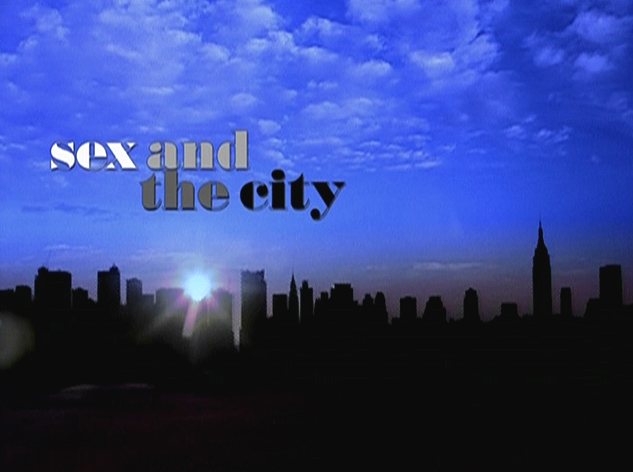
What a bizarre phenomenon Sex and the City was. (The past tense is used here with a feeling of great hope.) Beginning on HBO in 1998, the series' setting tells us everything we need to know about it: late 1990s New York. In other words, right smack dab in the middle of New York's Giuliani era, a time when the streets were cleaned up and made safe for young women to leave their apartments dressed exactly as they pleased. Now that Times Square's pornographic smorgasbord had been transmogrified into a family-friendly Walt Disney spectacle, ladies of means were unaware of the irony that freed them to utilize their vaginas in ways that the fear of rape had previously prevented. Also, this was before 9/11, when New York became a TARGET and a focal point in America's newfound suspicion of Muslims (a suspicion that was slow to creep its way into the world of Sex and the City, showing up in the second feature film in an extremely uncomfortable form).
The first three-and-a-half seasons of the series were about young women in a wonderland vision of pre-9/11 New York, an extraordinarily decadent time and place that enabled the frivolous, dream-like lifestyles of these four amoral characters and rewarded viewers with that particularly insidious form of self-hate that only indulgence by proxy can produce. But the show did capture a certain reality - these characters lived fantasy lives that were not wholly untenable during that time. When I moved to New York in 2000, I experienced some of the intoxication that Carrie Bradshaw often feels in the show, and it wasn't just because I was a kid from the suburbs living in the Big City - it was because it was a time of great wealth, confidence, and indulgence. The technology boom had enormous influence on New York's economy, and everyone seemed to be riding high in spite of the fact that the bubble was about to burst. So I can't fault the show's first few seasons as far as their embrace and glorification of that period, because that is what the times were about: spending shitloads of money on utterly needless things and going wild in the streets with frenzied abandon.
What is odd, however, is the consistency of the show's tone over the next two-and-a-half seasons, or the series' post-9/11 period. Carrie and her three compatriots hardly acknowledge the events of that date (there are one or two fleeting references). Couple 9/11 itself with the economic problems that were already developing, and there was no way of escaping the fact that the 1990s were unmistakably over. But Sex and the City never acknowledged this. The show continued to showcase lavish behavior at its most indiscreet, heedless of the demands of money, or the fear that gripped New York for years after the day of the attacks. In this way, Sex and the City morphed from a fantasy rooted in reality to a delusional daydream, and this willful denial on the part of the show's creators and characters built into a crazed explosion of whorish decadence by the time the series reached the big screen. By this point, the characters themselves had been abandoned and replaced by caricatures of flamboyant drag queens on holiday.
So the show began as a social portrait of a particular moment, but when that moment passed, it never adjusted, leaving its characters looking deluded and immensely trivial. But I was never the show's target audience, which will lend any review I write a certain prejudicial cast, at least in the eyes of its most devoted fans. Still, notwithstanding the somewhat philosophical objections above, I enjoyed much of the series. The show's strength was in its ability to create odd situations, to carry off a certain witty flair, and to keep even a 30-ish married hetero male interested enough to finish off all six seasons. The movies, however, are, as I suggested above, another story. They are nothing less than grotesque self-parody, abandoning the series' character-based approach to storytelling, and veering unwaveringly into the high camp we associate with Beyond the Valley of the Dolls and Myra Breckenridge. In the first film we see Chris Noth's Mr. Big behave in an incredible out-of-character manner when he gets momentary cold feet. This kind of fundamental character inconsistency is a trademark of both films, which fling all plausibility out the window in favor of hyper-lush accoutrement, exotic settings, and bodily fluid jokes.
I felt strongly about including another voice in this review, given that my own fairly strident opinion represents a male viewpoint and because the show has such a devoted following. So I decided to interview the member of that following to whom I happen to be married.
He: I understand that you are a fan of Sex and the City. When did you starting watching it?
She: I started watching it sometime in 2001. The first episode I saw was the one where Carrie goes to Los Angeles. After I saw that episode I rented the first season and started watching it from the beginning.
He: Okay, a quick Wikipedia search tells me that the LA episodes were in 2000. It was the third season. Those were good episodes.
She: Yes. I watched them on DVD at my friend Madeline's house in LA.
He: Perfect. You probably thought you were going to run into McConaughey at Starbucks. Hoping.
She: Yeah, that dreamboat.
He: So what appealed to you about the show? And what kept you watching all six seasons?
She: I was single at the time, so initially it was funny because the girls on the show were having a lot of the same dating problems my friends and I were having. I watched the first three seasons with my roommate at the time, Becca, and we both identified with the "bad date" thing the show did so well at the beginning. As the show progressed, so did the characters, and it became less about being single and more about their relationships with each other and the men in their lives.
He: So you could find parallels in your own life and the lives of your friends, and so you identified with some of this stuff.
She: Sure, like you would identify with any comedy. It is only funny when there is some truth to it.
He: But women respond differently to Sex and the City than men do. I always thought the show was pretty funny, and enjoyed it when it succeeded in the storytelling department. I found the main characters quite grating, however, and often had a hard time empathizing with them and their "struggles." Did you like the characters?
She: When we watched the whole show together all at once, I definitely grew more irritated with the characters than I did when I only saw a few episodes at a time. When I first started watching, we were renting discs, one by one. I think there were four episodes per disc, so it forced us to take a break and watch it over a longer period of time. The second time around it definitely got hard to watch Samantha have sex over and over and over again. It is different watching a character do that over a span of six years vs. a few weeks. But yes, I liked the characters. Carrie was annoying at times, but her flaws created much of the plot. She was also the easiest to identify with in a sense because she was the least exaggerated character on the show, so she had that working in her favor even when I was frustrated by her.
He: Sure. What did you make of the male characters on the show? Were they as realistic as the females? Were they treated the same?
She: The show definitely gave the women the power. The exaggerated male characters mostly came off as kind of sad and idiotic. They never really got into what the men on the show were thinking, so you never really empathized with them.
He: I was put off by the grotesque indulgence of the female characters, which contradicted all of their moaning about how tricky men were. I mean, maybe a shallow woman who gets all excited about $900 shoes and has to have them doesn't deserve her Mr. Wonderful. I also thought it was bizarre that when Carrie and her friends are together, their mouths are like these confused flapping gab-holes, but then when Carrie sits down at her computer, she's full of this sudden wisdom, like some spoiled white Oprah.
She: I don't think the show was meant to be realistic. The behavior and lifestyles of the characters were an exaggerated fantasy. The point was that every girl loves her shoes and has splurged at one time or another when she shouldn't have. I think one of the reasons the show was so popular is that it was the first time a television show really sided with the women's point of view. In a lot of ways I think that Sex and the City did for women what Playboy did for men in the 1950s. It allowed us not to feel guilty for wanting $900 shoes, hating baby showers, and resenting married friends. Playboy did the same thing for men who did not want to have a family. Both things idealized a lifestyle that had previously been seen as sad or taboo.
He: I think those points are really good. Let's move on to the movies. Did you feel they were a fair continuation of the series?
She: Sure. I know the second one got terrible reviews but i thought they both stayed true to the series. I think the problem with the movies is that the actresses had gotten so old. It was depressing seeing them act the same way as they did ten years ago
He: Yes, and the characters didn't mature.
She: Exactly right. The characters did not evolve.
He: I had a problem with Big's behavior in the first one. His momentary "cold feet" set the whole plot in motion, but it was so unlike him.
She: Agreed, I thought that part was out of character as well. I wished they had thought of a different way to get to the same point. I thought about it afterward and it was really important that the audience empathize with him so they could forgive him afterward.
He: What about the second movie? It seems like it was made only for gay men.
She: The whole show was made for gay men, by gay men.
Me: Do you hope there will be another movie?
She: I don't really care. The series seems kind of done to me. I'm not sure what else they could do with it without abandoning the whole idea of the show.
He: Maybe they could wait 20 years and do one where they are all grandmothers and get trapped inside a posh estate with a murderer for a weekend.
She: Yeah, maybe you don't know whether or not Big did it, but Carrie is accusing him.
He: Yeah, maybe Big could kill Steve. Yelling, "Shut up, you whiner!" while bludgeoning him.
She: Right. And Charlotte could be trying to calm everyone down.
He: With tea and cakes. I think if there's another Sex and the City movie, all four leads should have to show their vaginas. You know, to "close the loop."
She: Gross.
He: The whole show is about vaginae and you never see one. It's a cop out.
She: It was on TV, Casey. Television.
The DVD
Sex and the City: The Complete Collection arrives in a sturdy, well-designed box. The outer board case has a wrap-around style with a magnetic flap closure. The interior of the box has a book-like design, with each "page" being of heavy card stock, housing two discs each, which are pulled out with thumb and forefinger from the open edge of the "page." Removal and replacement of the discs is slightly cumbersome, and necessitates one touching the underside of discs in the process. It's far from an optimum situation, although an alternate design method utilizing pop-out trays would have required packaging with much larger overall volume.
There are a total of 20 discs in the set, which include all 94 episodes of the series, plus the two feature films. There is also a new bonus disc featuring a 90-minute writers' roundtable discussion. Missing is the bonus disc from the two-disc DVD edition of the first film.
Image and Sound
There are no surprises here. The full-frame series looks very good and surprisingly film-like at times. Colors are bright and blacks are deep. There is generally very negligible evidence of compression; the enhanced 1.85:1 image for the films is even better, given their recent release. The show's stereo soundtrack is clear and bold.
Bonus Content
All of the extras are here from the previous releases, plus the new writers' roundtable. There is plenty of bonus content here for fans of the show, although only the roundtable will be new to owners of the previous box set.
Final Thoughts
A landmark in numerous ways, Sex and the City established a formidable cultural legacy, one that has been somewhat undermined by the feature films, especially the second one. But the series itself was and is entertaining, hilarious, and significant. Those who already own this material in some form can safely skip this release; for neophytes, it's recommended.
|




| Popular Reviews |
| Sponsored Links |
|
|
| Sponsored Links |
|
|
| Release List | Reviews | Shop | Newsletter | Forum | DVD Giveaways | Blu-Ray | Advertise |
|
Copyright 2024 DVDTalk.com All Rights Reserved. Legal Info, Privacy Policy, Terms of Use,
Manage Preferences,
Your Privacy Choices 
| |||||||