
| Reviews & Columns |
|
Reviews DVD TV on DVD Blu-ray 4K UHD International DVDs In Theaters Reviews by Studio Video Games Features Collector Series DVDs Easter Egg Database Interviews DVD Talk Radio Feature Articles Columns Anime Talk DVD Savant Horror DVDs The M.O.D. Squad Art House HD Talk Silent DVD
|
 DVD Talk Forum |
|
|
| Resources |
|
DVD Price Search Customer Service #'s RCE Info Links |
|
Columns
  


 
|
|
|
Waldo the Dog
Other // Unrated // January 24, 2011
List Price: $17.99 [Buy now and save at Amazon]
The Film:
Waldo the Dog is one of the weirdest film experiences I have ever had - certainly in recent memory. Unfortunately, the ability to have a unique mind-trip does not automatically equate to experiencing something truly worthwhile. That is exactly the case with this experimental hodgepodge of conflicting genres that clash with one another rather than blend seamlessly into a solid, enjoyable movie.
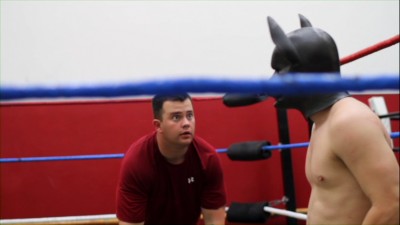

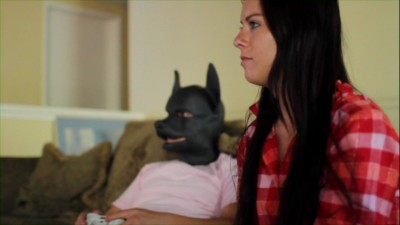
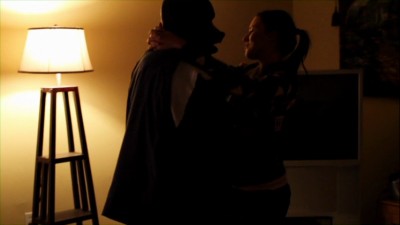
I won't bother ruining the movie's entire sequence of events or its ending (which managed to take me by surprise). The first five minutes or so are interesting enough, but then they are followed by an hour or so of content that feels like an actual chore to sit through. The film becomes more interesting towards the ending with the interactions between Jaquelyn and Waldo increasing my enjoyment, and yet these scenes don't even come close to truly working on a fundamental level. Waldo the Dog almost plays like a parody of sorts as the humor is rather consistently awkward and never makes it possible to actually care about these characters. It's especially hard to become emotionally invested in the lead character simply because he's not portrayed as sympathetic during the majority of the film. Once I realized Waldo had been a stalker and that he continued down this path (not to mention knowledge I had of an earlier event in the story) it made it impossible for me to ever consider rooting for the character. If I had any lingering doubts, one of the film's final scenes cemented my opinion. When Waldo opens up a sheet of paper and read's three words: "I forgive you", I was both flabbergasted and offended by what I had witnessed.
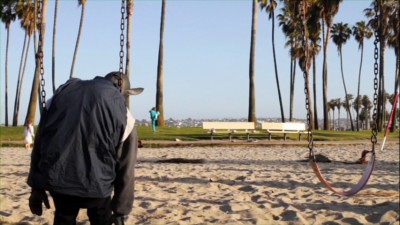
The film would perhaps play better if the opening acts had not been revealed until the end of the film, and if the stalking-aspect had been toned down or removed altogether from the later portions of the story. Unfortunately, the first hour or so would be uninteresting no matter how it had been edited - a short film might have served the narrative structure better but then I would have seen the ending coming and the surprise would have been ruined.
The acting was never particularly impressive. I often had the feeling that many moments were improvised and poorly at that. The end credits indicated that the two leads were contributing writers. This may be confirmation of my 'theory'. A scene in which Waldo begins to talk with a high-pitched squeal to Jaquelyn was particularly odd -- especially when his voice began to crack and sounded deep. According to Waldo, he had never wanted her to hear his voice and that is why he remained silent for so long. Jaquelyn responds to the deepness she heard in his voice questioningly and Waldo just seems to shrug it all off. The entire scene ends up feeling like a bad joke the audience isn't even meant to be a part of. Later in the film it becomes clearer why Waldo was so obviously masking his voice - what was not so clear was why anyone would be expected to believe for even a single second the interactions of the two characters in the earlier scene.
The cinematography is nicely done with a surprisingly effective use of colors for an indie low-budget production. The director clearly had some interesting visual ideas as well. Shots are framed in often unique and interesting ways that suggest a better film could have been a real possibility. I certainly would be interested in seeing another film by writer/director Kris Canonizado in the future. However, I would caution the film-maker to reconsider the narrative structure of Waldo the Dog and to re-evaluate his plans for any upcoming project. Lastly, if Canonizado actually intends to make a 'Waldo 2' next I would not be so interested.
The DVD:
Video:
The video quality was better than expected, and features a 1:78:1 anamorphic widescreen presentation. I can't claim to know what type of digital camera was used to film this movie (perhaps Digital SLR?), but I can say that it looked surprisingly rich in color and had a 'clean' naturalistic appearance. The video was only occasionally the victim of some poor compression issues (such as minor pixilation).
Audio:
There are no setup options. 2.0 English-language audio is the only option. No subtitles are found on this release. The audio was often too loud, and was clearly not mixed as well as it perhaps could have been. The good news is that when dialog is used it is clearly defined.
Extras:
There isn't even a menu or an ability to select scenes.
On the subject of the DVD packaging: I feel it is worth noting that this CreateSpace release doesn't even include the title of the movie on the cover art spine.
Final Thoughts:
Waldo the Dog was certainly an interesting experiment. It is unfortunate then that the film is marred by a weak first-half, and an ending that doesn't manage to evoke any sympathy for the characters. The good news is that the film suggests director Kris Canonizado has a commendable sense of how to create interesting visuals - which should serve him well in the future.
Skip It.
Neil Lumbard is a lifelong fan of cinema. He aspires to make movies and has written two screenplays on spec. He loves writing, and currently does in Texas.
|



| Popular Reviews |
| Sponsored Links |
|
|
| Sponsored Links |
|
|
| Release List | Reviews | Shop | Newsletter | Forum | DVD Giveaways | Blu-Ray | Advertise |
|
Copyright 2024 DVDTalk.com All Rights Reserved. Legal Info, Privacy Policy, Terms of Use,
Manage Preferences,
Your Privacy Choices 
| |||||||