
| Reviews & Columns |
|
Reviews DVD TV on DVD Blu-ray 4K UHD International DVDs In Theaters Reviews by Studio Video Games Features Collector Series DVDs Easter Egg Database Interviews DVD Talk Radio Feature Articles Columns Anime Talk DVD Savant Horror DVDs The M.O.D. Squad Art House HD Talk Silent DVD
|
 DVD Talk Forum |
|
|
| Resources |
|
DVD Price Search Customer Service #'s RCE Info Links |
|
Columns
  


 
|
|
|
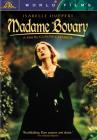
Madame Bovary
Isabelle Huppert is convincingly unsympathetic as Emma Bovary; restless and unsatisfied from the very beginning, she comes alive only in momentary experiences that touch her desire for a richer, more vibrant life. Nonetheless, it appears that much of the sterility of her life is brought about by her own attitude; she seems unable to relate to others or to the world around her in a meaningful way.
The film's central focus on Emma's boredom does call up some interesting comparisons between her world and our own. Instant communication, the broad availability of books, music, and film from around the world, and the ease of travel make our world a much wider and potentially richer one than Emma Bovary's. But for all the intellectual and emotional stimulation at our fingertips, in our own time boredom and ennui are hardly problems of the past; an individual's personality is as important as his or her environment in determining whether that person will be happy or eternally dissatisfied with life.
Certainly, then, Madame Bovary has potent thematic material to work with: an introspective character drama in which passions are repressed or expressed against a backdrop of bourgeois comfort and social expectations. Nonetheless, the material never comes to life; as strange as it may seem, I would suggest that Madame Bovary, at two hours and twenty minutes of running time, is either much too long or much too short.
The film is presented in a peculiarly choppy manner; if I had to sum it up, it feels like a two-hour cut of an original eight-hour film. Now, I know that this is not really the case, and the two hours and twenty minutes of run time is the original, but the pacing of the film is still very jarring. Scene changes are very abrupt, and I kept half-expecting some of the actors to get cut off in mid-sentence. Some very important portions of the film are barely presented, such as the establishment of Emma's relationship with her husband; to be sure, the story needs to move on to crucial later developments, but these developments are at times bewildering without the necessary context that could have been developed in the earlier scenes.
Another oddity is the occasional narrative voiceover, lyrically describing what's going on in Emma's head and in her life. The presence of a narrator itself is perfectly natural for the film, but the strange thing is that it doesn't pop up until the film is well under way, making it a bit of a shock to suddenly hear someone telling us about these characters whom we've been watching. After this, the narration reappears periodically, but not consistently; again, it feels like the feature was cut down from a much longer piece that had a more extensive use of the narration.
If the film had either cut to the bare, emotional heart of the story more quickly, or alternately had developed the characters and situations more richly and in detail, the story could have worked. As it is, however, there's insufficient depth established for us to understand or care about Emma or her situation, with the result that her predicament feels merely tedious rather than compelling or tragic.
Video
The film is presented in a widescreen 1.66:1 transfer that appears to preserve its original aspect ratio. However, I was very disappointed to see that the DVD transfer of Madame Bovary is not anamorphically enhanced; the recent MGM World Films releases of My Father's Glory and My Mother's Castle received outstanding anamorphic transfers, so why not Madame Bovary?
The image quality is average, no more and no less. Some edge enhancement is present along with some noise, but the main failing of the transfer is in the colors. The picture overall has a dull, slightly muted appearance to it, and at times skin tones are tinted slightly more reddish than natural.
Viewers will be pleased to see that the subtitles are optional; this is a crucial element in any adequate transfer of a foreign-language film, and MGM has certainly gone in the right direction here. French, English, and Spanish subtitles are offered, along with the option of viewing the film with no subtitles.
Audio
Like the video, the French mono audio track for Madame Bovary is about average. While quite understandable, the dialogue is slightly muffled at times, and the overall sound is flat. No English track is provided.
Extras
We're looking at a very basic disc here. The only special feature on the DVD is a trailer for the film.
Final thoughts
In terms of the DVD transfer, the non-anamorphic Madame Bovary is a disappointing step backward for MGM World Films. The optional subtitles are a high point, however, and MGM deserves praise for continuing to handle subtitles perfectly. As for the film itself, Madame Bovary is best left to those who found the original novel highly compelling; the film is watchable but its oddly-handled pacing and lack of dramatic buildup make it a good candidate for a rental only.
|



| Popular Reviews |
| Sponsored Links |
|
|
| Sponsored Links |
|
|
| Release List | Reviews | Shop | Newsletter | Forum | DVD Giveaways | Blu-Ray | Advertise |
|
Copyright 2024 DVDTalk.com All Rights Reserved. Legal Info, Privacy Policy, Terms of Use,
Manage Preferences,
Your Privacy Choices 
| |||||||