
| Reviews & Columns |
|
Reviews DVD TV on DVD Blu-ray 4K UHD International DVDs In Theaters Reviews by Studio Video Games Features Collector Series DVDs Easter Egg Database Interviews DVD Talk Radio Feature Articles Columns Anime Talk DVD Savant Horror DVDs The M.O.D. Squad Art House HD Talk Silent DVD
|
 DVD Talk Forum |
|
|
| Resources |
|
DVD Price Search Customer Service #'s RCE Info Links |
|
Columns


|
|
|
Dark Shadows: The Complete Original Series
MPI Home Video // Unrated // April 10, 2012
List Price: $599.98 [Buy now and save at Amazon]
My name is Victoria Winters. My journey is beginning. A journey that I hope will open the doors of life to me and link my past with my future. A journey that will bring me to a strange and dark place... to the edge of the sea... high atop Widow's Hill to a house called Collinwood. - The opening to the first episode of Dark Shadows.
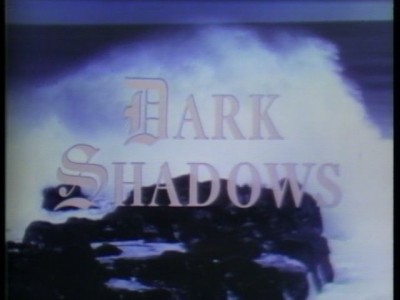
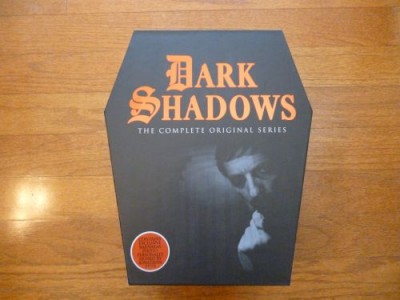
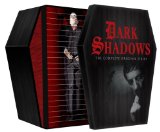
With a high-profile Tim Burton/Johnny Depp movie version of the classic gothic daytime soap opera Dark Shadows scheduled to be released in a couple of months, MPI has decided to release the entire series in one impressive boxed set. They really went all out on this release, crafting an eye-catching coffin-shaped case to hold the series and including some very nice extras inside. It's also the most massive DVD collection that I can recall. The set contains an astounding 1,225 episodes that span 131 discs (including several DVDs devoted to extras). If that's not enough, the price is incredibly reasonable. Oh yeah, and it's a limited edition limited to only 2500 copies. (Note: According to the studio's rep, the limited edition is sold out at the distributor level. MPI is creating new sets, but they are not going to include the signed Jonathon Frid photo and will not be numbered.) This is easily one of the coolest releases of the year.
I have very fond memories of watching Dark Shadows when it originally aired way back in the late 60's. Sometimes my stay-at-home mother (which was the rule rather than the exception back in those days) would have to walk to the store (only rich people had two cars) or take the bus downtown to do some shopping and she'd get a neighbor to watch me for an hour or two. One older lady would turn on her 'stories,' as she called soap operas, in the late afternoon and I'd be bored me to tears. Except when Dark Shadows came on. I'd be playing with my Matchbox cars or Lincoln Logs on the floor off to the side of the TV, but when I heard Victoria Winter's voice introducing the show I'd start to pay attention. This wasn't any normal soap opera involving doctors having affairs; it was populated with ghosts, werewolves, and most importantly, a vampire! I'd pretend to play but I'd really be waiting for Barnabas Collins, the undead star of the show to make his appearance. Once he did, I'd run behind the couch, only occasionally peaking out to see if he was still on the screen. Once he'd left, my sitter would give the all-clear sign and I'd come out from behind the safety of our vampire-proof living room furniture. It was bone-chilling excitement that you can only really have when you're 5 or 6 years old.
I hadn't really seen the show since then. I had caught a couple of episodes over the years on the Sci-Fi Channel a decade ago and rented the first DVD from the original release but didn't get a chance to watch the whole thing. This is just the sort of cult show that I often enjoy, so when MPI announced that they were releasing the entire series on in one gigantic collection I knew that this was my chance to finally delve into the show.
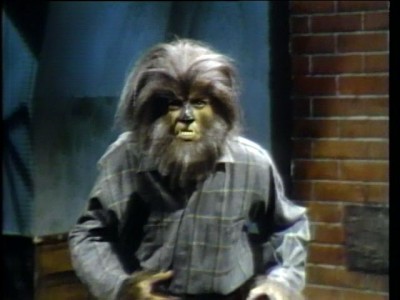
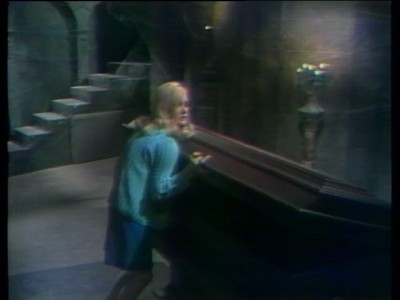
The series was one of the earliest creations of TV producer/director Dan Curtis, a man who definitely left his mark on the small screen. Nominated for four Emmy Awards (he would win one), Curtis was the man behind the two critically acclaimed big budget mini-series, The Winds of War and War and Remembrance, both based on best-selling books by Herman Wouk. He probably best remembered for his made-for-TV horror films including Bram Stoker's Dracula, The Norliss Tapes (about a man who discovers a group of vampires), Frankenstein, and the fun Trilogy of Terror. In 1972 he also produced the most widely watched TV movie up to that point in history: The Night Stalker (which was followed by a sequel, The Night Strangler, which Curtis also directed, and a TV series based on the films that he was not involved with.)
Before all that however, he sold the idea of Dark Shadows to ABC. Reportedly based on a nightmare he had, the show was a daytime soap opera, but a totally unique one that wasn't like anything that had come before it.
Soap operas are nearly extinct now but they used to rule daytime television with the most popular ones making more money than many prime-time series, often several times their production costs. They aired daily with several storylines running concurrently. Any one plot would move rather slowly so that fans wouldn't be lost if they happened to miss a day, but with multiple threads to follow there was always enough to keep viewers interested. They usually revolved around the day-to-day lives of several well-to-do families filled with attractive people who all live intricate lives. Their love affairs, ethical dilemmas, financial difficulties, marital infidelities, and hidden pasts that are threatened to be revealed are fodder for the never-ending saga. When one plot line is wrapped up, three others are still going strong ensuring that there isn't a good place to stop watching.
Dark Shadows took this framework and gave it a good twist, making something new and very interesting.
What's it all about?
The show is set in the fictional fishing town ofCollinsport , Maine
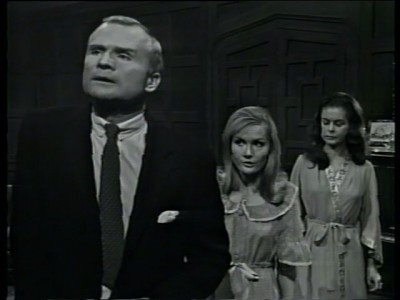
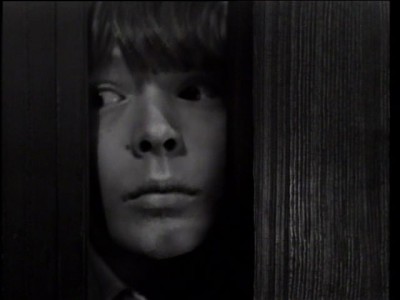
In the first episode Victoria Winters (Alexandra Moltke), an orphan who grew up in a "foundling home" inNew York City Victoria Victoria Bangor , Maine
The first episodes include a plot involving Burke Devlin, who arrives on the same train asVictoria
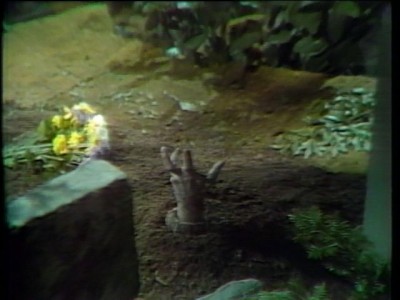
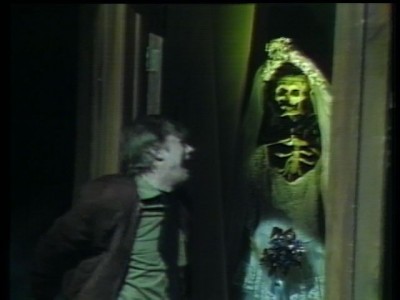
Sounds like a typical soap opera, doesn't it? The difference is that Collinwood is haunted. It's a gothic show with a dark atmosphere, something not associated with daytime television especially in 1966. While the paranormal elements come more to the forefront as the show goes on, even in the early installments there's a feeling of foreboding that runs counter to what you'd expect. In the first episode everyone thatVictoria meets warns her to stay away from Collinwood and to go back to New York Wuthering Heights than General Hospital
At first there are just suggestions of otherworldly visitors, but before too long all doubt is removed and viewers at home see that there is a ghost that inhabits Collinwood. Things grow more mystical from there and in episode 210 the show's most famous character finally arrives: Barnabas Collins (Jonathan Frid).
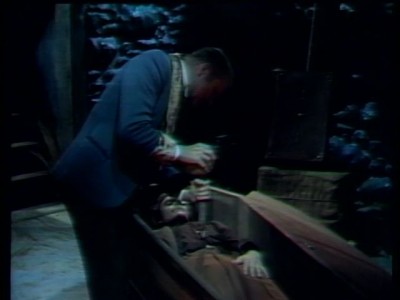
It came about because of a con artist named Willie Loomis (John Karlen). While at Collinwood he hears some of the tales from the Collins family's past, including the rumor that Naomi Collins was buried in the Collins family mausoleum wearing all of her jewelry. That's a prize that's too good to pass up, so he sneaks into the tomb one evening and finds the coffin. He can't get the concrete lid off however, so the crook rigs up a block and tackle to a fixture and in doing so accidently triggers a secret switch. A doorway opens up and inside is another coffin, this one bound with iron chains. He cuts off the locks and opens it up, and a hand reaches out from inside and grabs his throat.
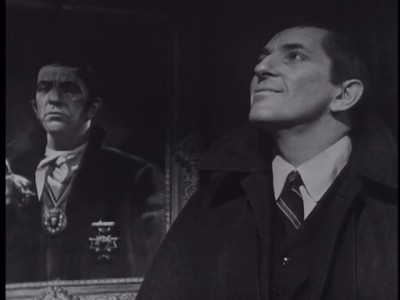
The following evening a new visitor arrives at Collinwood, Barnabas Collins, a relative fromEngland
Originally slated to be in the show for a dozen or so weeks, Barnabas was a huge success and the ratings soared. So he stayed and became an integral part of the show.
When the show was first released on DVD, MPI started with the introduction of Barnabas, skipping the first 209 episodes (after the rest of the series was released they went back and put out the first section of the show as Dark Shadows: The Beginning). It's easy to see why. While the early episodes are good, the show really starts to take off once the vampire makes his appearance. Then things really get interesting.
I was surprised at how well the show plays today. Director David Lynch once said that "mystery is like a magnet" and that's exactly what this show does to pull viewers into the story. There are a lot of unexplained and strange events that are sprinkled evenly throughout the series, and just as soon as the answer to one is given another one pops up. It's not typical soap opera mysteries either concerning who the father of a baby is or whether someone has committed a crime. Yes, there are some plots like that. The stories involving Carolyn's love life aren't as engaging as the others, but the nice thing about the show is that there are always a couple of concurrent plots. When the show is at its best, the writers would twist the plot around in unexpected ways sending people back in time or to travel to parallel dimensions creating some unique mysteries that would keep the viewers guessing, and coming back for more each day.
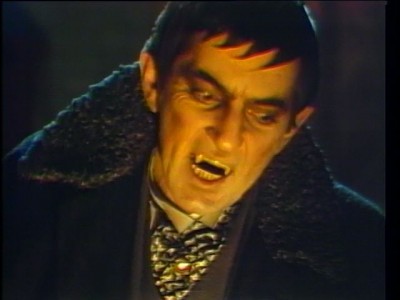
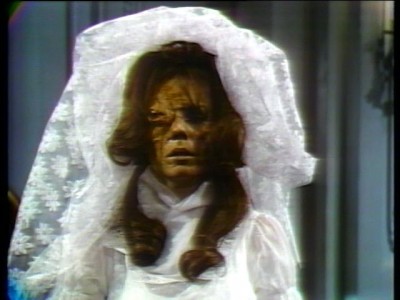
The show also has the look of an old Universal horror movie. The sets are bathed in shadows and the lighting is generally dark, effectively creating an atmosphere that makes the program feel spooky and creepy. They definitely made the most of the small budget and were able to make what should have been a bland set evoke a creaky old mansion.
One thing to realize is that the pace of the program is rather slow, especially when compared to current shows, but that just adds to the gothic feel of the program. The fact that the plot doesn't reveal itself at a break-neck speed makes it at bit more eerie and atmospheric. Viewers have time to ponder what's going to happen next and to wonder what's really going on in the spooky old house.
It's also important to remember the show's origins when viewing it. It was made on a tight budget and at a grueling pace. They filmed five days a week and, according to one of the interviews with a cast member included as an extra, the cast would get the script the night before they recorded an episode. That means they'd rehearse and record an episode during the day, get the next day's script, go home and have to be ready to put the episode down the following morning. To make matters worse they used a 'live to tape' method of shooting, which basically means that they record what happens in front of the cameras with no retakes unless something drastic happens. The upshot to all of this is that there's nothing slick or polished about the show. If lines are flubbed or a boom mic's shadow is in the picture, it gets broadcast that way. While this will definitely (and understandably) turn off some viewers, I really liked the raw feel it created. Like the early adventures of Doctor Who, another show I really enjoy, the occasional goofs give Dark Shadows a lot of charm and make it special. In both shows, the stories, characters, and actors are able to rise above the meager production values and make something that's better than you'd expect just looking at a clip.
So is it worth the money?
With a retail price of just two pennies shy of $600, the collection is going to set you back some serious money but it's actually an amazingly good deal. (It can currently be ordered for less than $425 including shipping from Amazon which makes it a steal.) The series was originally released in 32 4-disc collections that retailed for $59.98 each. Getting the whole set that way (and a lot of fans did) would shrink your bank account by over $1900! Careful bargain hunters that were patient could sometimes find various volumes for around $25 each, but that would still total $800 and would take a lot of time and effort. Getting the entire series for less than $0.50 an episode (and the extras for free!) is quite a bargain... even more so when you realize the street price is significantly less.
When you compare this show to other TV series the deal becomes even more apparent. (Hey, I love crunching numbers so you'll forgive me if I indulge myself a bit. All prices are retail prices per episode for SD DVDs. The complete series price is used unless specified.) From the highs of shows like Breaking Bad Season 4 which runs $4.31/episode and The Sopranos ($3.25) to sitcoms like Seinfeld ($1.39) or Friends ($0.85) Dark Shadows is very favorable. Even classic TV like I Dream of Jeanie ($1.39), The Munsters ($1.00) and Combat ($1.97) are significantly more expensive. And only one of these collections (I Dream of Jeanie) has unique packaging or a signed photo of the star. Any way you look at it, even at the high cost, this is a bargain.
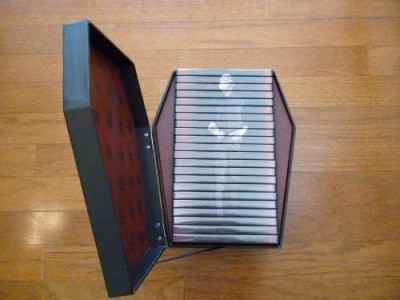
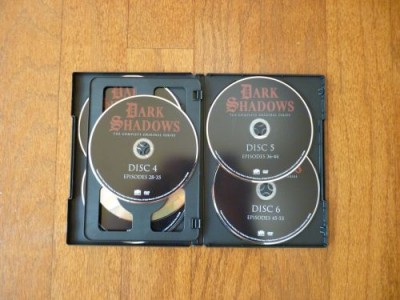
As mentioned earlier, this set contains the complete Dark Shadows TV series, 1,225 episodes. The shows themselves are on the first 126 discs with the last 5 DVDs reserved for special features. While I do not have the original releases to compare with this set, I'm certain the content on the discs is exactly the same. The extras that are included on the DVDs with the episodes correspond to the ones included with the original releases and the menus haven't been changed. (The menu on disc 25, for example, proclaims that it's disc one.) The DVDs are housed in 22 single-width six-disc cases. These are housed in custom coffin shaped box (with metal hinges no less!) and the spines of the cases from the image of Barnabas lying in his casket. It's a very nice effect. The first pressing of this set is a limited edition of only 2500.
Note: There are also two 'best of' single-disc collections being released at the same time: Fan Favorites and The Best of Barnabas. These are at a much lower price point, natually, but they aren't nearly as satisfying. You can read my reviews of those sets too: Fan Favorites - The Best of Barnabas.
Video:
It's pretty amazing that all of these episodes still exist (save one, #1219, that has been reconstructed from the audio track, still photos, and the opening and closing of the episodes surrounding it). Though the full frame video hasn't been restored it doesn't look too bad at all. Due to the sheer number of episodes the cost and the time that it would take to do even a rudimentary cleanup pushes it outside of the realm of the realistic. As it is, the black and white (for the early episodes) and color (later on) full frame image is a bit soft, details tend to get lost in dark areas, and there is some print damage. The spots and scratches aren't very bad, and they never become a distraction, but they are present. Some of the installments only exist as Kinetoscopes (where they filmed the image on a TV screen) and these naturally lack the detail that the others have but there's only a few that are like that. If you go into the show with realistic expectations for an unrestored show from the 60's, chances are you won't be disappointed.
Audio:
The show comes with the original mono soundtrack which, like the video, hasn't been cleaned up. There's some hiss in the background and while some episodes sound better than others, none of them that I screened had horrible audio. The extraneous sounds were never distracting and dialog was always easy to hear. There are no subtitles.
Extras:
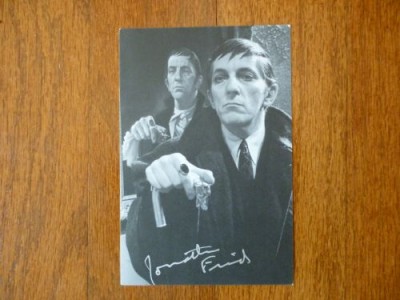
Wow! There's a lot of stuff here. Aside from the cool coffin box itself, the set contains a signed picture of Jonathan Frid who played Barnabas Collins. It's an actual signed image, not just a reproduction, which is pretty cool. There's also an invaluable 96-page booklet listing all of the episodes with a brief synopsis as well as detailing on which disc each installment is located. The booklet is filled with photos from the show, it's not just page after page of bland text.
On the discs themselves there are well over 100 interviews with actors and people associated with the show sprinkled throughout the collection. The ones that I had a chance to hear were generally short but interesting and well worth watching. In addition, the final five discs are devoted to bonus features: There's a 25th Anniversary Special, footage from a 1991 convention where the cast reunited to celebrate the show, a 30th Anniversary retrospective, Dark Shadows Tribute, and a reel of the scariest moments from the show.
But that's just scratching the surface. There are promos used to advertise the show, a discussion with Dark Shadows creator Dan Curtis on his work before the show made him famous, a retrospective on Hollywood movie star Joan Bennett who played Elizabeth Collins Stoddard, footage of the cast rehearsing the show, bloopers and outtakes, vintage interviews with various members of the cast from TV talk shows back when the show was on the air, commercials for Dark Shadows merchandise, a behind-the-scenes featurette, a overview of the events in the show that took place before Barnabas arrived (for those who want to jump in when the vampire arrives), a look at the locations used in the show, an episode in Spanish, and much more! There are hours and hours worth of bonus material included with the set, so suffice to say that once you've gotten through the 457 hours of the program itself, you still have a lot left to watch.
The only things that are really missing are the two feature films, House of Dark Shadows (1970) and Night of Dark Shadows (1971). I'm sure there's a rights issue and there's so much here, both quality and quantity, that their omission isn't a grievous error.
Final Thoughts:
I was expecting this to be a nice set, but it significantly exceeded my expectations. The main draw is the show itself. Dark Shadows is oddly addictive, with a gothic atmosphere that works better than it should and some intriguing mysteries the like of which daytime television had never seen before and hasn't since. The set itself is spectacular: 131 DVDs housed in a coffin shaped box with copious extras, a nice program guide, and a signed photo of the man who played the show's most famous character, Barnabas Collins. This is one of the most impressive collections to have been released in a long time and easily earns the DVDTalk Collector Series rating.
With a high-profile Tim Burton/Johnny Depp movie version of the classic gothic daytime soap opera Dark Shadows scheduled to be released in a couple of months, MPI has decided to release the entire series in one impressive boxed set. They really went all out on this release, crafting an eye-catching coffin-shaped case to hold the series and including some very nice extras inside. It's also the most massive DVD collection that I can recall. The set contains an astounding 1,225 episodes that span 131 discs (including several DVDs devoted to extras). If that's not enough, the price is incredibly reasonable. Oh yeah, and it's a limited edition limited to only 2500 copies. (Note: According to the studio's rep, the limited edition is sold out at the distributor level. MPI is creating new sets, but they are not going to include the signed Jonathon Frid photo and will not be numbered.) This is easily one of the coolest releases of the year.
I have very fond memories of watching Dark Shadows when it originally aired way back in the late 60's. Sometimes my stay-at-home mother (which was the rule rather than the exception back in those days) would have to walk to the store (only rich people had two cars) or take the bus downtown to do some shopping and she'd get a neighbor to watch me for an hour or two. One older lady would turn on her 'stories,' as she called soap operas, in the late afternoon and I'd be bored me to tears. Except when Dark Shadows came on. I'd be playing with my Matchbox cars or Lincoln Logs on the floor off to the side of the TV, but when I heard Victoria Winter's voice introducing the show I'd start to pay attention. This wasn't any normal soap opera involving doctors having affairs; it was populated with ghosts, werewolves, and most importantly, a vampire! I'd pretend to play but I'd really be waiting for Barnabas Collins, the undead star of the show to make his appearance. Once he did, I'd run behind the couch, only occasionally peaking out to see if he was still on the screen. Once he'd left, my sitter would give the all-clear sign and I'd come out from behind the safety of our vampire-proof living room furniture. It was bone-chilling excitement that you can only really have when you're 5 or 6 years old.
I hadn't really seen the show since then. I had caught a couple of episodes over the years on the Sci-Fi Channel a decade ago and rented the first DVD from the original release but didn't get a chance to watch the whole thing. This is just the sort of cult show that I often enjoy, so when MPI announced that they were releasing the entire series on in one gigantic collection I knew that this was my chance to finally delve into the show.
The series was one of the earliest creations of TV producer/director Dan Curtis, a man who definitely left his mark on the small screen. Nominated for four Emmy Awards (he would win one), Curtis was the man behind the two critically acclaimed big budget mini-series, The Winds of War and War and Remembrance, both based on best-selling books by Herman Wouk. He probably best remembered for his made-for-TV horror films including Bram Stoker's Dracula, The Norliss Tapes (about a man who discovers a group of vampires), Frankenstein, and the fun Trilogy of Terror. In 1972 he also produced the most widely watched TV movie up to that point in history: The Night Stalker (which was followed by a sequel, The Night Strangler, which Curtis also directed, and a TV series based on the films that he was not involved with.)
Before all that however, he sold the idea of Dark Shadows to ABC. Reportedly based on a nightmare he had, the show was a daytime soap opera, but a totally unique one that wasn't like anything that had come before it.
Soap operas are nearly extinct now but they used to rule daytime television with the most popular ones making more money than many prime-time series, often several times their production costs. They aired daily with several storylines running concurrently. Any one plot would move rather slowly so that fans wouldn't be lost if they happened to miss a day, but with multiple threads to follow there was always enough to keep viewers interested. They usually revolved around the day-to-day lives of several well-to-do families filled with attractive people who all live intricate lives. Their love affairs, ethical dilemmas, financial difficulties, marital infidelities, and hidden pasts that are threatened to be revealed are fodder for the never-ending saga. When one plot line is wrapped up, three others are still going strong ensuring that there isn't a good place to stop watching.
Dark Shadows took this framework and gave it a good twist, making something new and very interesting.
What's it all about?
The show is set in the fictional fishing town of
In the first episode Victoria Winters (Alexandra Moltke), an orphan who grew up in a "foundling home" in
The first episodes include a plot involving Burke Devlin, who arrives on the same train as
Sounds like a typical soap opera, doesn't it? The difference is that Collinwood is haunted. It's a gothic show with a dark atmosphere, something not associated with daytime television especially in 1966. While the paranormal elements come more to the forefront as the show goes on, even in the early installments there's a feeling of foreboding that runs counter to what you'd expect. In the first episode everyone that
At first there are just suggestions of otherworldly visitors, but before too long all doubt is removed and viewers at home see that there is a ghost that inhabits Collinwood. Things grow more mystical from there and in episode 210 the show's most famous character finally arrives: Barnabas Collins (Jonathan Frid).
It came about because of a con artist named Willie Loomis (John Karlen). While at Collinwood he hears some of the tales from the Collins family's past, including the rumor that Naomi Collins was buried in the Collins family mausoleum wearing all of her jewelry. That's a prize that's too good to pass up, so he sneaks into the tomb one evening and finds the coffin. He can't get the concrete lid off however, so the crook rigs up a block and tackle to a fixture and in doing so accidently triggers a secret switch. A doorway opens up and inside is another coffin, this one bound with iron chains. He cuts off the locks and opens it up, and a hand reaches out from inside and grabs his throat.
The following evening a new visitor arrives at Collinwood, Barnabas Collins, a relative from
Originally slated to be in the show for a dozen or so weeks, Barnabas was a huge success and the ratings soared. So he stayed and became an integral part of the show.
When the show was first released on DVD, MPI started with the introduction of Barnabas, skipping the first 209 episodes (after the rest of the series was released they went back and put out the first section of the show as Dark Shadows: The Beginning). It's easy to see why. While the early episodes are good, the show really starts to take off once the vampire makes his appearance. Then things really get interesting.
I was surprised at how well the show plays today. Director David Lynch once said that "mystery is like a magnet" and that's exactly what this show does to pull viewers into the story. There are a lot of unexplained and strange events that are sprinkled evenly throughout the series, and just as soon as the answer to one is given another one pops up. It's not typical soap opera mysteries either concerning who the father of a baby is or whether someone has committed a crime. Yes, there are some plots like that. The stories involving Carolyn's love life aren't as engaging as the others, but the nice thing about the show is that there are always a couple of concurrent plots. When the show is at its best, the writers would twist the plot around in unexpected ways sending people back in time or to travel to parallel dimensions creating some unique mysteries that would keep the viewers guessing, and coming back for more each day.
The show also has the look of an old Universal horror movie. The sets are bathed in shadows and the lighting is generally dark, effectively creating an atmosphere that makes the program feel spooky and creepy. They definitely made the most of the small budget and were able to make what should have been a bland set evoke a creaky old mansion.
One thing to realize is that the pace of the program is rather slow, especially when compared to current shows, but that just adds to the gothic feel of the program. The fact that the plot doesn't reveal itself at a break-neck speed makes it at bit more eerie and atmospheric. Viewers have time to ponder what's going to happen next and to wonder what's really going on in the spooky old house.
It's also important to remember the show's origins when viewing it. It was made on a tight budget and at a grueling pace. They filmed five days a week and, according to one of the interviews with a cast member included as an extra, the cast would get the script the night before they recorded an episode. That means they'd rehearse and record an episode during the day, get the next day's script, go home and have to be ready to put the episode down the following morning. To make matters worse they used a 'live to tape' method of shooting, which basically means that they record what happens in front of the cameras with no retakes unless something drastic happens. The upshot to all of this is that there's nothing slick or polished about the show. If lines are flubbed or a boom mic's shadow is in the picture, it gets broadcast that way. While this will definitely (and understandably) turn off some viewers, I really liked the raw feel it created. Like the early adventures of Doctor Who, another show I really enjoy, the occasional goofs give Dark Shadows a lot of charm and make it special. In both shows, the stories, characters, and actors are able to rise above the meager production values and make something that's better than you'd expect just looking at a clip.
So is it worth the money?
With a retail price of just two pennies shy of $600, the collection is going to set you back some serious money but it's actually an amazingly good deal. (It can currently be ordered for less than $425 including shipping from Amazon which makes it a steal.) The series was originally released in 32 4-disc collections that retailed for $59.98 each. Getting the whole set that way (and a lot of fans did) would shrink your bank account by over $1900! Careful bargain hunters that were patient could sometimes find various volumes for around $25 each, but that would still total $800 and would take a lot of time and effort. Getting the entire series for less than $0.50 an episode (and the extras for free!) is quite a bargain... even more so when you realize the street price is significantly less.
When you compare this show to other TV series the deal becomes even more apparent. (Hey, I love crunching numbers so you'll forgive me if I indulge myself a bit. All prices are retail prices per episode for SD DVDs. The complete series price is used unless specified.) From the highs of shows like Breaking Bad Season 4 which runs $4.31/episode and The Sopranos ($3.25) to sitcoms like Seinfeld ($1.39) or Friends ($0.85) Dark Shadows is very favorable. Even classic TV like I Dream of Jeanie ($1.39), The Munsters ($1.00) and Combat ($1.97) are significantly more expensive. And only one of these collections (I Dream of Jeanie) has unique packaging or a signed photo of the star. Any way you look at it, even at the high cost, this is a bargain.
The DVDs:
As mentioned earlier, this set contains the complete Dark Shadows TV series, 1,225 episodes. The shows themselves are on the first 126 discs with the last 5 DVDs reserved for special features. While I do not have the original releases to compare with this set, I'm certain the content on the discs is exactly the same. The extras that are included on the DVDs with the episodes correspond to the ones included with the original releases and the menus haven't been changed. (The menu on disc 25, for example, proclaims that it's disc one.) The DVDs are housed in 22 single-width six-disc cases. These are housed in custom coffin shaped box (with metal hinges no less!) and the spines of the cases from the image of Barnabas lying in his casket. It's a very nice effect. The first pressing of this set is a limited edition of only 2500.
Note: There are also two 'best of' single-disc collections being released at the same time: Fan Favorites and The Best of Barnabas. These are at a much lower price point, natually, but they aren't nearly as satisfying. You can read my reviews of those sets too: Fan Favorites - The Best of Barnabas.
Video:
It's pretty amazing that all of these episodes still exist (save one, #1219, that has been reconstructed from the audio track, still photos, and the opening and closing of the episodes surrounding it). Though the full frame video hasn't been restored it doesn't look too bad at all. Due to the sheer number of episodes the cost and the time that it would take to do even a rudimentary cleanup pushes it outside of the realm of the realistic. As it is, the black and white (for the early episodes) and color (later on) full frame image is a bit soft, details tend to get lost in dark areas, and there is some print damage. The spots and scratches aren't very bad, and they never become a distraction, but they are present. Some of the installments only exist as Kinetoscopes (where they filmed the image on a TV screen) and these naturally lack the detail that the others have but there's only a few that are like that. If you go into the show with realistic expectations for an unrestored show from the 60's, chances are you won't be disappointed.
Audio:
The show comes with the original mono soundtrack which, like the video, hasn't been cleaned up. There's some hiss in the background and while some episodes sound better than others, none of them that I screened had horrible audio. The extraneous sounds were never distracting and dialog was always easy to hear. There are no subtitles.
Extras:
Wow! There's a lot of stuff here. Aside from the cool coffin box itself, the set contains a signed picture of Jonathan Frid who played Barnabas Collins. It's an actual signed image, not just a reproduction, which is pretty cool. There's also an invaluable 96-page booklet listing all of the episodes with a brief synopsis as well as detailing on which disc each installment is located. The booklet is filled with photos from the show, it's not just page after page of bland text.
On the discs themselves there are well over 100 interviews with actors and people associated with the show sprinkled throughout the collection. The ones that I had a chance to hear were generally short but interesting and well worth watching. In addition, the final five discs are devoted to bonus features: There's a 25th Anniversary Special, footage from a 1991 convention where the cast reunited to celebrate the show, a 30th Anniversary retrospective, Dark Shadows Tribute, and a reel of the scariest moments from the show.
But that's just scratching the surface. There are promos used to advertise the show, a discussion with Dark Shadows creator Dan Curtis on his work before the show made him famous, a retrospective on Hollywood movie star Joan Bennett who played Elizabeth Collins Stoddard, footage of the cast rehearsing the show, bloopers and outtakes, vintage interviews with various members of the cast from TV talk shows back when the show was on the air, commercials for Dark Shadows merchandise, a behind-the-scenes featurette, a overview of the events in the show that took place before Barnabas arrived (for those who want to jump in when the vampire arrives), a look at the locations used in the show, an episode in Spanish, and much more! There are hours and hours worth of bonus material included with the set, so suffice to say that once you've gotten through the 457 hours of the program itself, you still have a lot left to watch.
The only things that are really missing are the two feature films, House of Dark Shadows (1970) and Night of Dark Shadows (1971). I'm sure there's a rights issue and there's so much here, both quality and quantity, that their omission isn't a grievous error.
Final Thoughts:
I was expecting this to be a nice set, but it significantly exceeded my expectations. The main draw is the show itself. Dark Shadows is oddly addictive, with a gothic atmosphere that works better than it should and some intriguing mysteries the like of which daytime television had never seen before and hasn't since. The set itself is spectacular: 131 DVDs housed in a coffin shaped box with copious extras, a nice program guide, and a signed photo of the man who played the show's most famous character, Barnabas Collins. This is one of the most impressive collections to have been released in a long time and easily earns the DVDTalk Collector Series rating.
|



| Popular Reviews |
| Sponsored Links |
|
|
| Sponsored Links |
|
|
| Release List | Reviews | Shop | Newsletter | Forum | DVD Giveaways | Blu-Ray | Advertise |
|
Copyright 2024 DVDTalk.com All Rights Reserved. Legal Info, Privacy Policy, Terms of Use,
Manage Preferences,
Your Privacy Choices 
| |||||||