
| Reviews & Columns |
|
Reviews DVD TV on DVD Blu-ray 4K UHD International DVDs In Theaters Reviews by Studio Video Games Features Collector Series DVDs Easter Egg Database Interviews DVD Talk Radio Feature Articles Columns Anime Talk DVD Savant Horror DVDs The M.O.D. Squad Art House HD Talk Silent DVD
|
 DVD Talk Forum |
|
|
| Resources |
|
DVD Price Search Customer Service #'s RCE Info Links |
|
Columns
  


 
|
|
|
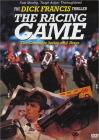
Racing Game, The
With a set like The Racing Game, there are two audiences to keep in mind when making a recommendation: those who have enjoyed the original program and are looking to see if it's worth getting on DVD, and those who haven't seen it and want to know if it's worth watching in the first place. At times the two points of view can conflict, as with a truly lousy movie that's been given a stellar DVD transfer, but in the case of The Racing Game, my overall recommendation for both ends up being the same, for different reasons.
The Racing Game is billed as "The Dick Francis Thriller," as the series is loosely based on the stories of crime and action in the high-stakes world of horse racing written by award-winning mystery novelist Dick Francis. That's all well and good, and it was reason enough for me to be interested in this 1979 television series... but it turns out to be more "inspired by" Francis' work than actually "based on."
Only the first episode, "Odds Against," is actually an adaptation of a Francis novel. Here we meet the jockey-turned-detective Sid Halley, who in fact is a character that Francis used in more than one novel... but still he only appeared as a character in three novels out of thirty-nine. The subsequent five episodes are essentially unrelated to anything Francis wrote, with the exception that some elements of the plot from the third Sid Halley novel (Whip Hand) are incorporated into the second episode, "Trackdown."
The use of Sid Halley as the continuing main character in The Racing Game puts the series in the predicament of every other generic action-detective show: nothing really life-changing or dramatic is going to happen to the main character, and chances are he's going to solve the case just fine. Francis' usual style is to introduce a new character in each novel (though admittedly it's usually the same personality type with a different name) which does solve the Murder She Wrote problem of having a character consistently stumbling over corpses and plots every week. In that way, there's also some sense that the character has high personal stakes in the story, and that Francis could (at least in theory) have an unconventional ending. In The Racing Game, though, the pairing of Sid Halley (Mike Gwilym) and his friend Chico (Mick Ford) comes all too quickly to seem like just another clichéd detective partnership.
All this leads me to the question of why the original novels were left by the wayside as they were. Francis is an award-winning mystery novelist; why drop his plots in favor of some concocted by a television scriptwriter? The plots are, quite frankly, rather dull in The Racing Game. That's not to say that there isn't action: we get various car chases, fistfights, and so on. But action for its own sake is not exciting: we need to have an exciting story driving on the action for it to be meaningful. And in this regard, The Racing Game falls flat: the plots are poorly introduced and badly presented. Much of the fault of this lies in the cast of characters, which is generally too large and too anonymous: in order to make sense of the brief snippets of plot-advancement dialogue, it's necessary to remember who's who among a surfeit of sketchily-introduced secondary characters, none of whom are particularly memorable.
To top it all off, the episodes seem to focus on entirely the wrong aspects of Francis' work. A former winning jockey, Francis knew his horse racing inside and out, and brought that knowledge as a key point into his novels, but in the episodes of The Racing Game, the horseracing element is almost unimportant, and when it's present, it's badly presented. The one key element in "Trackdown," for instance, is the fact that thoroughbred racehorses are all considered to have a common birthday of January 1, but this fact is left to the end of the episode and given a hasty, "as you know, Bob" presentation.
I wanted to like The Racing Game; it's been a long time since I read any Dick Francis novels, but I enjoyed the ones that I read, as light-weight but entertaining thrillers. Unfortunately, if there's any spark of energy in The Racing Game, I must have blinked and missed it; totally in contrast to the high-speed racehorses that the stories are supposed to be about, the episodes plod along like tired carthorses.
The DVD
Video
The image quality for The Racing Game is definitely sub-par, though not unwatchably so. The overall image is grainy and blurry, resulting in a picture that's visually not very pleasing to the eye. Colors are drab and contrast is less than adequate, with dark scenes tending to be "black on black" rather than showing different shades and detail. It doesn't appear that the episodes were given much, if any, restoration in their transfer to DVD.
The episodes are presented in their original aspect ratio of 1.33:1.
Audio
The Racing Game simply sounds terrible, and it distinctly detracts from the experience of watching the shows. The volume for the dialogue is set far too low, requiring the volume level to be turned up substantially to even hear the actors; yet other sounds are at a more normal level, which creates a rather jarring effect. Even apart from the annoying volume issue, though, the sound quality of the series' Dolby 2.0 track is dismal: dialogue is muffled and indistinct, and the overall sound is rather indistinct. The poor sound quality is the main reason why I would not recommend this set even to Dick Francis fans, as it's definitely below the acceptable level.
Extras
The six fifty-minute episodes are presented on two DVDs in a double-wide keepcase. Special features are minimal: static credits (with no biographical information or filmographies), a bibliography, a photo gallery, and weblinks. An informative insert on Dick Francis is also included in the DVD case.
Final thoughts
I don't recommend The Racing Game to either existing fans or new viewers. Not to new viewers, because the content is dull and unengaging; not to fans, because the transfer is downright terrible. The odds are against The Racing Game being a winner for anyone, so I recommend skipping it.
|



| Popular Reviews |
| Sponsored Links |
|
|
| Sponsored Links |
|
|
| Release List | Reviews | Shop | Newsletter | Forum | DVD Giveaways | Blu-Ray | Advertise |
|
Copyright 2024 DVDTalk.com All Rights Reserved. Legal Info, Privacy Policy, Terms of Use,
Manage Preferences,
Your Privacy Choices 
| |||||||