
| Reviews & Columns |
|
Reviews DVD TV on DVD Blu-ray 4K UHD International DVDs In Theaters Reviews by Studio Video Games Features Collector Series DVDs Easter Egg Database Interviews DVD Talk Radio Feature Articles Columns Anime Talk DVD Savant Horror DVDs The M.O.D. Squad Art House HD Talk Silent DVD
|
 DVD Talk Forum |
|
|
| Resources |
|
DVD Price Search Customer Service #'s RCE Info Links |
|
Columns
  


 
|
|
|
Doctor Who: Planet of Giants
BBC Worldwide // Unrated // September 11, 2012
List Price: $24.98 [Buy now and save at Amazon]
The Show:
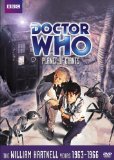
Four years before Irwin Allen brought a team of space explorers to a planet inhabited by giants in Land of the Giants, Doctor Who covered the same territory in Planet of the Giants. Similar in a lot of ways to the US series that would come later, this story that opened the second season of the long-running BBC show featured the first Doctor, William Hartnell and his companions only an inch tall, and the only witnesses to a murder. While it's not the best installment, it's not particularly bad either. The original four episode story was shorted to three (after all four had been shot) and while the end is a little rushed, it is still a solid example of the show from its early years. 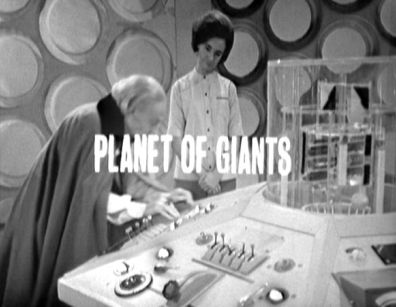
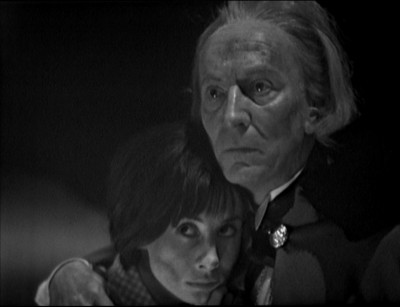
After witnessing the arrest of Robespierre in 18th Century Paris (in the previous story, The Reign of Terror scheduled for release next year), The Doctor and his companions take off in the TARDIS but something goes wrong. The doors open in mid-flight, something they're never supposed to do. Ian, Susan, and Barbara close them and The Doctor lands. No one seems to be the worse for wear, which surprises The Doctor, so they decide to explore their new surroundings.
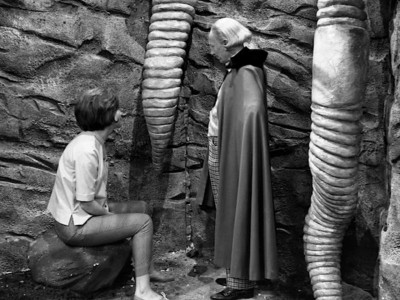
They find themselves on a planet with a rocky landscape and enormous creatures. The Doctor and Barbara find what looks like a snake at first, but it turns out to be a giant earthworm that's luckily deceased. Similarly Ian and Susan find some giant ants, which are also dead. After some discussion, The Doctor and Susan come to the same conclusion: they are back on Earth, but they've been reduced in size to approximately one inch.
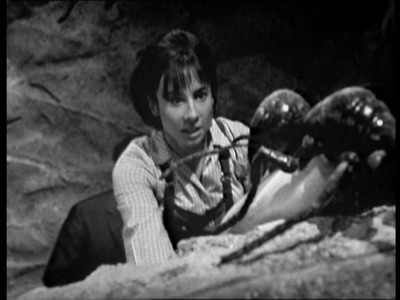
No sooner has this sunk in than Ian, having climbed into a box of matches, gets accidently taken by a full sized man. The other go and look for him, and while he's only yards away it seems like miles to the diminutive explorers.
While this is going on, the narrative (and scale) switches to the man who unknowingly has Ian, a government scientist named Farrow. He's been examining a new pesticide, DN6, which an industrialist, Forester, and a scientist, Smithers, are developing. They need government approval before they can go into large scale production, but unfortunately Farrow has discovered that the compound works too well. Not it kills all insect life that it comes into contact with, not just the harmful pests.
Forester has all of his money tied up in DN6, and when Farrow refuses to listen to his pleads, he kills him. He then pulls Smithers into his plot to hide the body and falsify the Farrow's report so they can go ahead with production.
Ian, escaping from the matchbox, discovers Farrow's body and easily figures out that he's been shot dead and shows the rest of the group catch up with him. Of course they can't let a murderer go free, and The Doctor is quite interested in what has kill all of the insect life in the area, so they sneak into the lab, a make some interesting discoveries.
As I mentioned earlier, this played out a lot like an episode of Planet of the Giants. The 'little people' had to bring a criminal to justice despite their small size, as well as use every day object that had suddenly grown to enormous size (from their point of view) in order to escape some traps, like being stuck in a sink. It was a fun show with some nice touches. I particularly liked the fact that normal-sized people couldn't hear them, which makes sense since their lungs would be moving a miniscule amount of air.
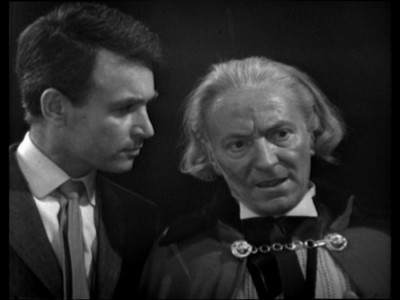
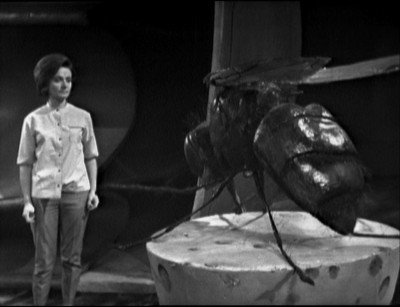
It is a bit of an odd story in some respects however. They're left on their own for the most part, never directly interacting with the regular-sized humans. As a matter of fact, the murderers never even see them. On top of that, no one really seems all that worried that they're only an inch tall. They're much to intent on exploring than solving their dilemma. The criminals are pretty stupid too, and though The Doctor helps in bringing them to justice, it's Foresters inane stupidity that really does them in.
Aside from that, it's a pretty solid installment of the show. It has a good amount of action and even some comic relief from a switchboard operator and her constable husband. If fans rarely bring up this story when they get together and discuss the early years it's because it's neither exceedingly good, nor exceedingly bad. Just a solid, decent example of the program.
The DVD:
Audio:
This show comes with the original mono soundtrack that fits the show just fine. The dynamic range is nothing to write home about, but the dialog is generally crisp and clear and there is no background noise, tape hiss, distortion or dropouts. There are optional subtitles in English.
Video:
The Restoration Team has worked their magic once more and the full frame B&W image looks very good. I was really impressed with the sharp and clear picture. The level of detail is excellent, the blacks are deep, and the image is stable. This is one of the best looking black and white episodes of Doctor Who to be released. You'll be pleased.
Extras:
There was a bit of a problem with the extras for this story: There's hardly anyone left alive who was connected with it. Yes, William Russell and Carole Ann Ford are thankfully still with us, but they hardly remember anything about this story. As one person put it in one of the extras, it was just four weeks of work 40 years ago. It was all done in the studio so there are no locations to visit today either. That didn't stop Ed Stradling, the person who put together the bonus features for this disc. He came up with some nice solutions to the problem and created a nice pack of extras.
For the commentary track some people you don't hear from very often were brought in, namely sound designer Brian Hodgson, makeup supervisor Sonia Markham, vision mixer Clive Doig and floor assistant David Tilley who were joined by moderator Mark Ayres. They talk about the episode, but also spend a fair amount of time reminiscing about their time on the show in general. It was surprisingly entertaining, especially since I didn't go in with high expectations.
There's also an odd bonus that not many people will find useful, and that's the original Arabic dub of the story. Way back when the BBC sold copies of Doctor Who all over the world and by some miracle the Arabic track survived all these years. It's a quirky bonus that's kind of fun to have, though I'm sure I'll never sit through all of it.
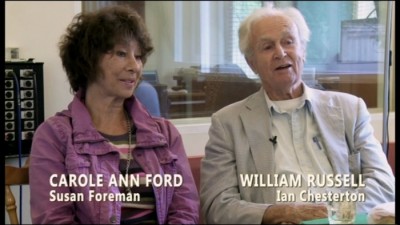
The video extras start off with a reconstruction of episodes three and four. The story was originally scripted, and filmed, as four episodes. When the execs at the BBC screened the story, they found that it dragged at the end and was to 'talkie.' He ordered that the last two episodes be cut down into one, and that's the way it originally aired. While the original edits to episodes three and four are long gone, the scripts still survive. So Ed Stradling decided to reconstruct the original episodes. To re-recorded the audio to the missing segments he brought in William Russell and Carole Ann Ford to reprise their roles and hired some very good mimics to play the other characters. For the video, he used some careful editing (zooming in on a frame so it looks different than the previous time it was used for example) and some CGI to make up the rest of the missing 25 minutes. It worked moderately well. It's easy to tell the new parts from the segments lifted from the aired version of episode three, and I found myself being pulled out of the show every time they switched, but overall it works more than it fails. The new episodes do have more than a little dialog and it's easy to see why the Head of Drama wanted it cut, but the story worked a little better, filling in moments and fleshing out the story. It's well worth watching.
Rediscovering The Urge to Live is an 8-minute look at the reconstruction of the final to episodes and has William Russell and Carole Ann Ford remembering what they can about the show (not much). It features a peek in on the recording of the audio and discusses why the decision was made to remake two episodes rather than have a making-of featurette on the original story. Next up are a pair of interviews with Carole Ann Ford and the late Verity Lambert originally recorded in 2003 for The Story of Doctor Who. These were nice discussions of their time with the show, though I wish Verity's had been a bit longer and went more in depth.
In addition there is a pop-up informational text option which is very informative as always. It does give some dry statistics, like how many people viewed each episode, but there are also some interesting notes such as script changes that were made and background information on the supporting characters. The extras are rounded off with, a couple of photo galleries, and the listings from the Radio Times in .pdf format.
Final Thoughts:
A solid example of the show from the early years, Planet of the Giants is a good installment of the long-running SF program. The reconstruction of episodes 3 and 4 (they were originally scripted and filmed but then merged into a single final episode) is a nice treat for Hartnell fans and gives a good indication of what the story was originally intended to look like. Recommended.
|



| Popular Reviews |
| Sponsored Links |
|
|
| Sponsored Links |
|
|
| Release List | Reviews | Shop | Newsletter | Forum | DVD Giveaways | Blu-Ray | Advertise |
|
Copyright 2024 DVDTalk.com All Rights Reserved. Legal Info, Privacy Policy, Terms of Use,
Manage Preferences,
Your Privacy Choices 
| |||||||